

Maison Dieu Dover.
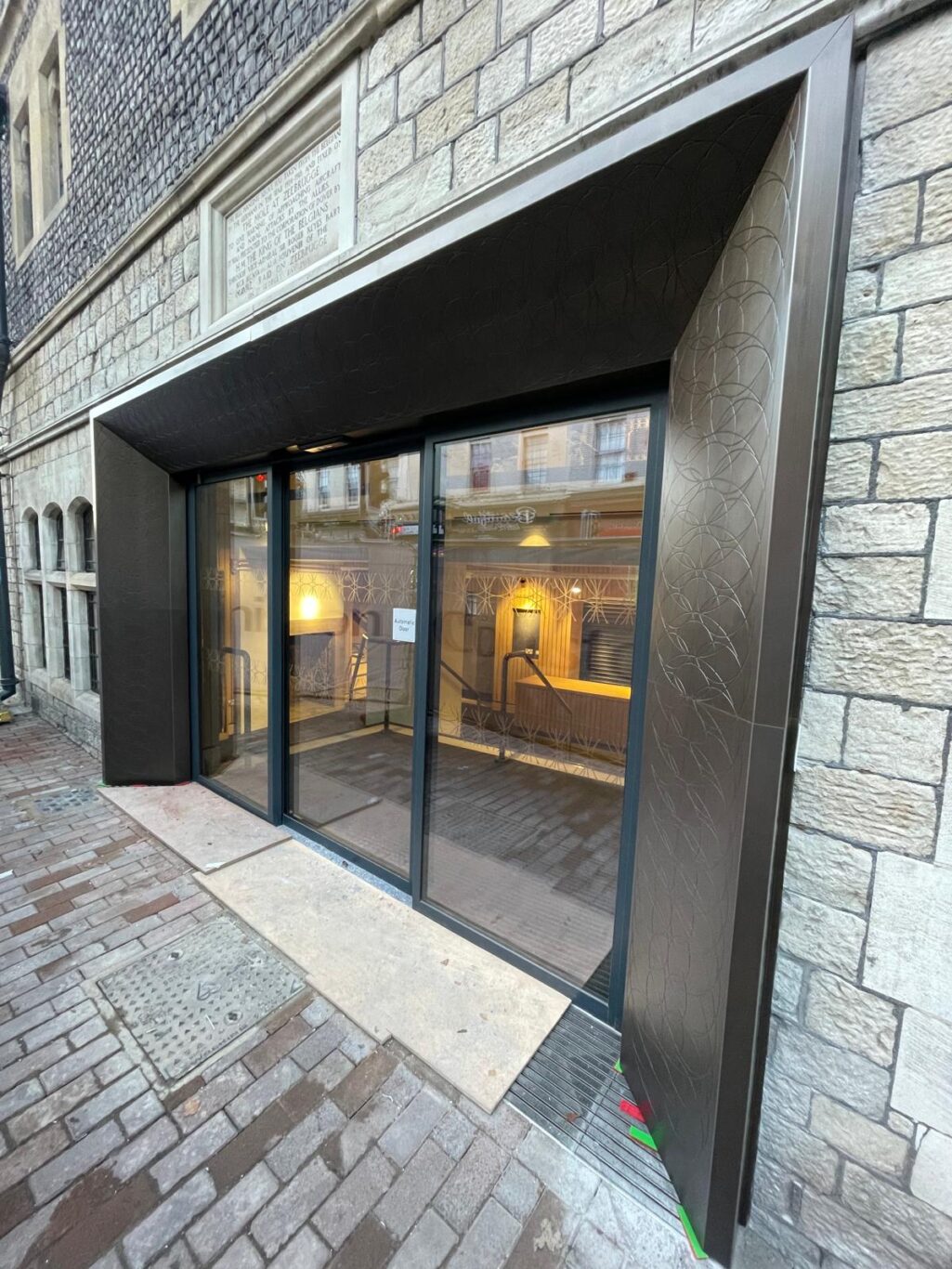
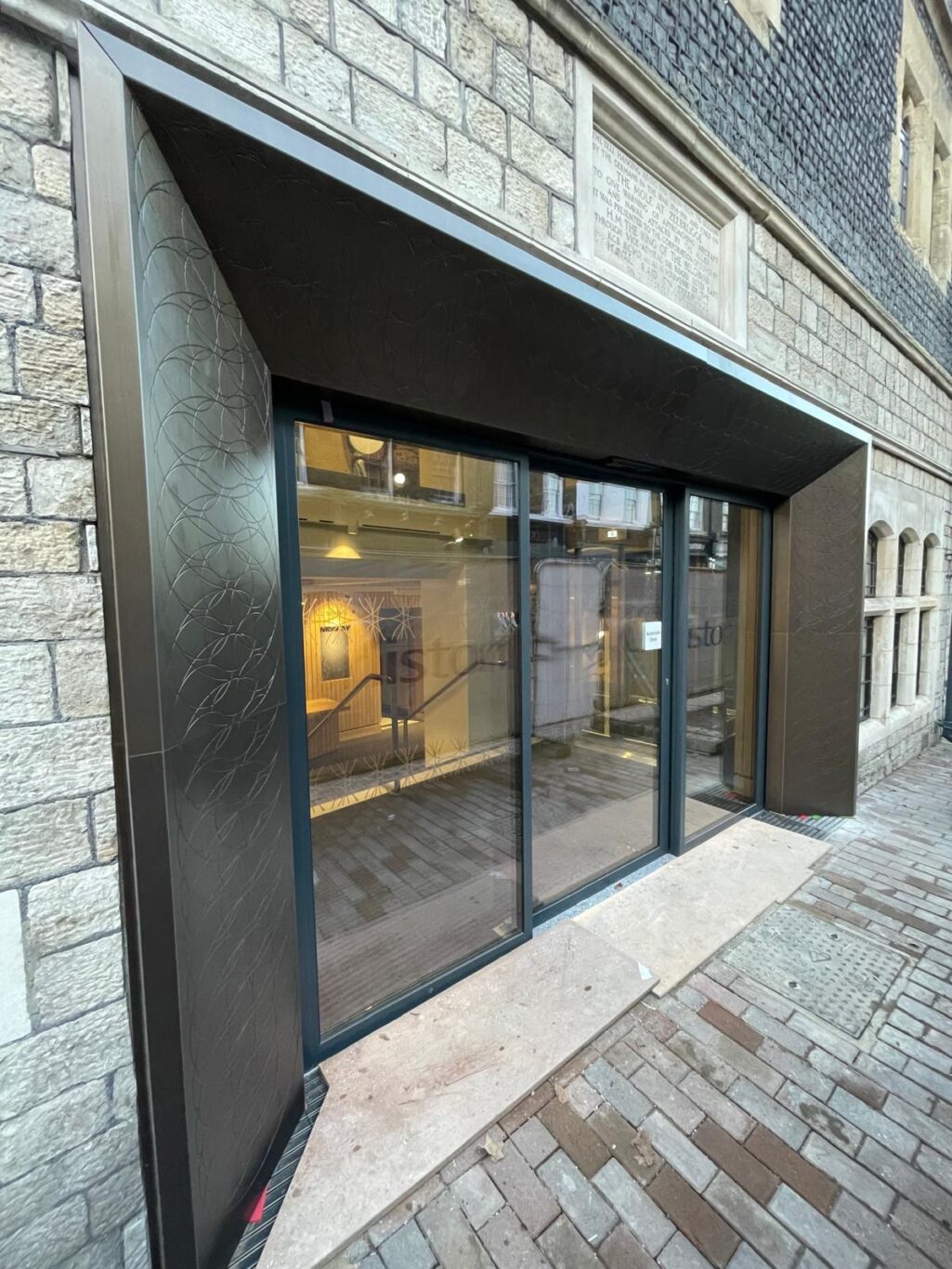
CDC Engineering was appointed to manufacture and install bespoke architectural metal cladding for the entrance of the iconic Maison Dieu, Dover. Working alongside the project team, our role was to produce a high-quality entrance feature that respected the building’s heritage while delivering a durable, contemporary finish.
The completed installation combines precision fabrication with specialist engraving techniques, creating an entrance that enhances the restored façade while reflecting the character and history of this landmark building.
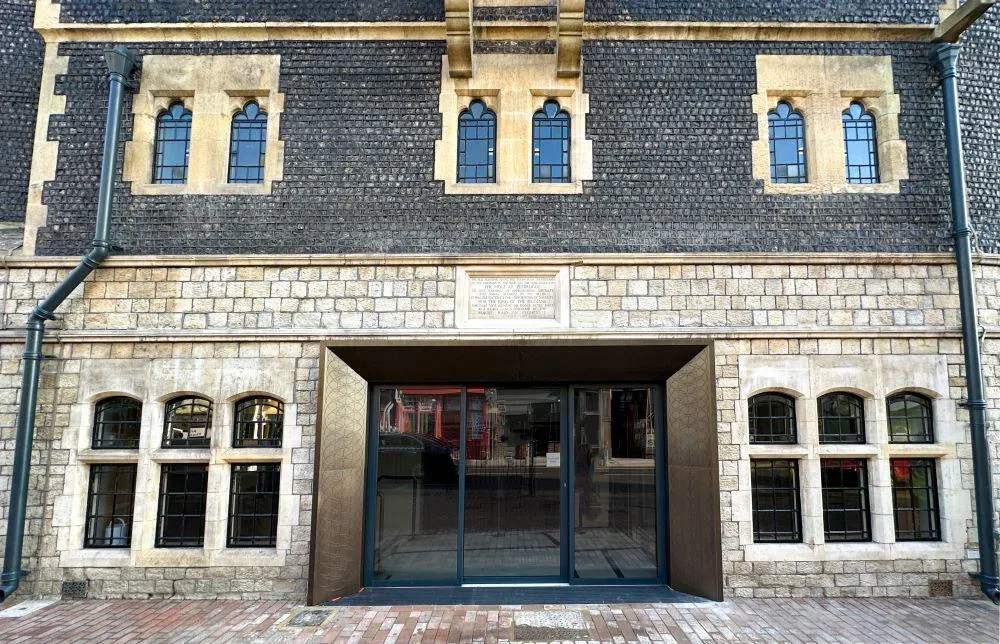
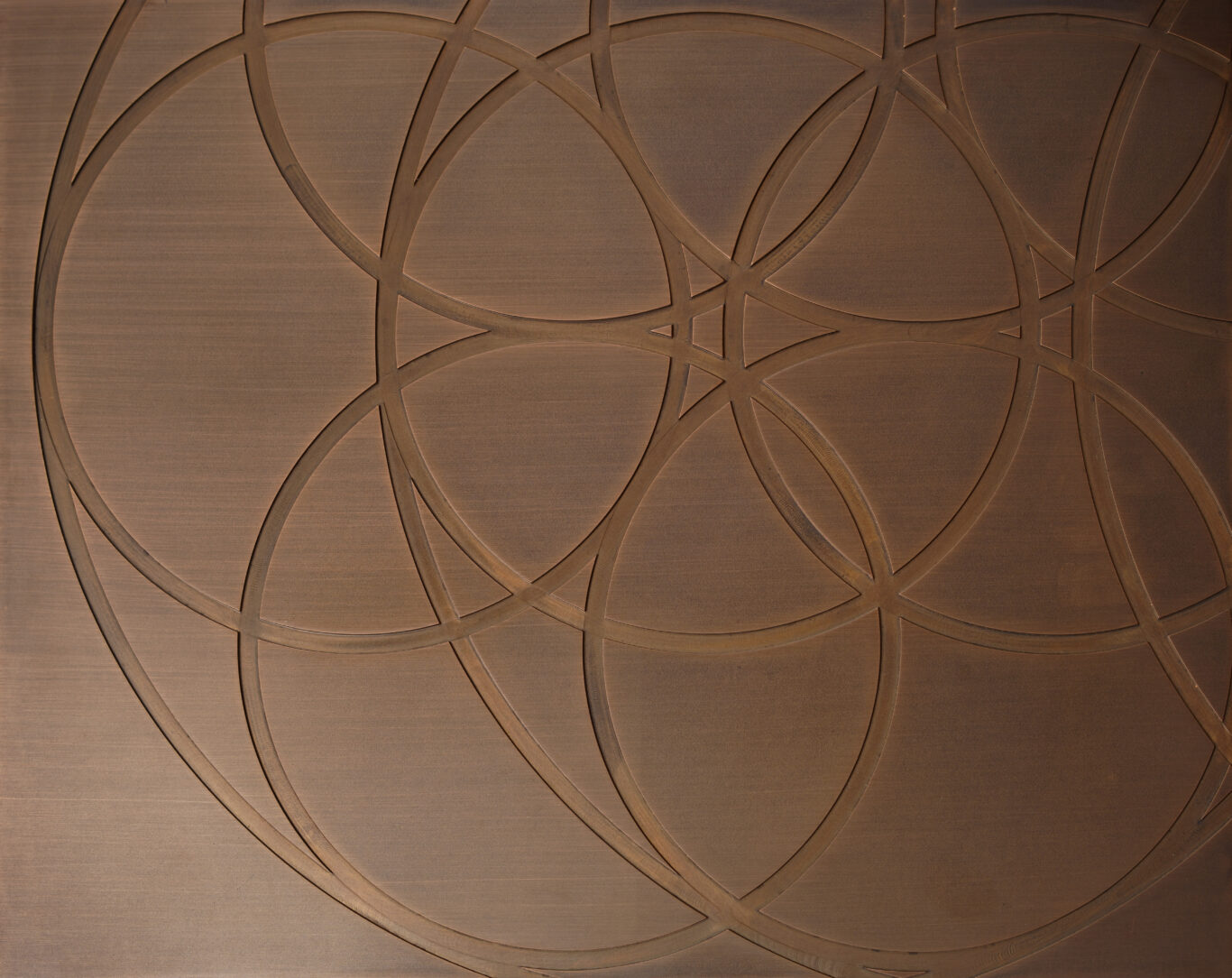
The defining feature of this project is the bespoke engraved pattern incorporated into each cladding panel. Rather than using applied graphics or surface printing, the decorative design was permanently engraved into the metal, creating a refined finish that subtly catches the light while maintaining a clean, understated appearance.
Achieving a consistent engraved pattern across multiple folded components required careful planning, ensuring every line aligned perfectly once installed. This level of precision is essential when working with architectural metalwork where every joint and return remains visible.
The engraved finish complements the historic architecture without overpowering it, providing a contemporary interpretation that respects the authenticity of the Maison Dieu restoration.
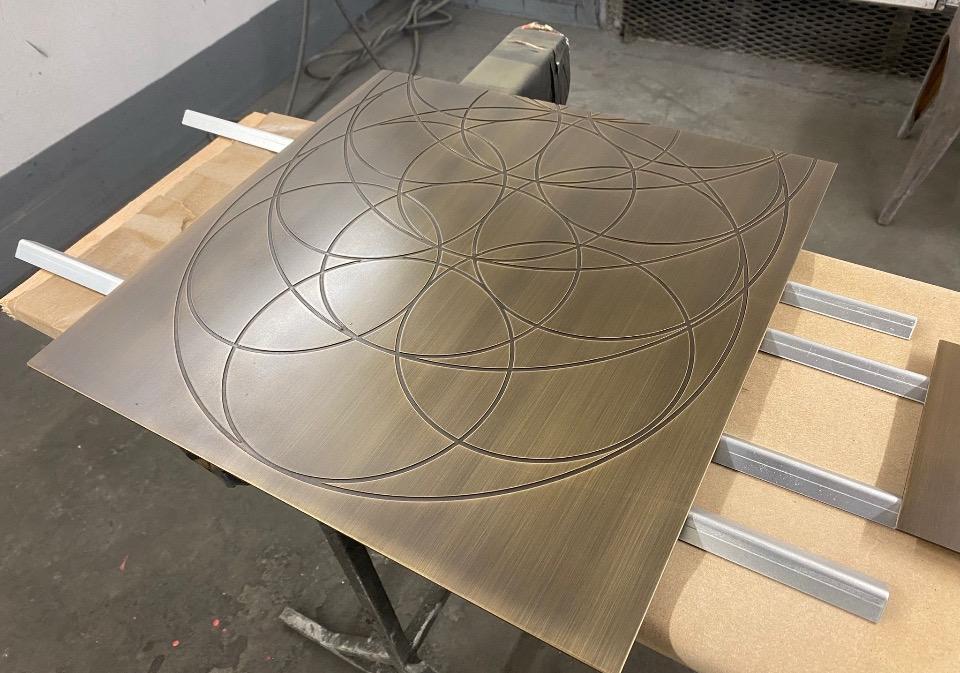
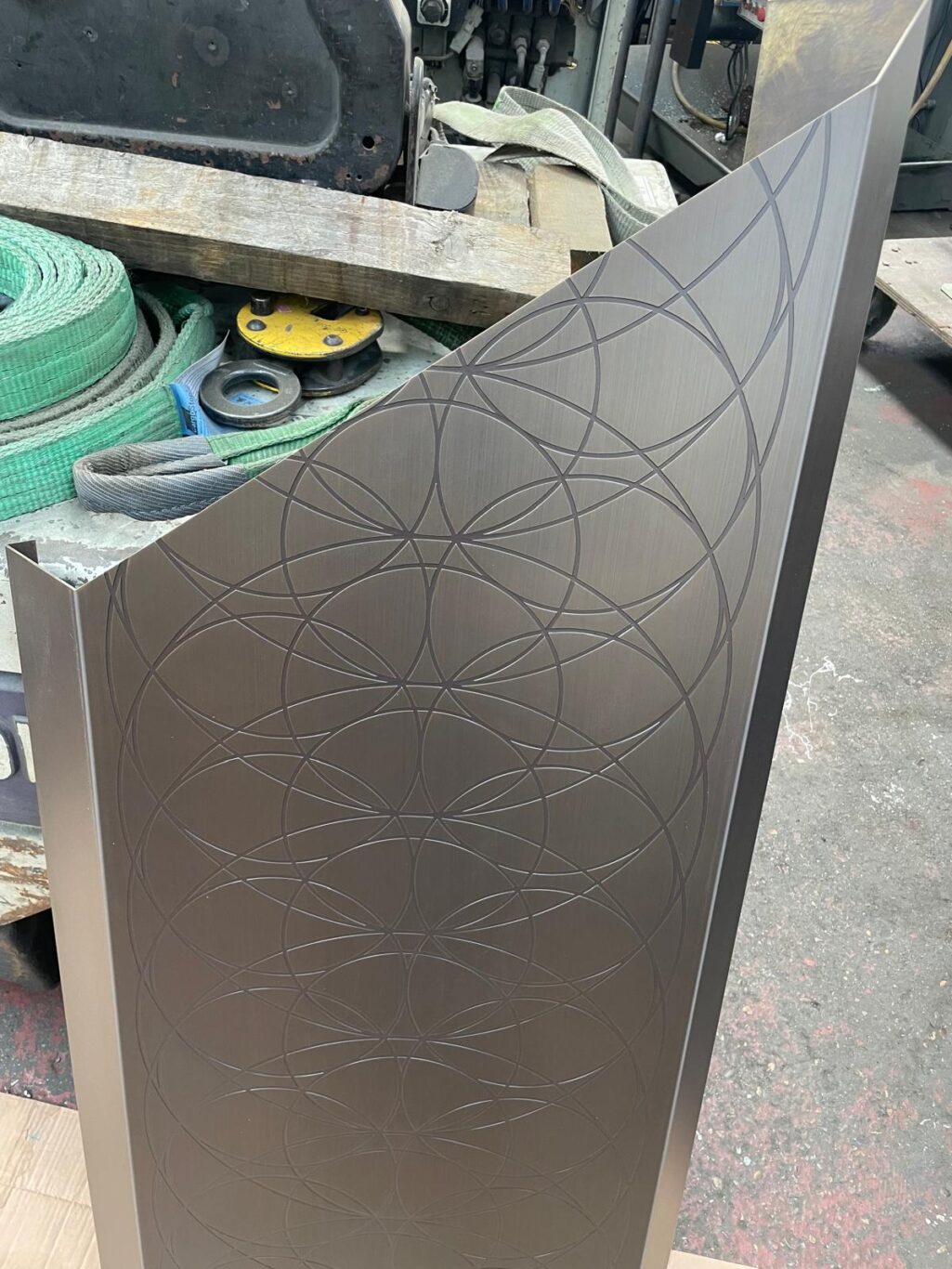
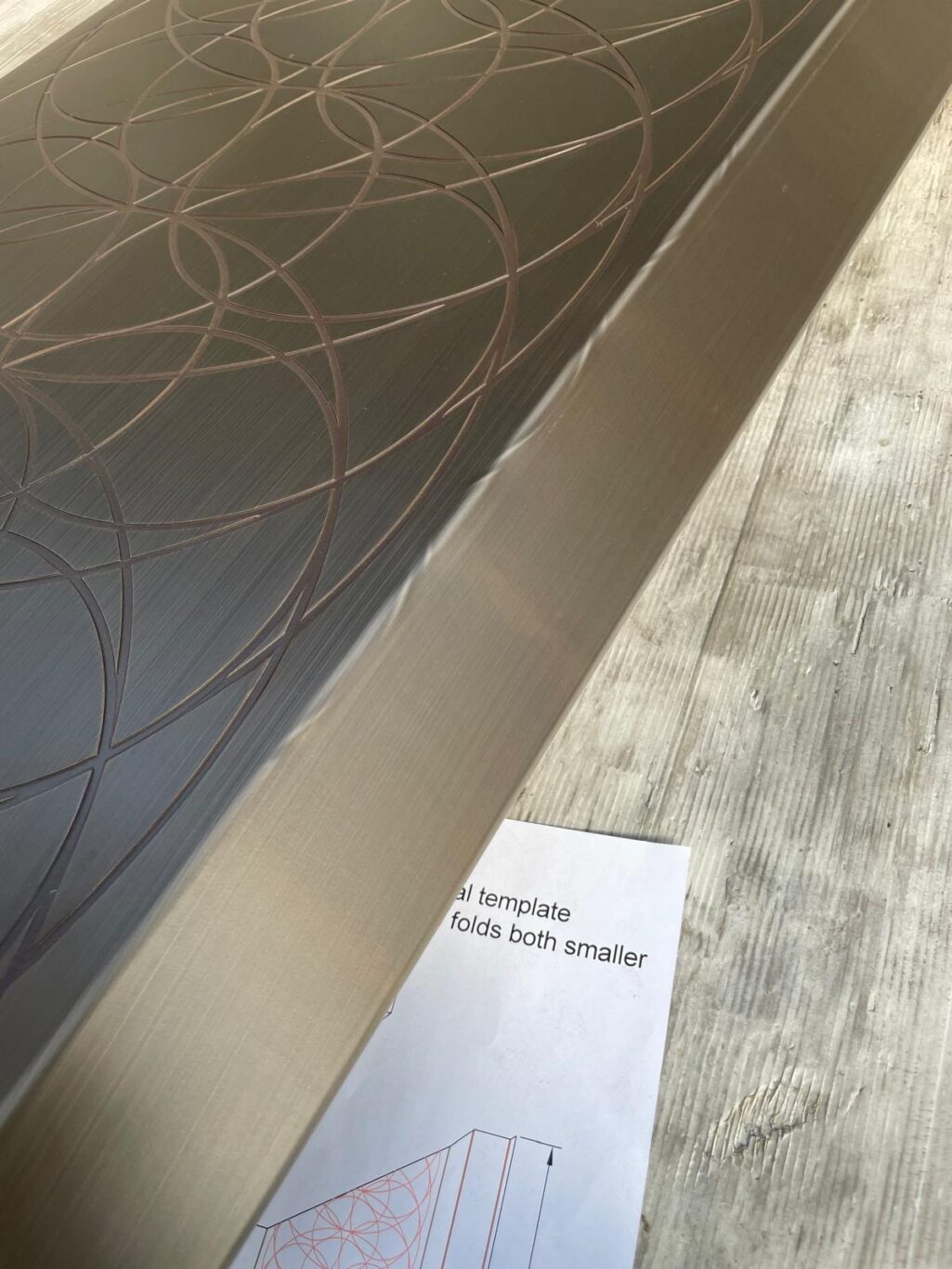
Each panel was manufactured in-house by CDC Engineering using precision fabrication techniques before being folded and assembled to create seamless architectural features around the entrance.
Particular attention was given to:
The completed installation demonstrates how detailed fabrication and specialist finishing techniques can transform a functional entrance into an architectural feature.
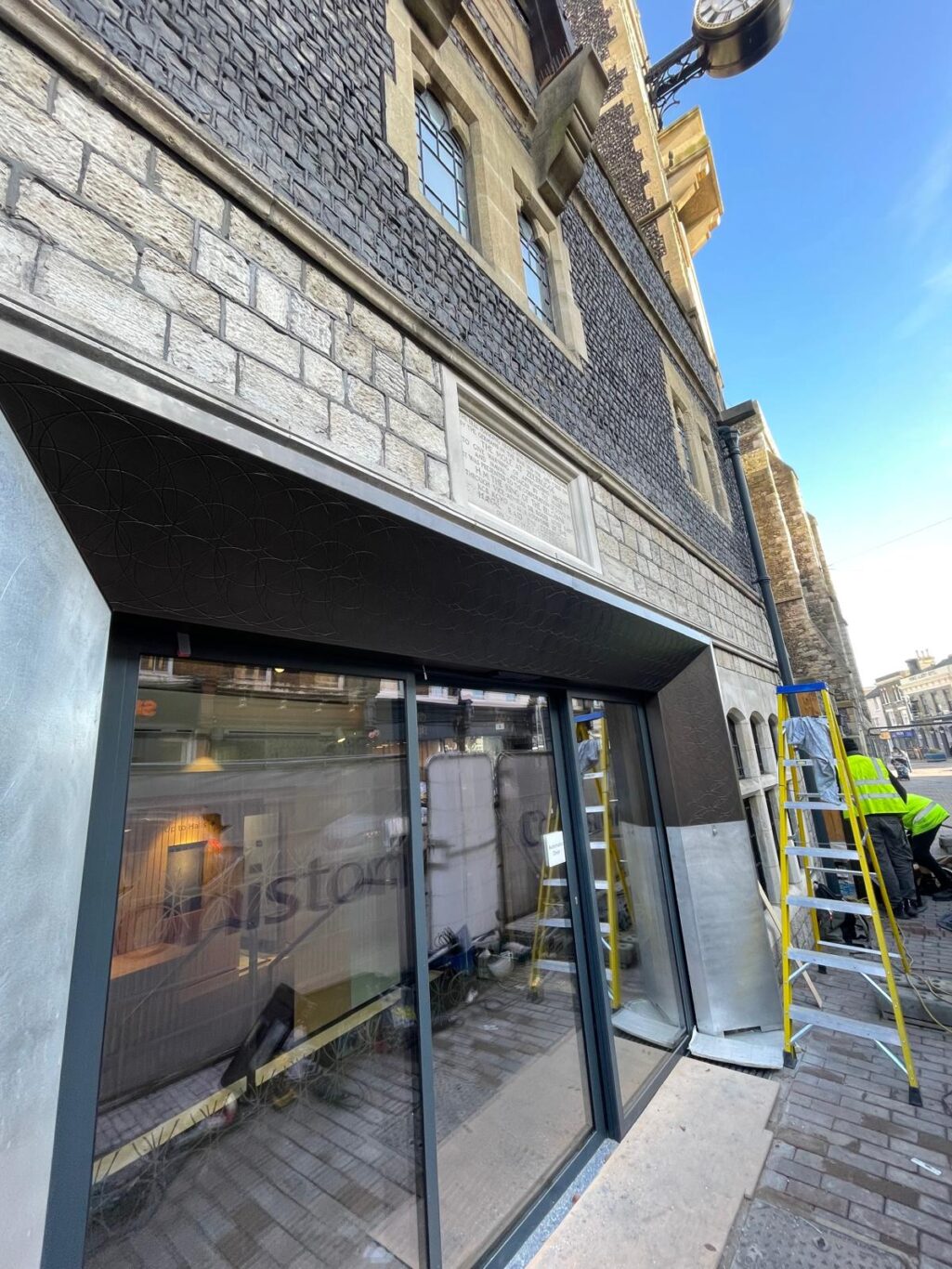
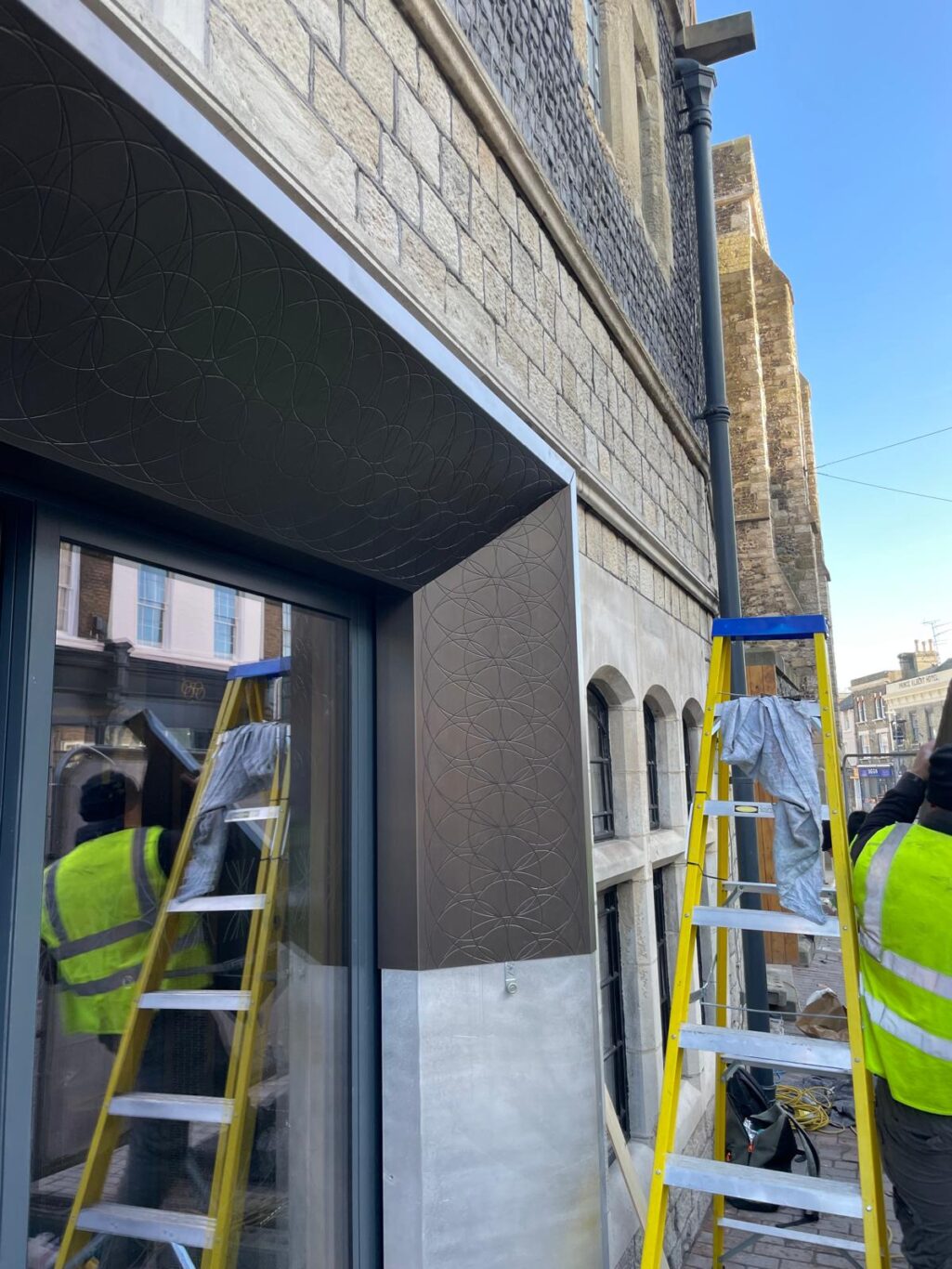
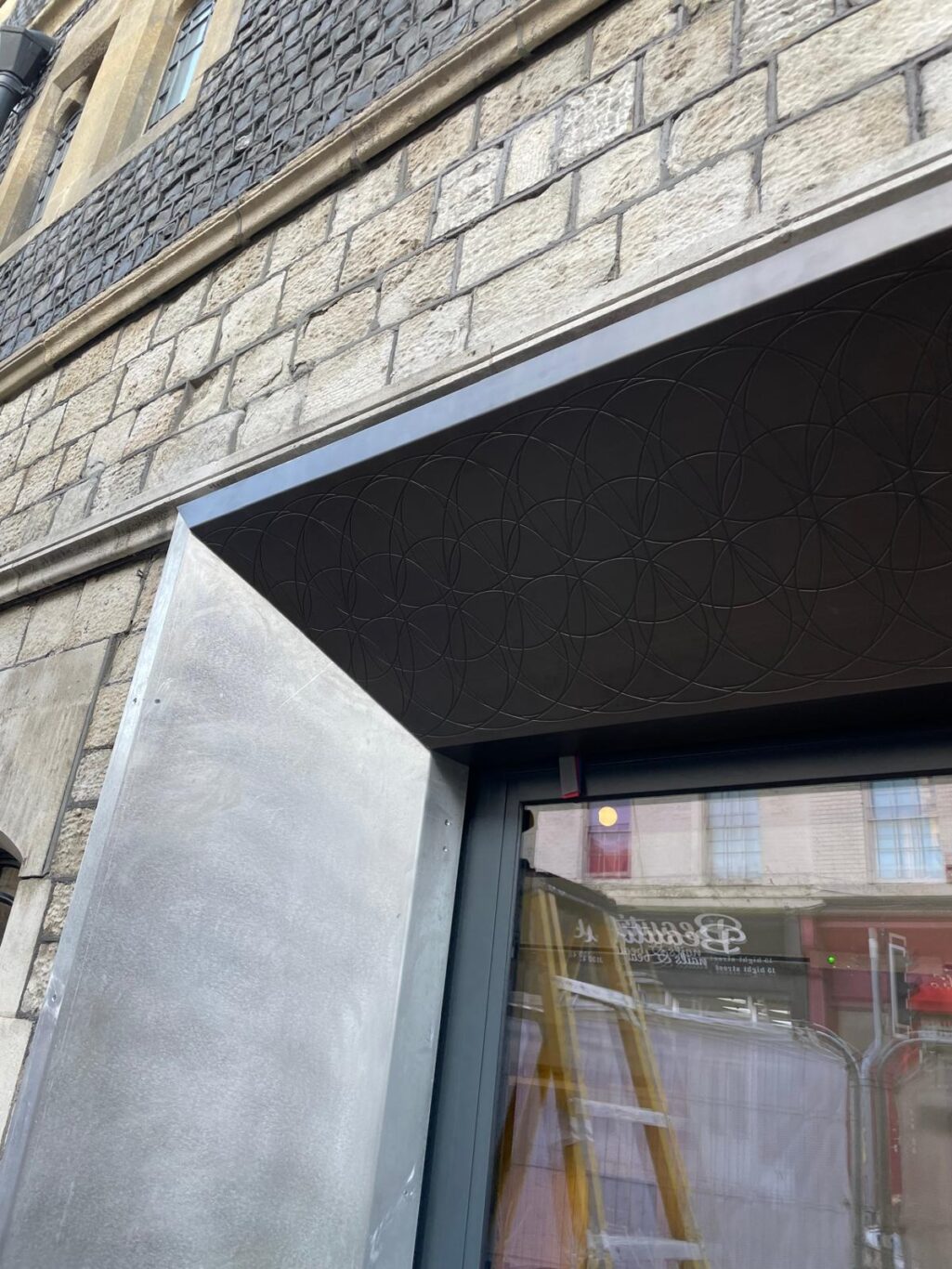
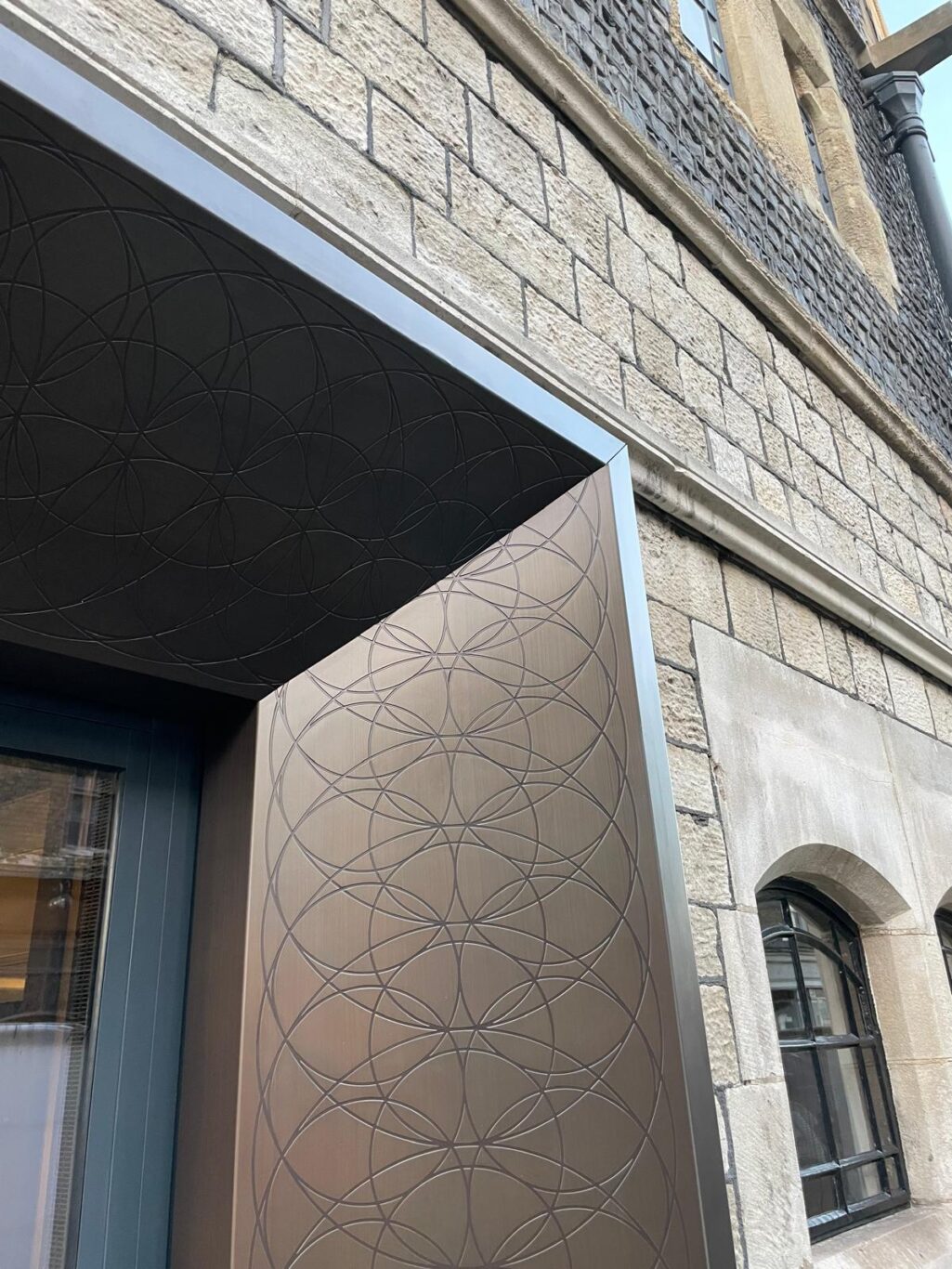
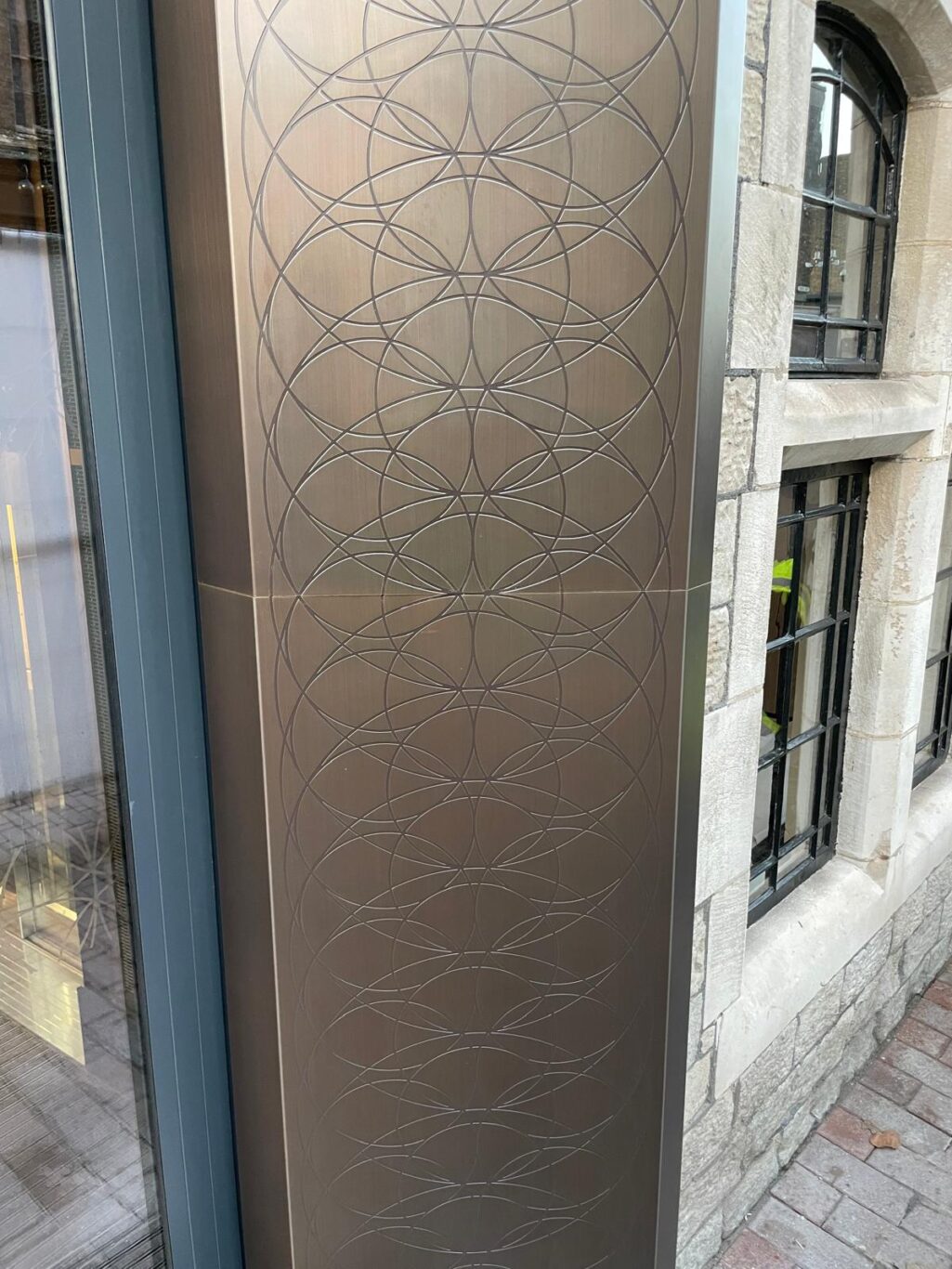
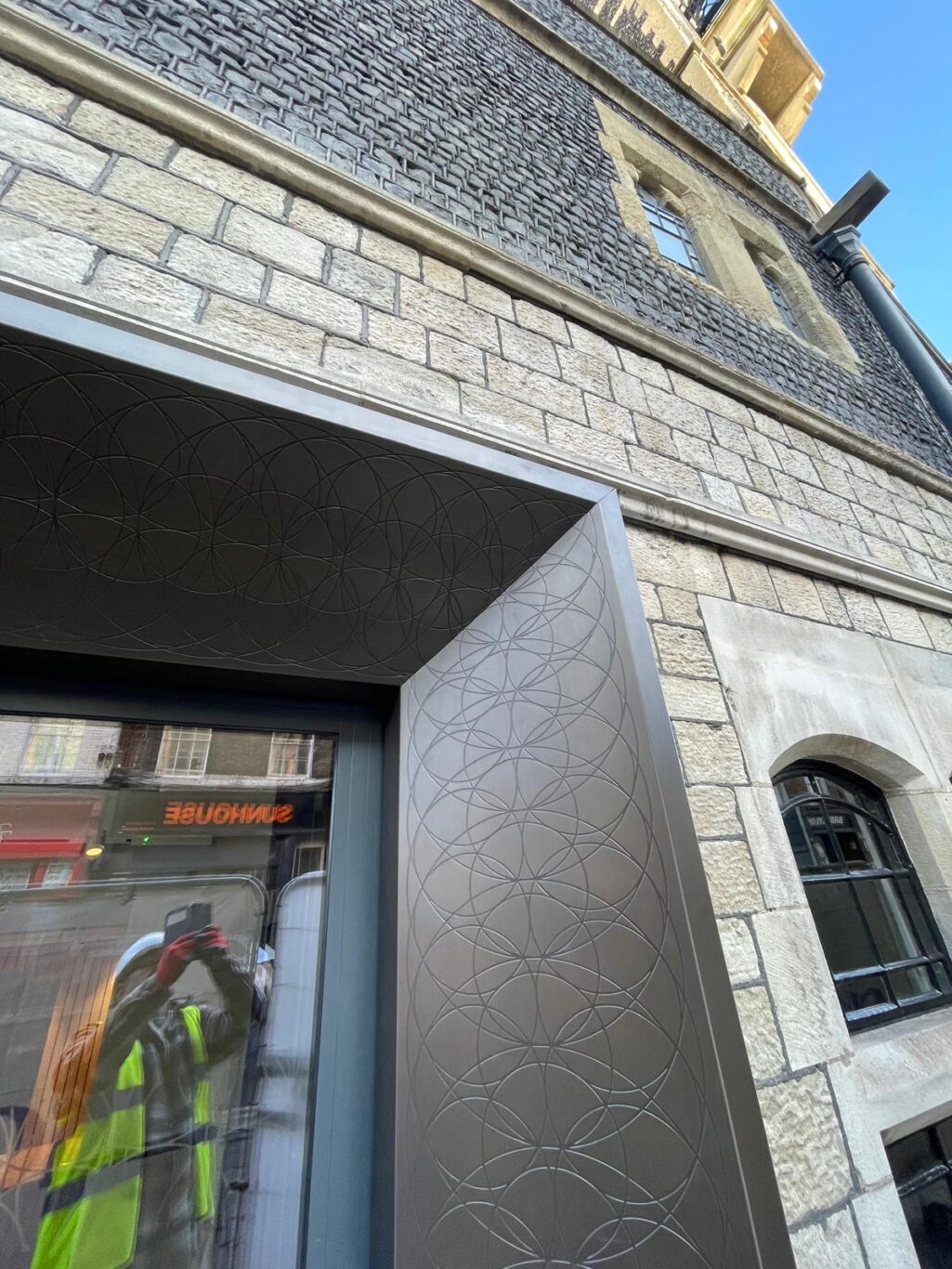
Historic restoration projects demand exceptional attention to detail. Every component must complement the existing architecture while meeting modern performance standards.
By combining precision fabrication with specialist engraving techniques, CDC Engineering delivered an entrance cladding solution that enhances the building’s identity while providing a durable, high-quality finish that will stand the test of time.
Whether working on heritage restorations, commercial developments or bespoke architectural projects, our team brings decades of fabrication expertise to every installation.
Looking for bespoke architectural metalwork? Get in touch with CDC Engineering to discuss your project. From decorative cladding and engraved metal panels to complex architectural fabrications, we deliver precision-engineered solutions across the UK.
Located at 33 Old Jewry in the City of London, Wild Izakaya is a premium Japanese restaurant developed by Wild Group, renowned for creating exceptional dining experiences across London. Designed by the award-winning CO:DE Studios, the restaurant features a carefully curated interior where every architectural detail contributes to the overall guest experience.
Having built a trusted relationship with Wild Group through previous collaborations, CDC Engineering was once again selected to manufacture and install bespoke architectural metalwork for this exciting new venue.
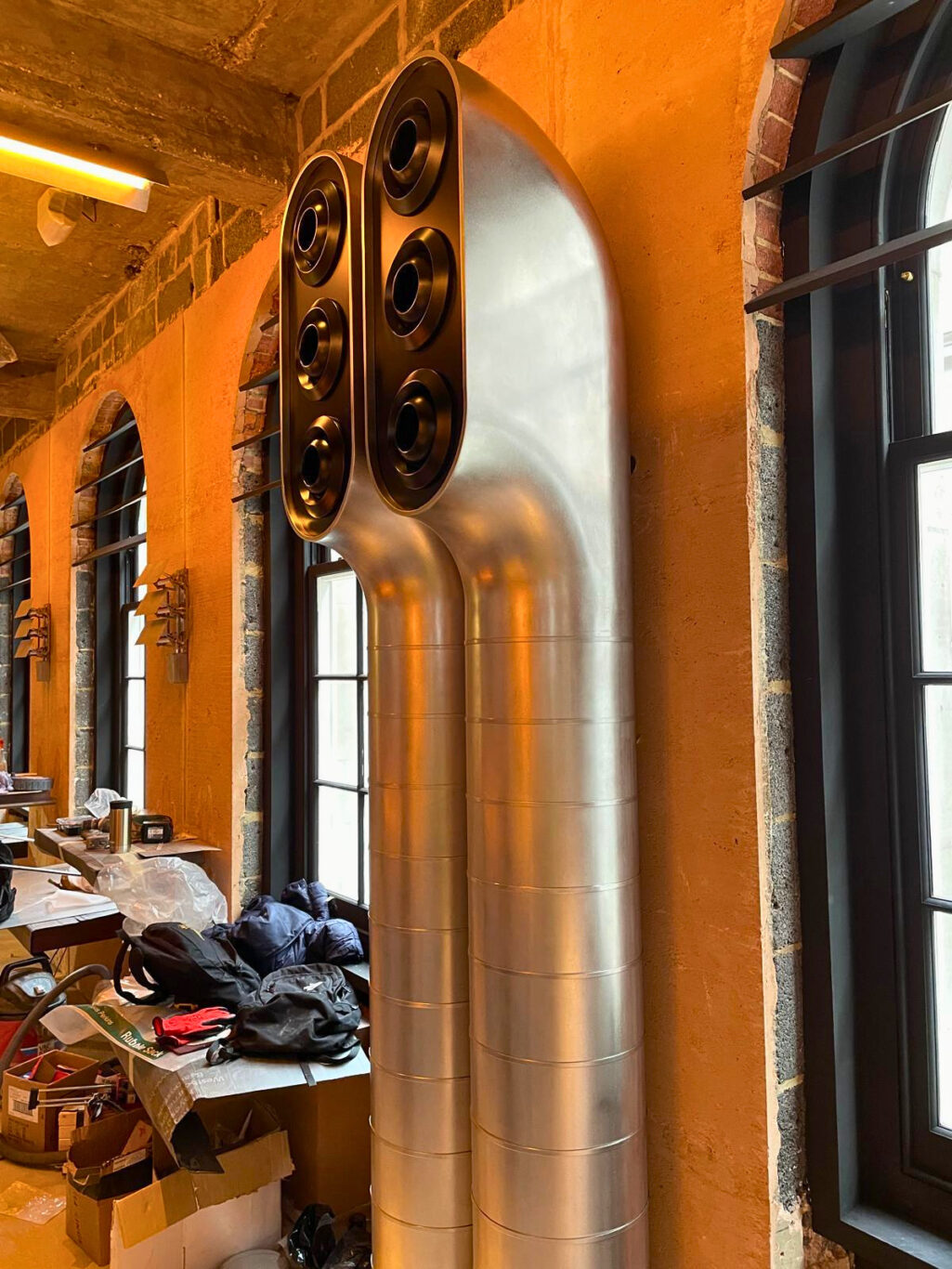
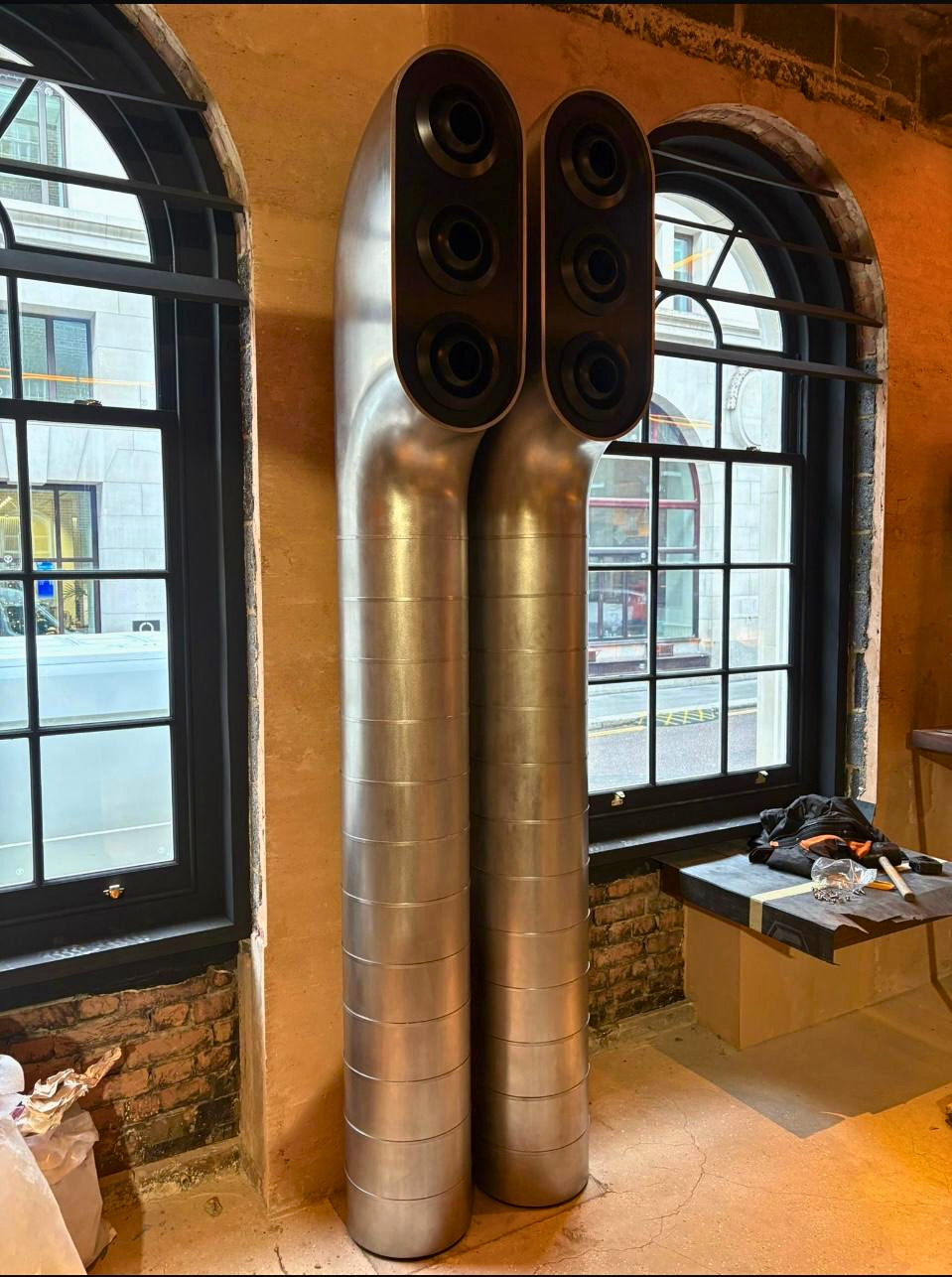
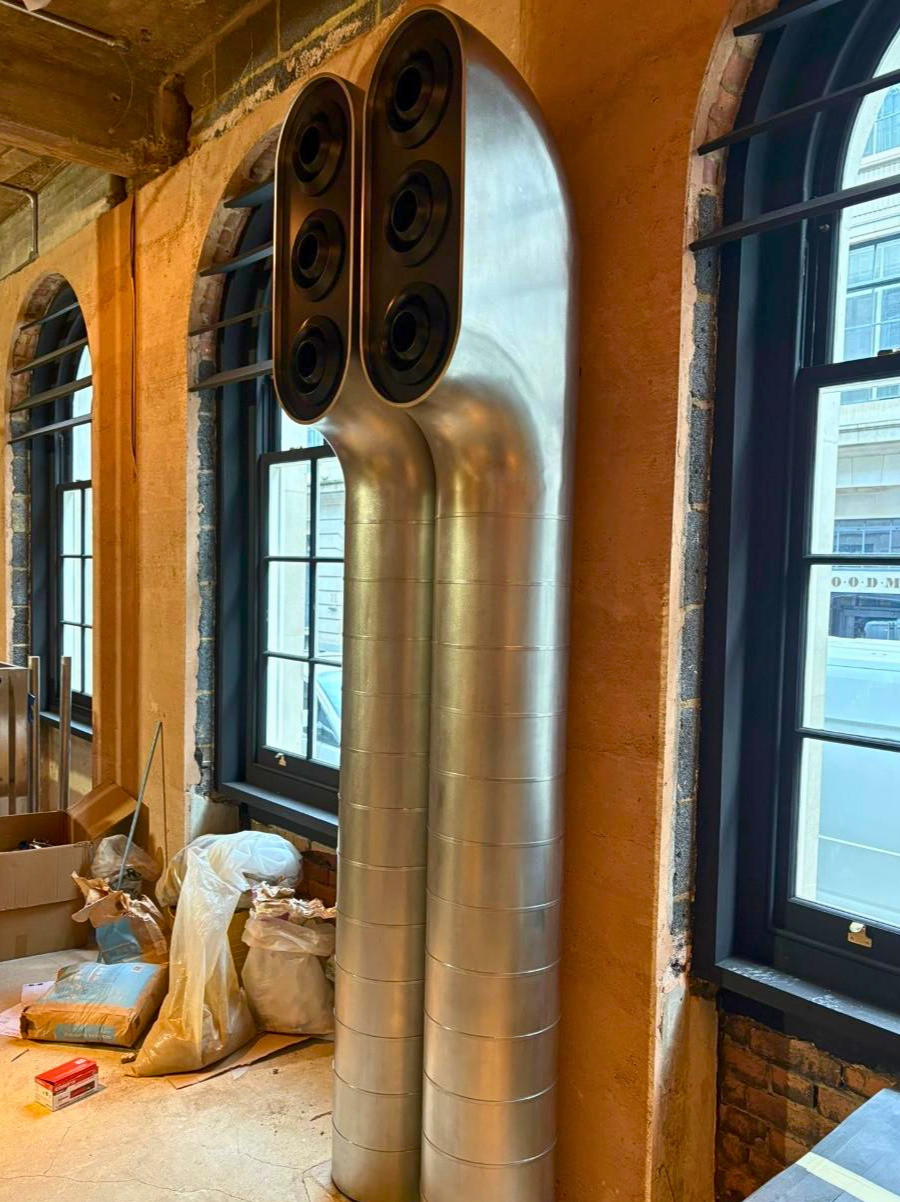
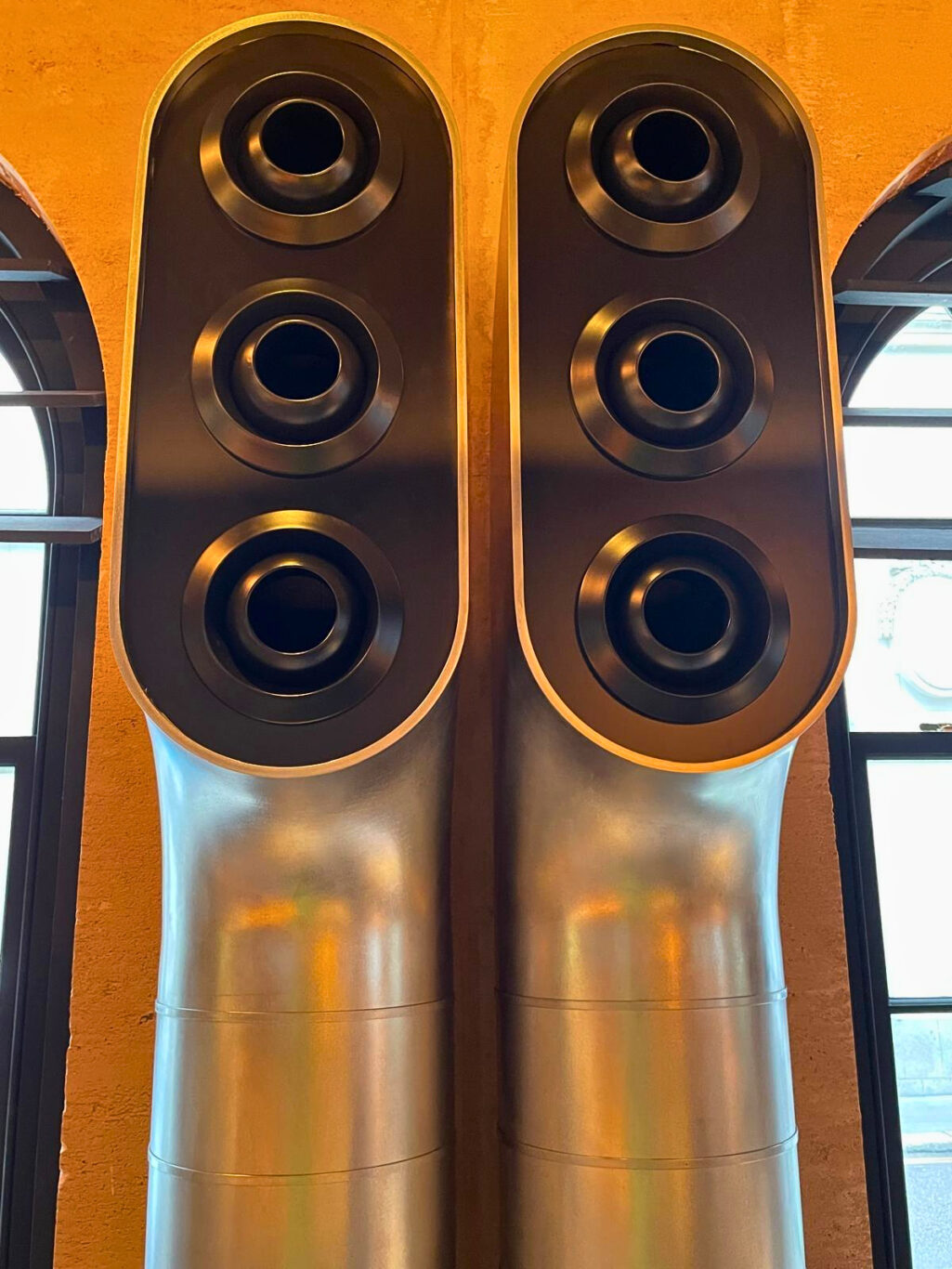
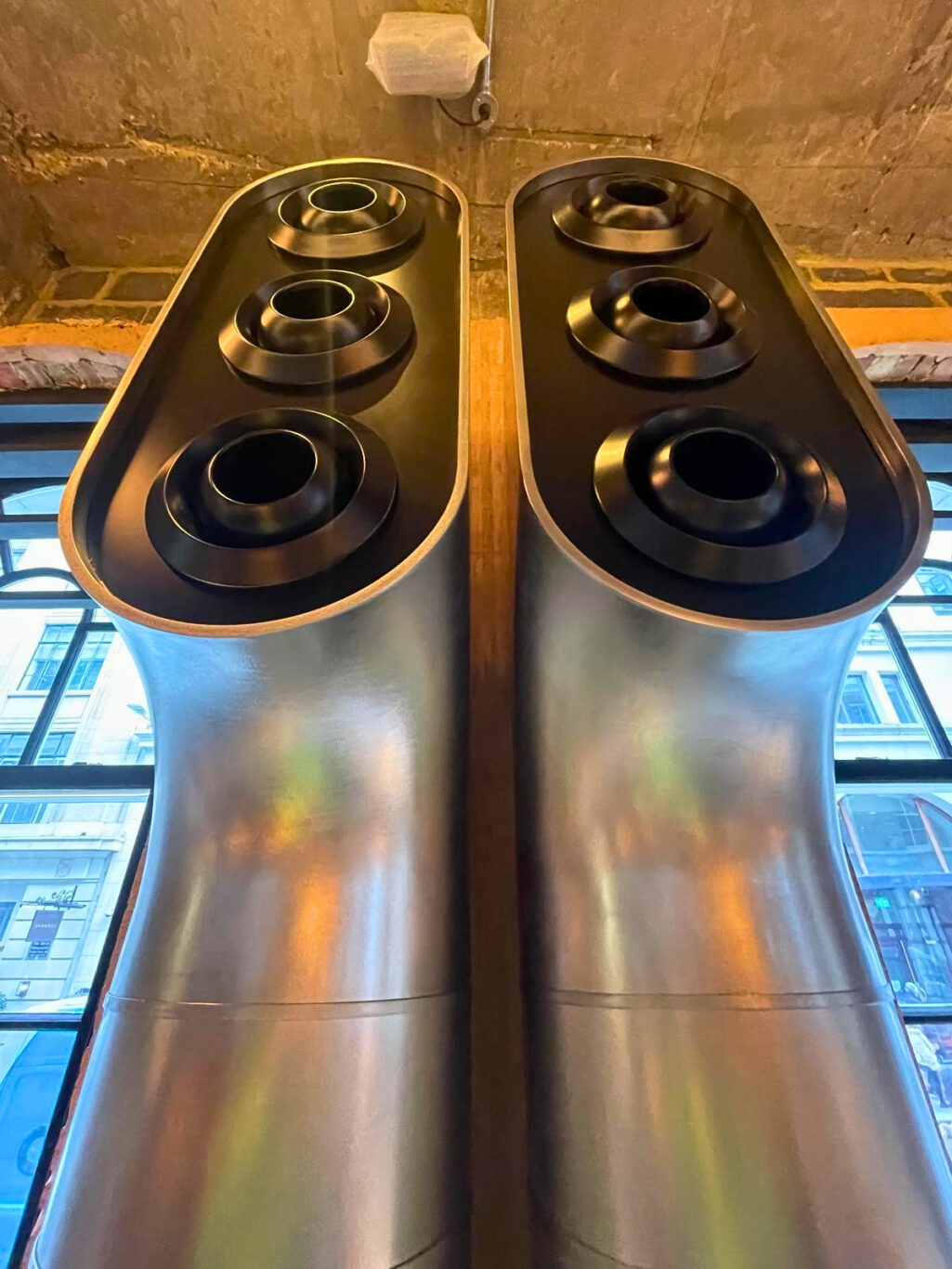
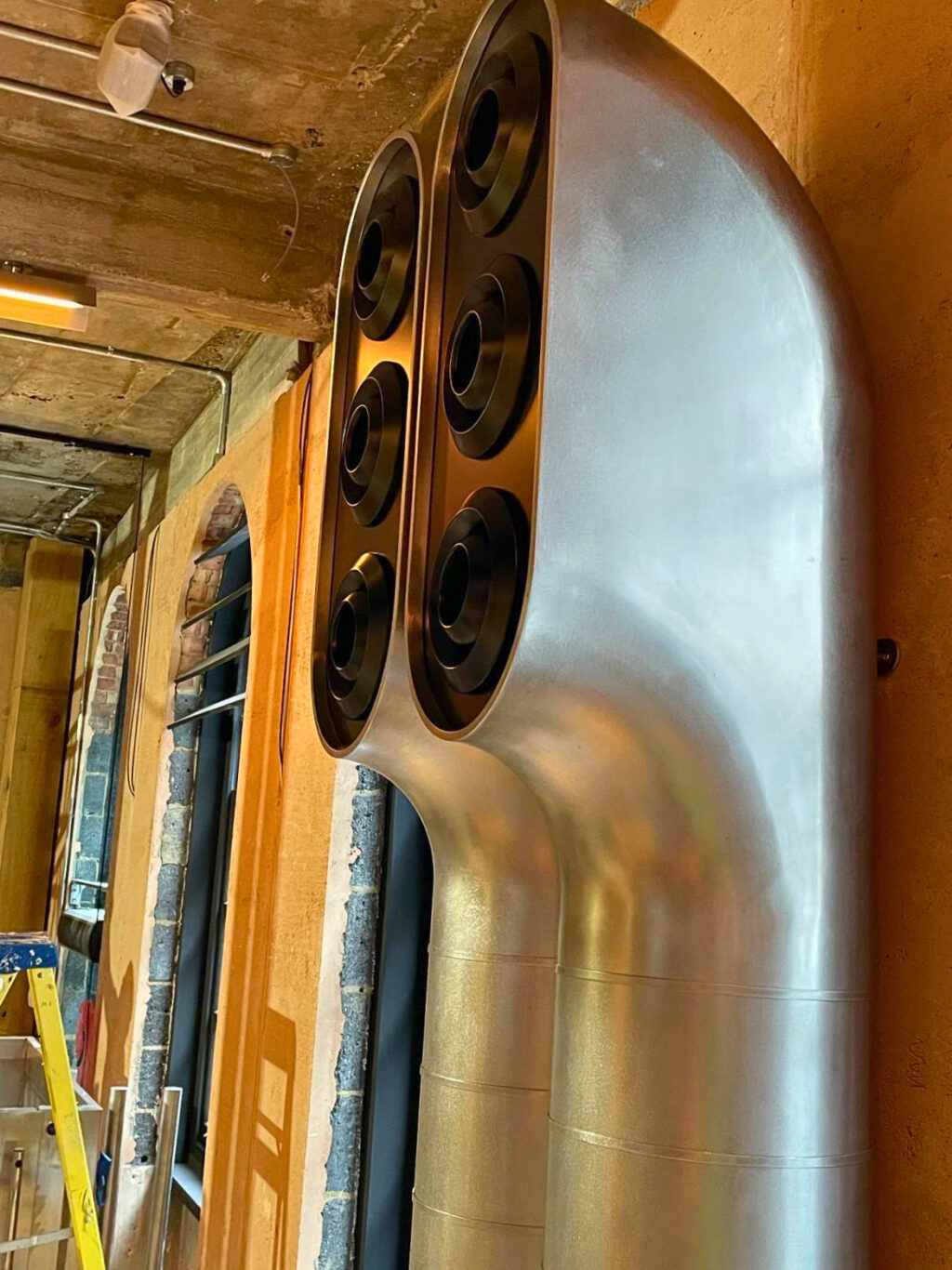
Working closely with CO:DE Studios, CDC Engineering manufactured four bespoke heating and ventilation flutes that combine technical performance with striking architectural design.
Standing 2.8 metres high with a 320mm diameter, each flute was fabricated from 316 grade stainless steel and finished with a high-quality satin brushed finish, providing exceptional durability while complementing the restaurant’s contemporary interior.
Unlike conventional ventilation ductwork, these bespoke flutes were designed to become a feature of the space, seamlessly integrating building services into the interior architecture.
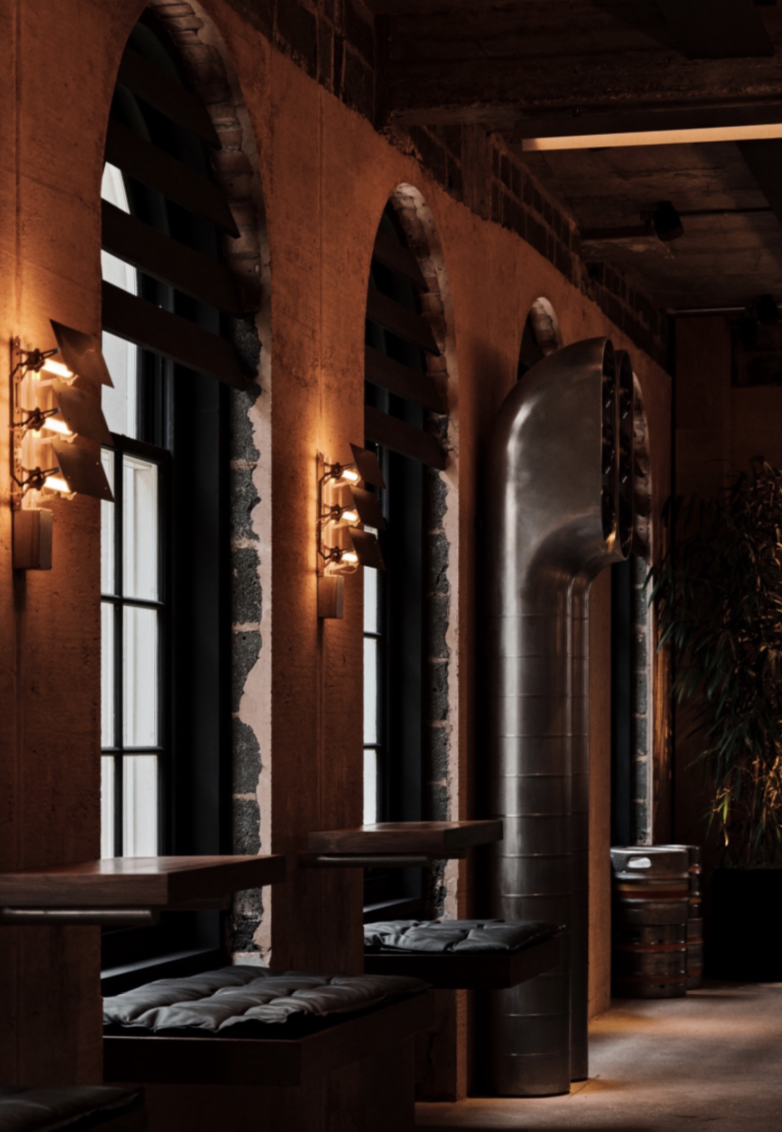
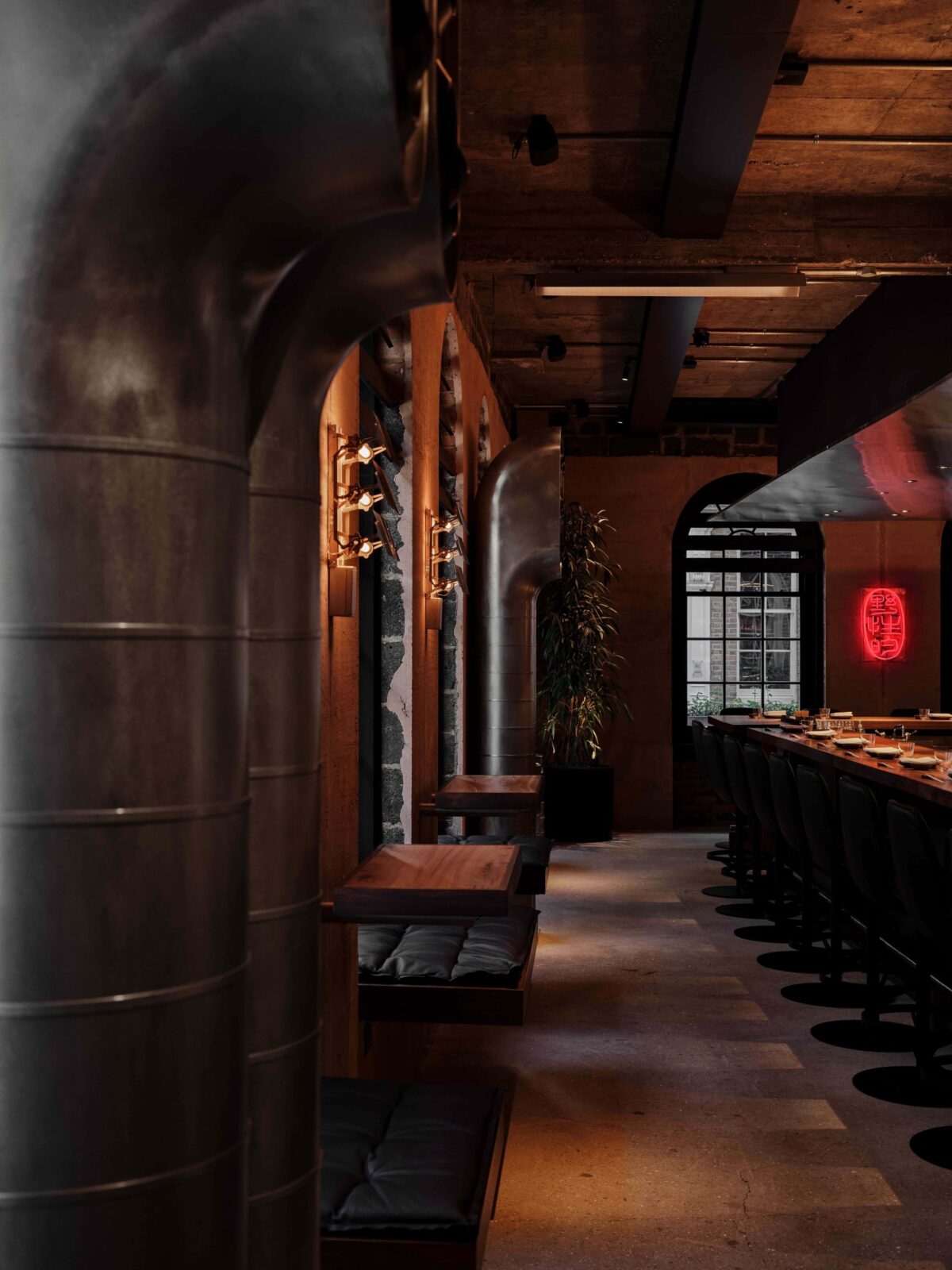
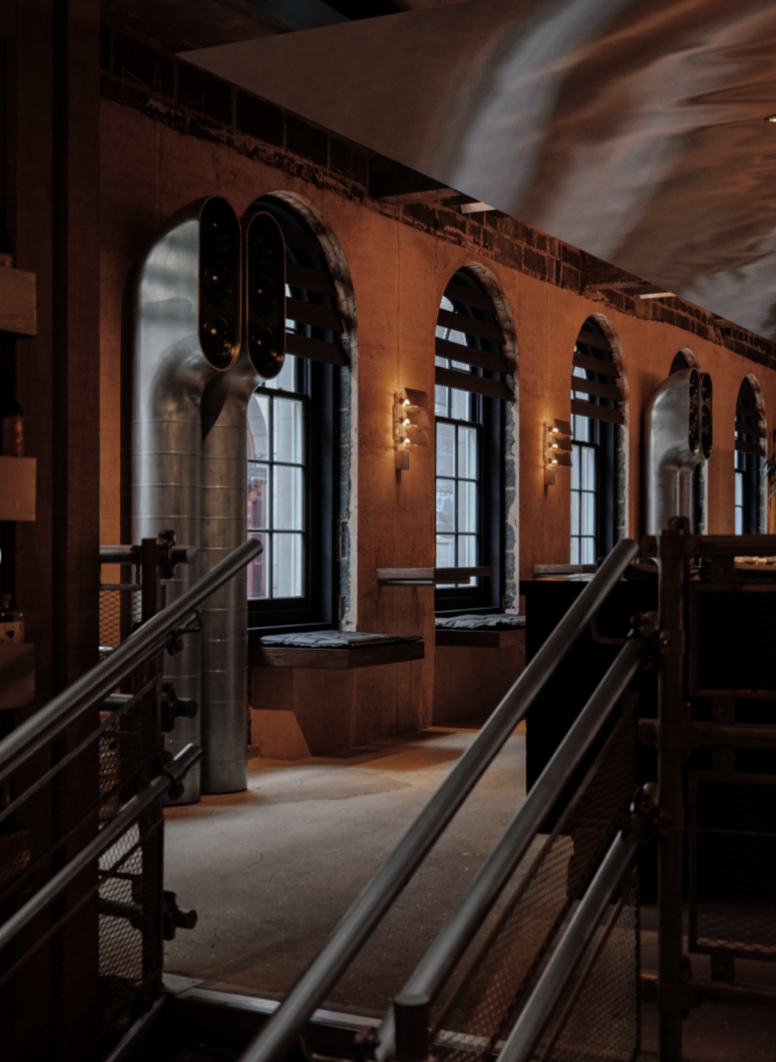
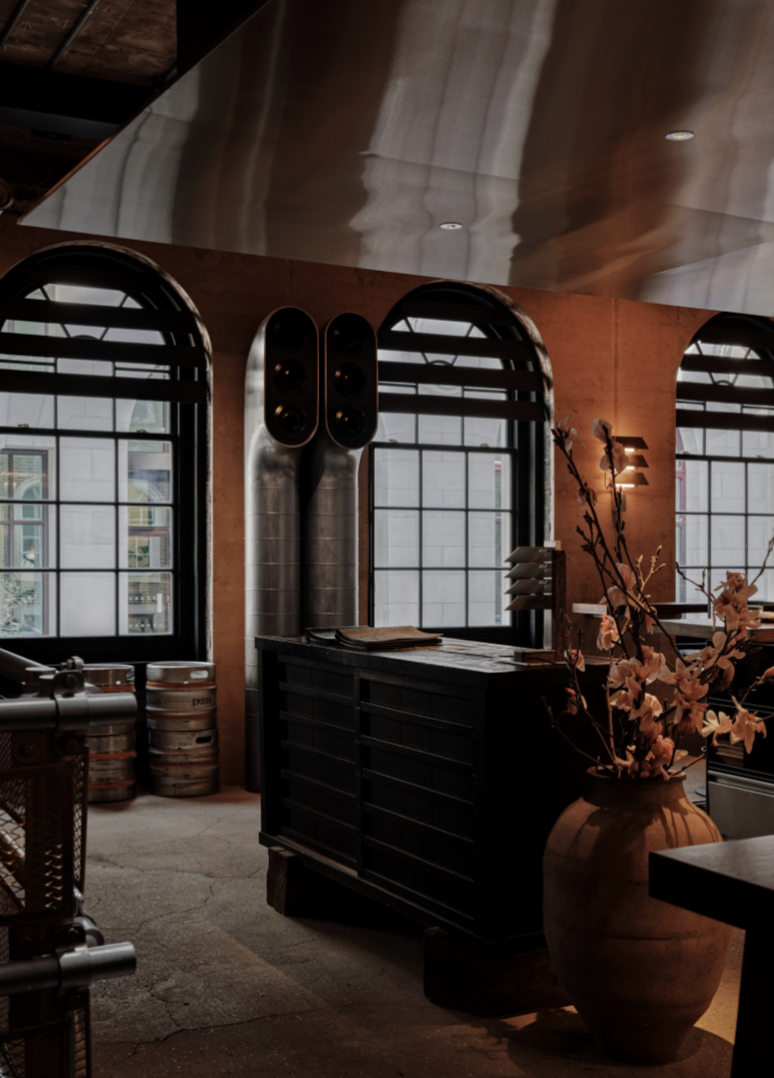
The scale and complex geometry of the flutes required exceptional fabrication accuracy and attention to detail throughout the manufacturing process.
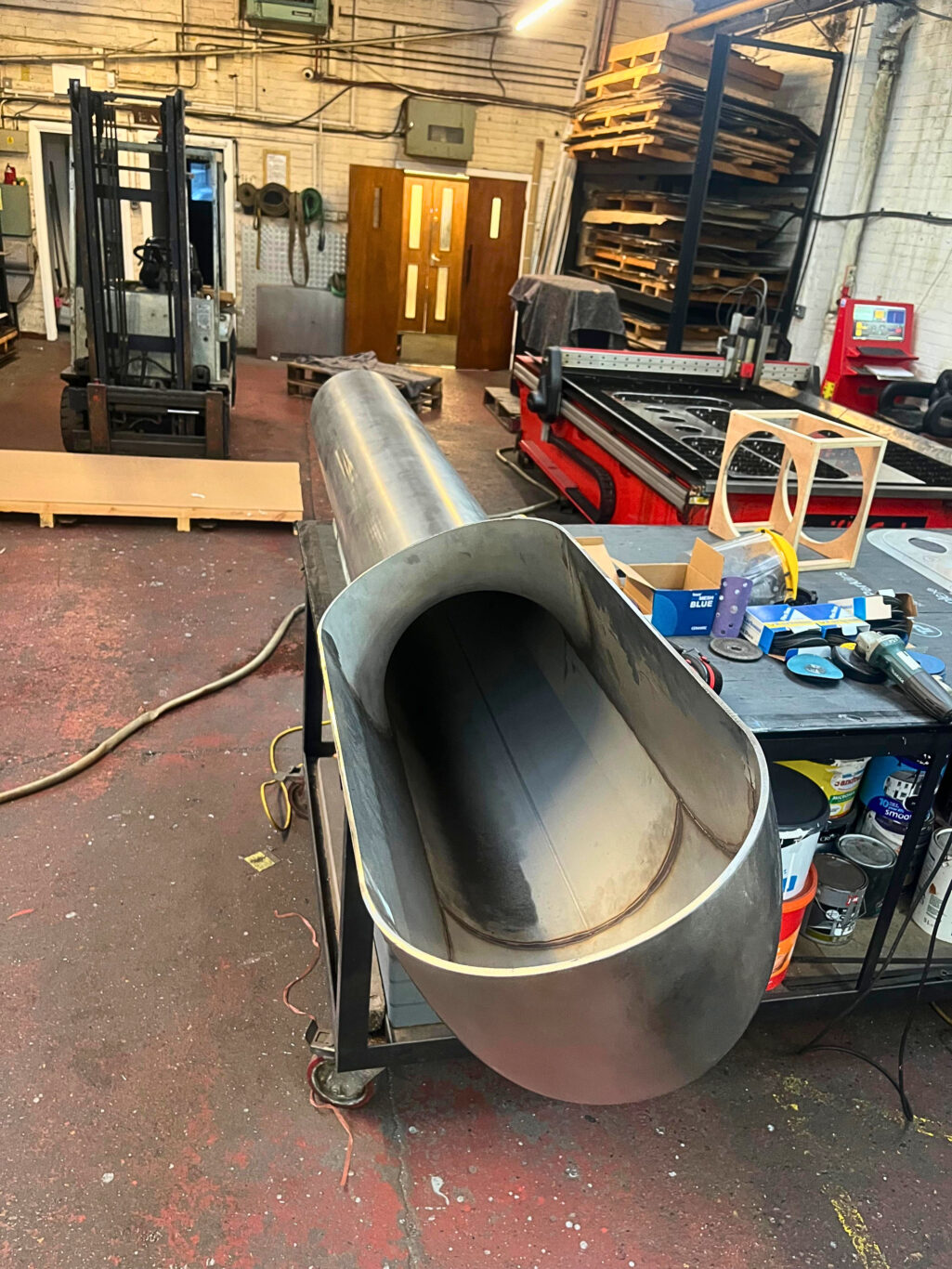
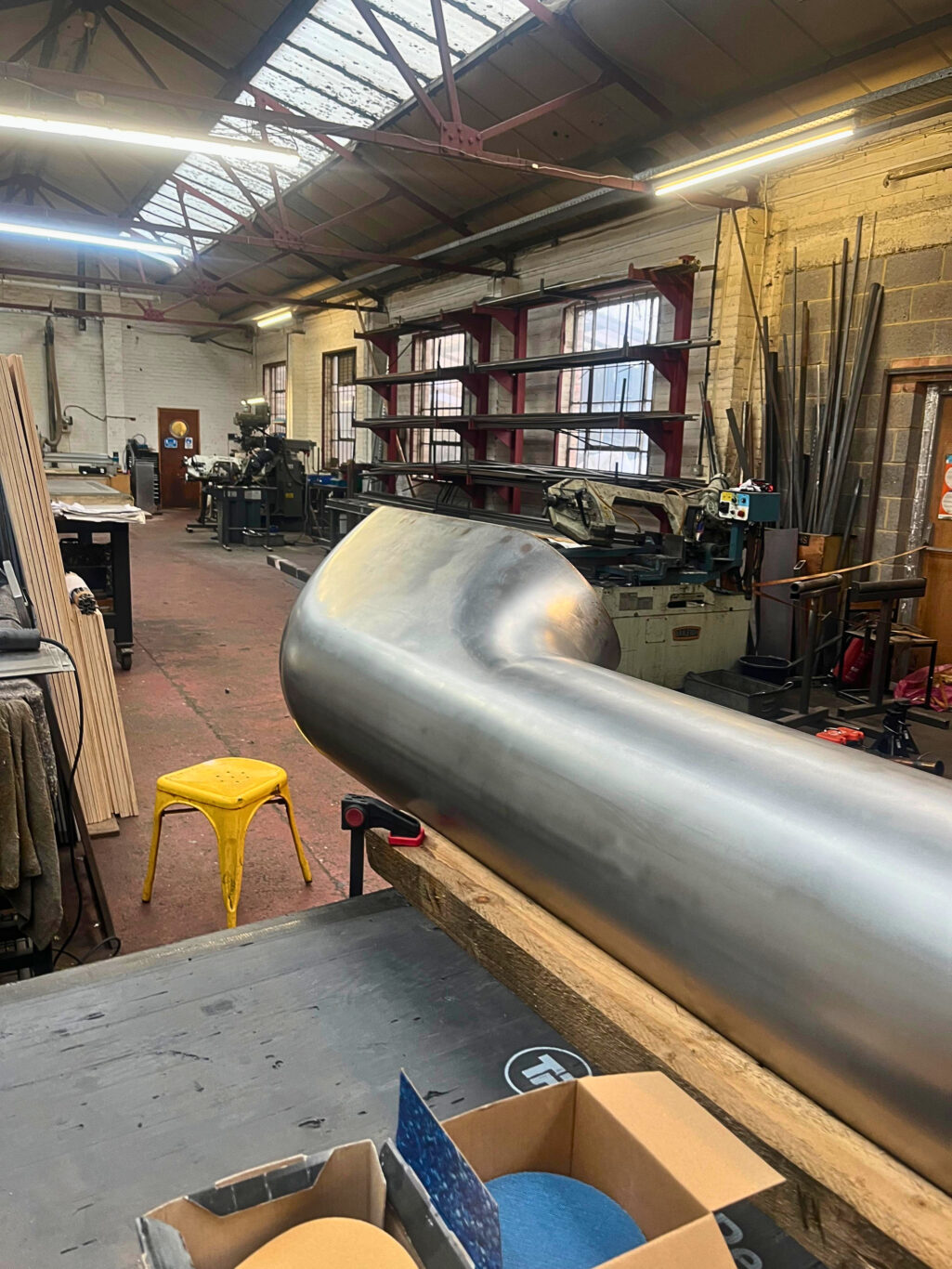
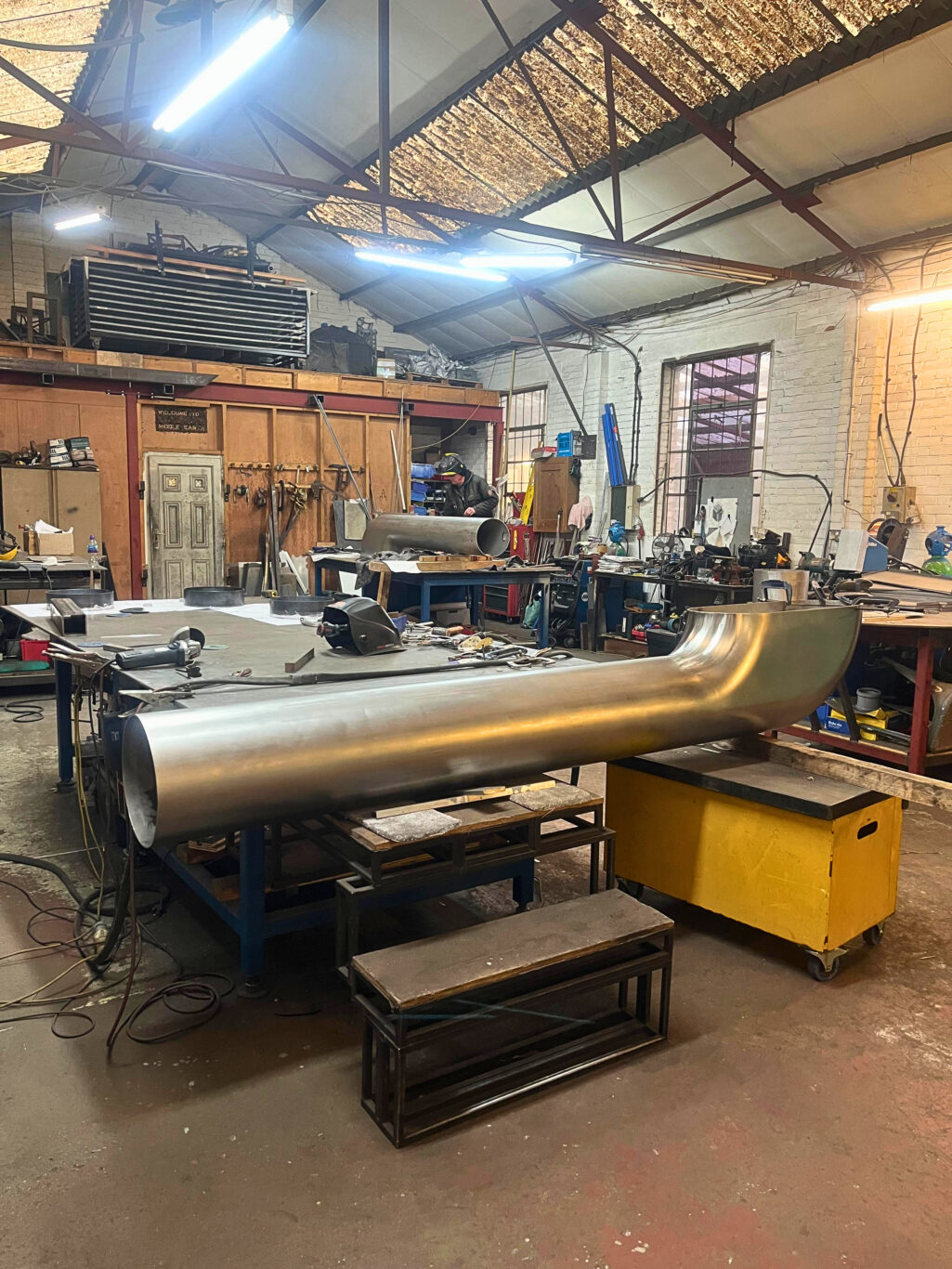
Our experienced fabricators utilised advanced TIG welding techniques to join multiple formed stainless steel sections, achieving clean, virtually seamless welds while maintaining the precise curvature of each component. Following fabrication, every flute was carefully satin brushed to produce a uniform finish across the entire surface.
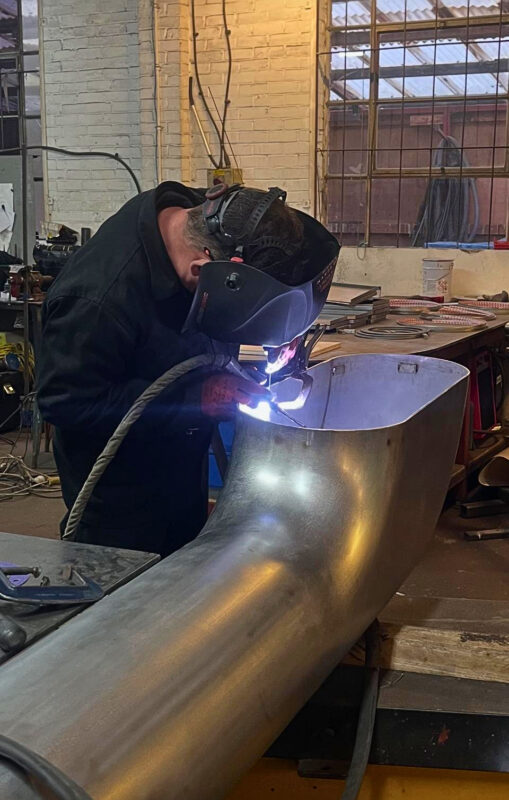
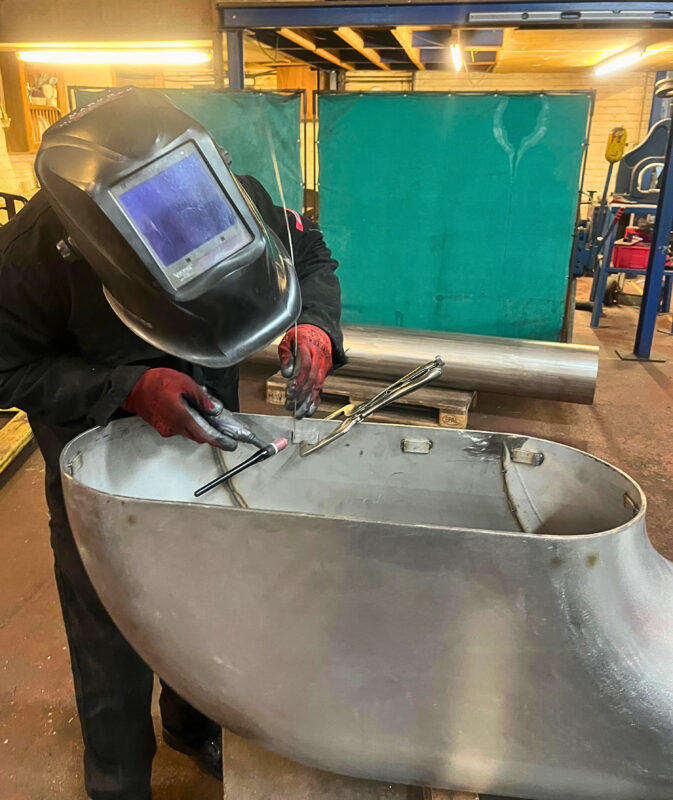
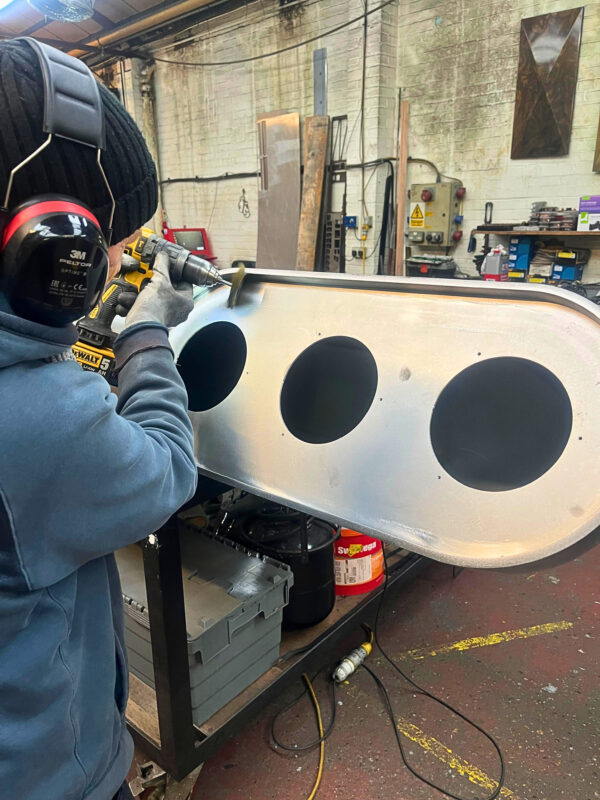
The ventilation outlets were finished with bespoke integrated inserts that provide efficient airflow while remaining subtle and visually refined, allowing the functional elements to blend effortlessly into the overall design.
This project demonstrates CDC Engineering’s capability to manufacture highly bespoke architectural metalwork where engineering precision and design excellence go hand in hand.
From concept through fabrication to installation, every stage was completed with meticulous attention to detail, ensuring the finished flutes met both the designers’ aesthetic vision and the project’s technical requirements.
CDC Engineering partners with architects, designers, fit-out contractors and hospitality brands to manufacture exceptional bespoke metalwork for commercial interiors across London and the UK.
Whether your project requires feature metalwork, stainless steel fabrication, architectural ductwork or bespoke design details, our experienced team can deliver from concept through to installation.
Get in touch with CDC Engineering to discuss your next project.
Felix Warley is one of Essex’s most distinctive premium dining destinations, renowned for its luxurious interiors and striking design aesthetic. Designed by hospitality specialists DesignLSM, the restaurant transformed a former public house into an elegant all-day dining venue featuring dramatic architectural elements, statement bars and bespoke metalwork throughout.
CDC Engineering was appointed to manufacture and install a range of bespoke architectural metalwork packages that became key features within the finished interior.
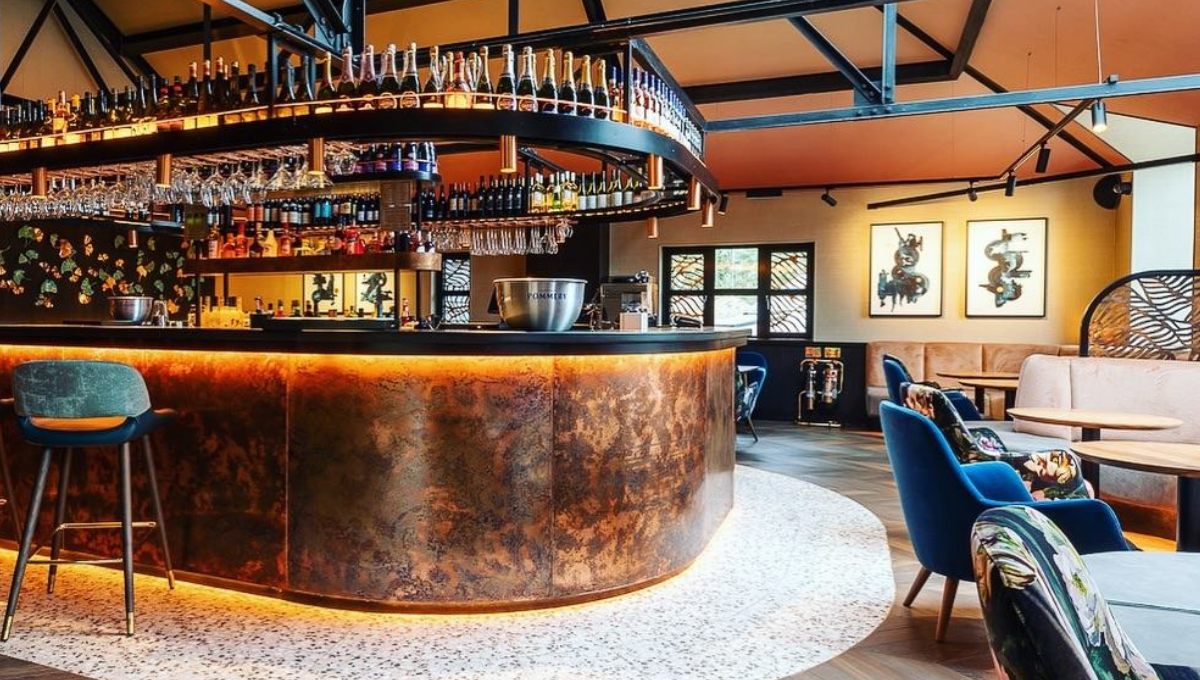
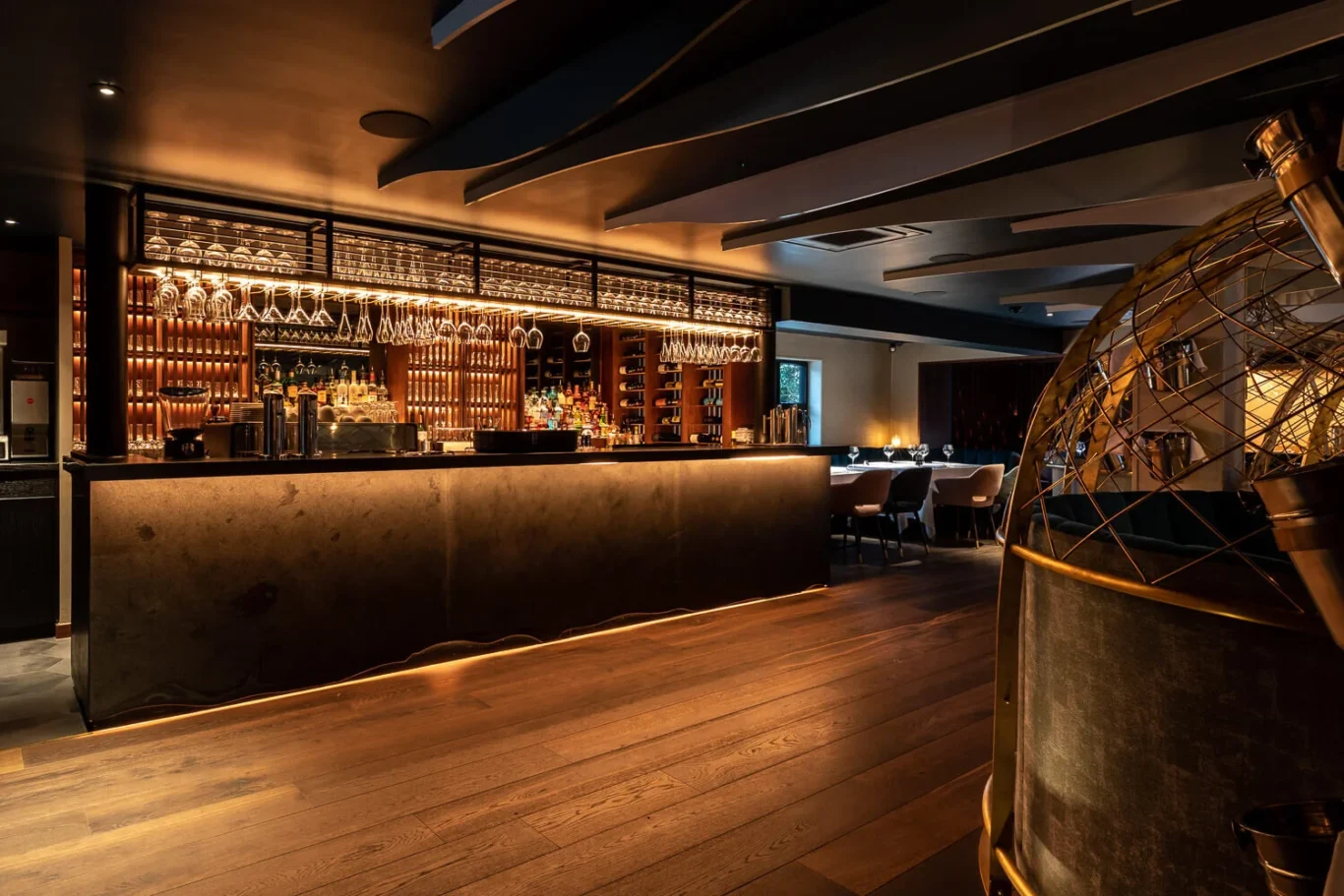
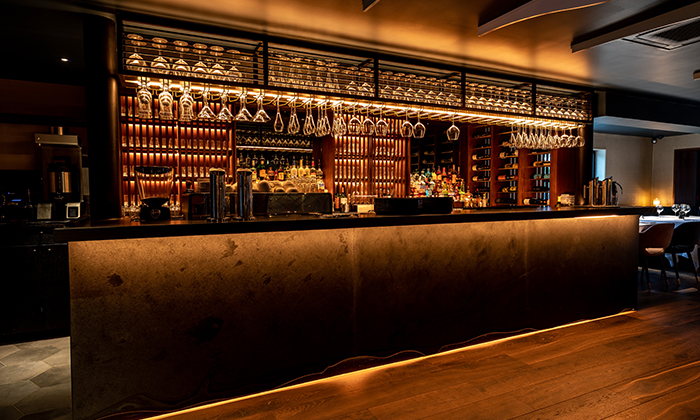
A key feature of the Felix Warley interior is its collection of statement bar installations, designed to create a memorable focal point within the restaurant.
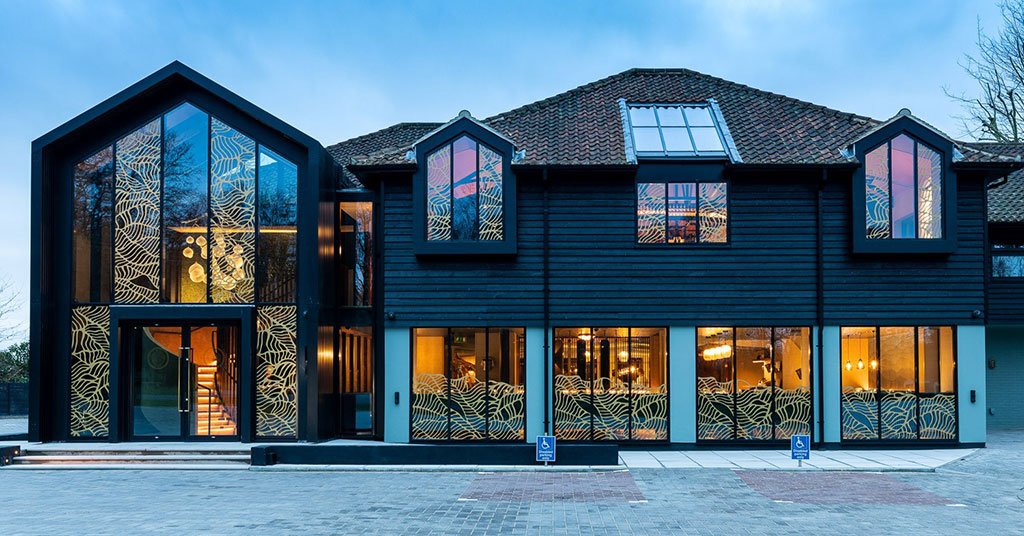
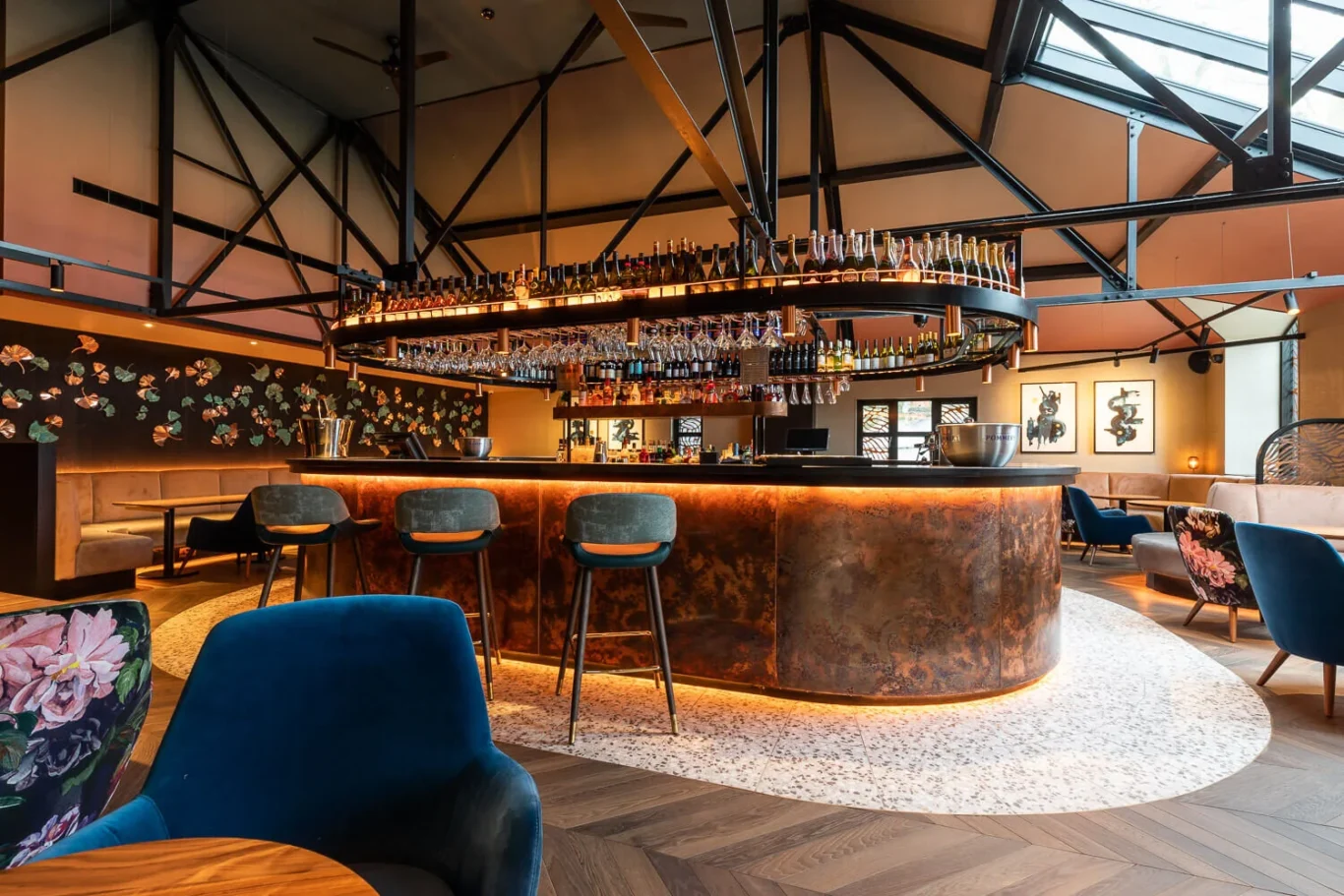
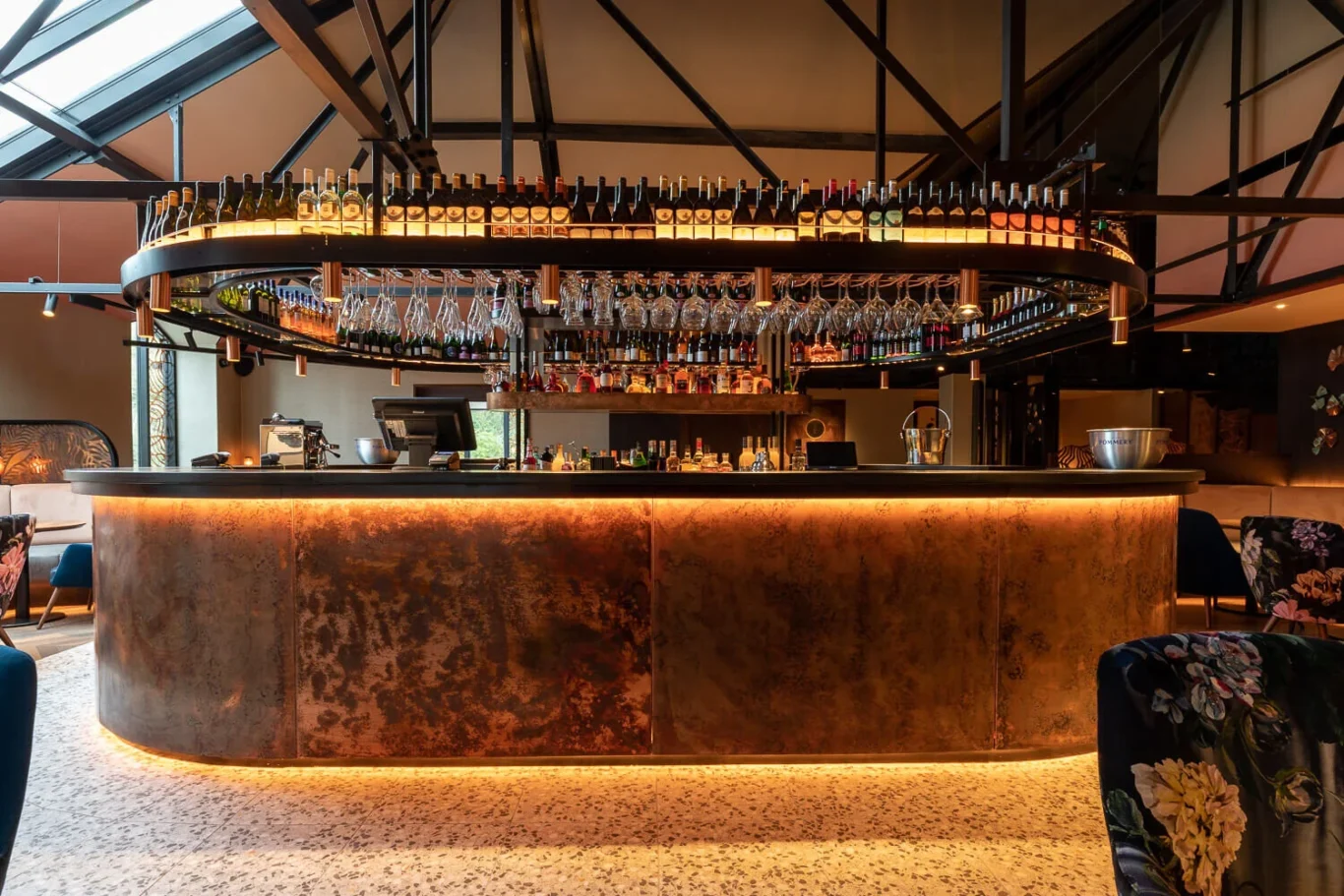
CDC Engineering manufactured and installed both the striking central circular bar and an additional feature service bar, including the supporting metal framework, bar fronts and integrated worktops. The bars were finished with bespoke acid-etched metal cladding, creating a rich textured appearance that complements the restaurant’s luxurious interior palette.
Suspended above the circular bar, CDC Engineering also fabricated the bespoke drinks gantry, designed to showcase bottles and glassware while reinforcing the dramatic architectural presence of the space.
The combination of acid-etched finishes, precision metal fabrication and carefully detailed worktops resulted in a collection of feature installations that blend practicality with high-end hospitality design.
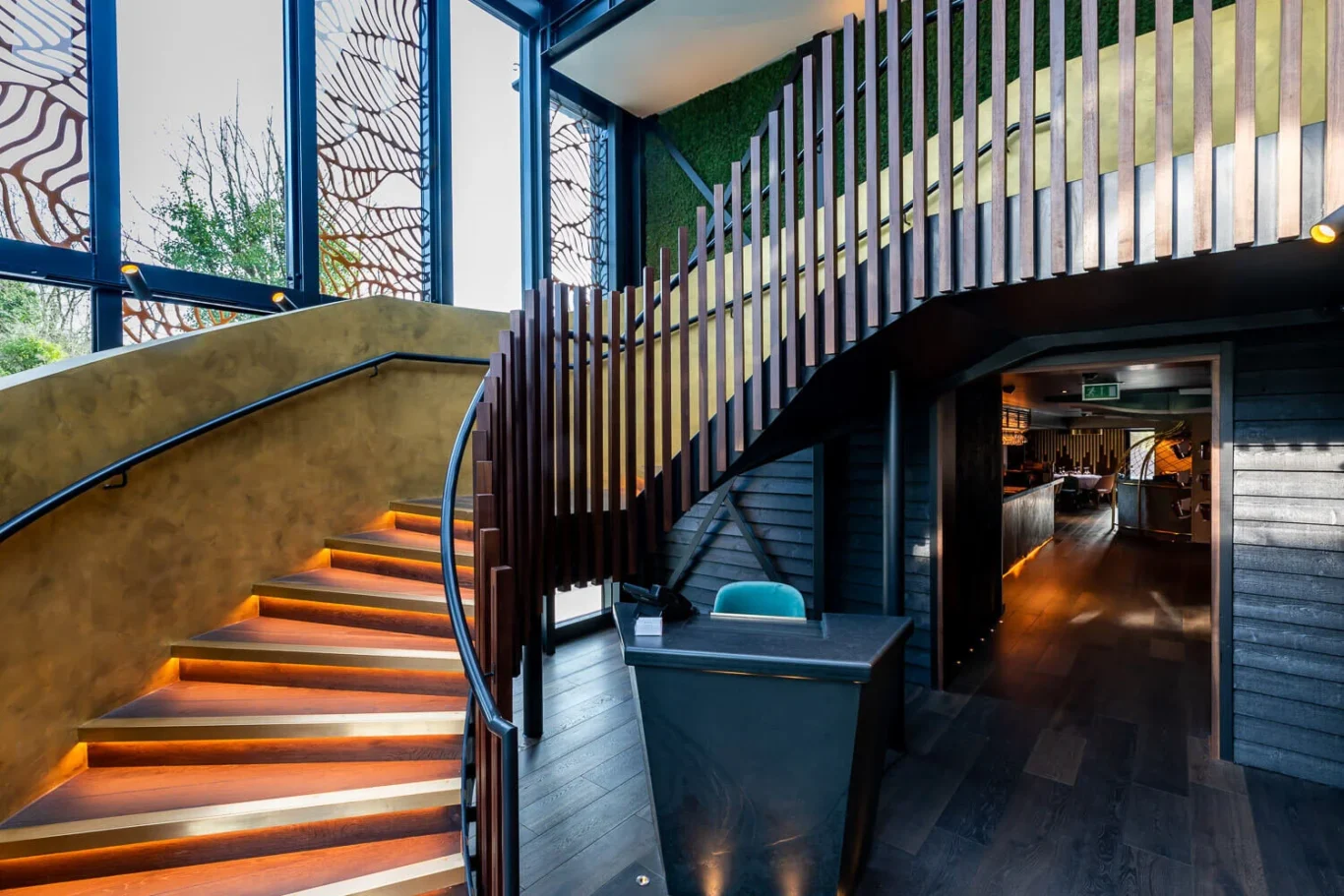
In addition to the bar and gantry installations, CDC Engineering manufactured and installed bespoke balustrades and a variety of acid-etched decorative metalwork features throughout the restaurant.
Designed to integrate seamlessly with the overall interior concept, the fabricated elements combine functionality with craftsmanship, enhancing the guest experience while maintaining the refined aesthetic envisioned by the design team.
Each component was manufactured to exact specifications, ensuring seamless integration with surrounding finishes and architectural features.
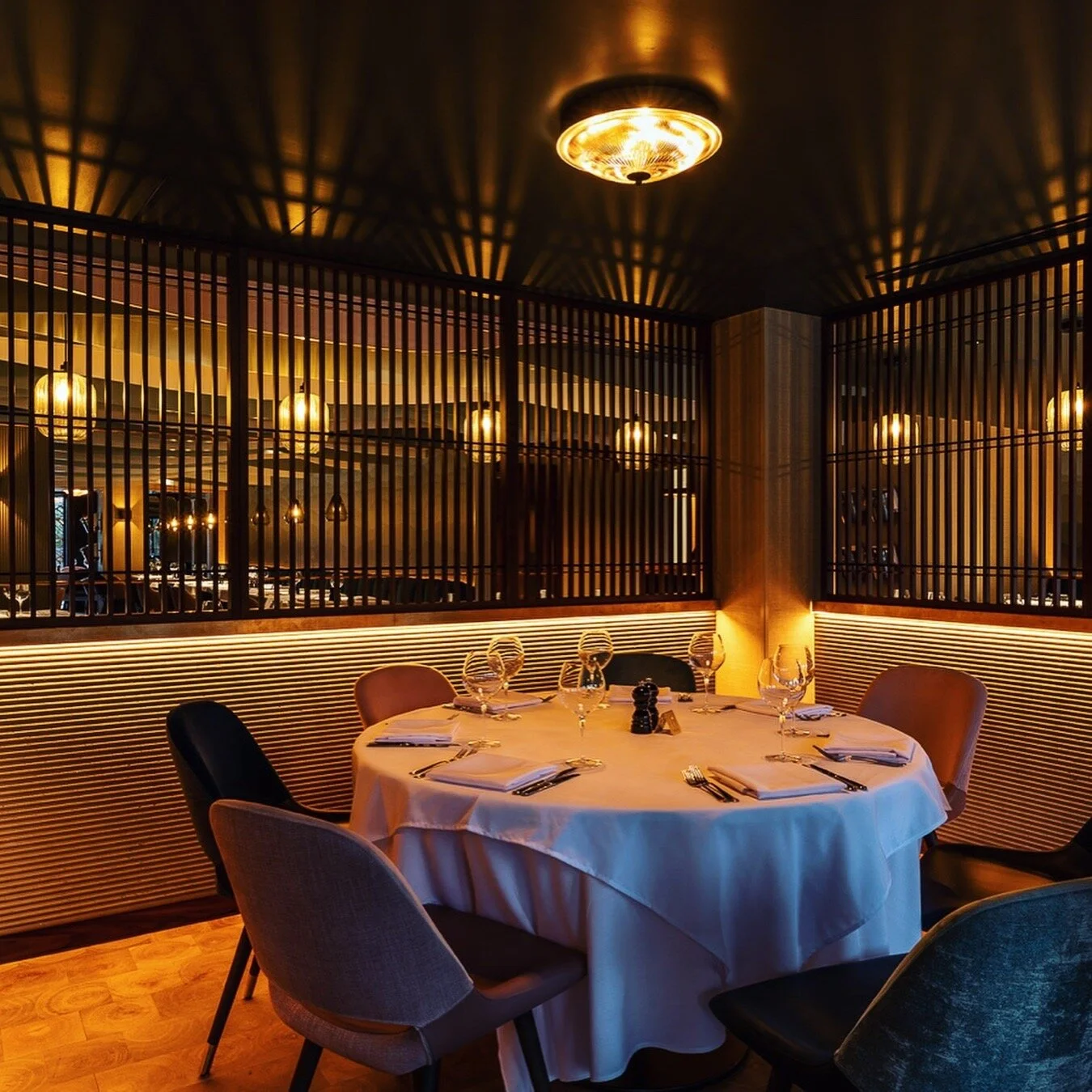
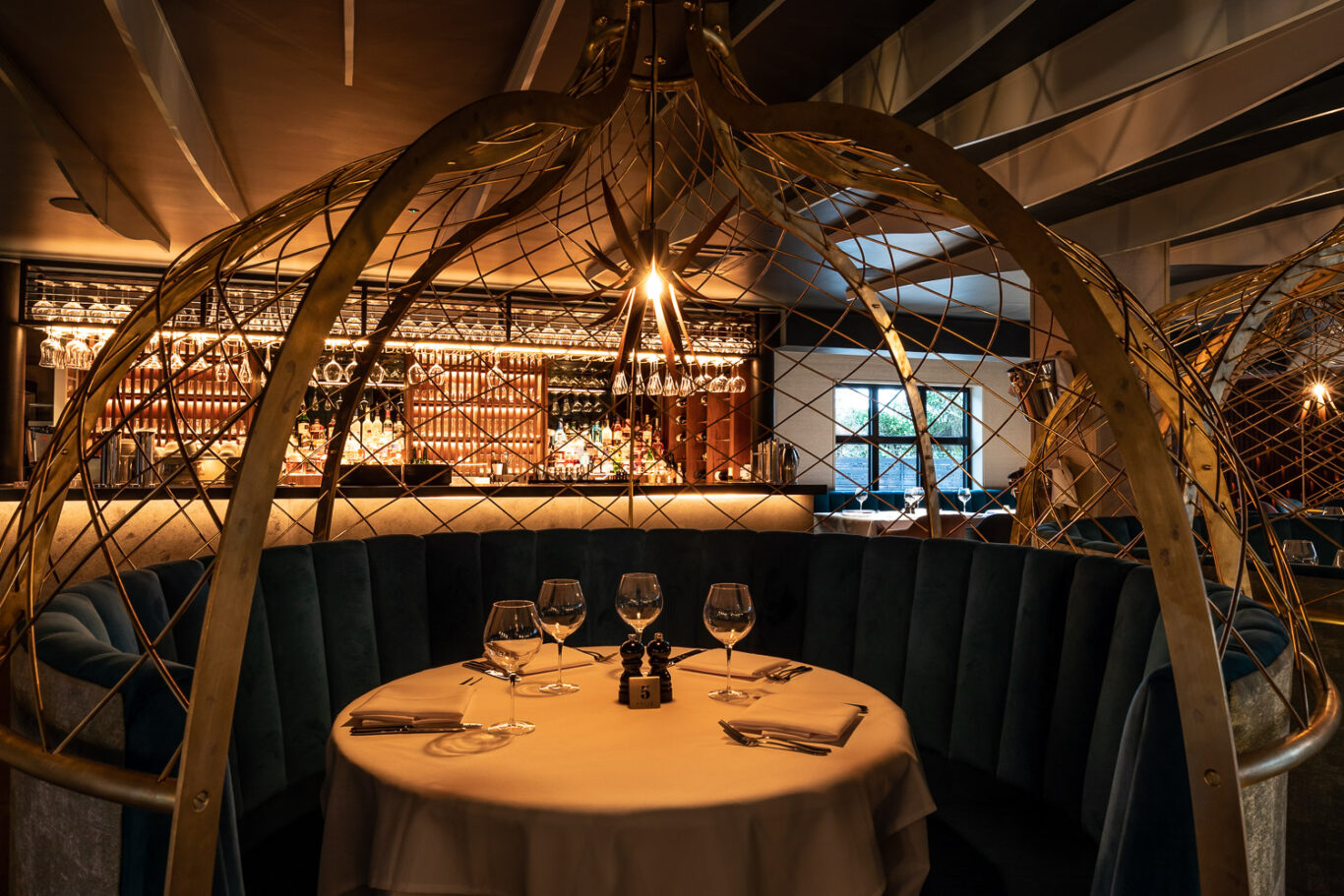
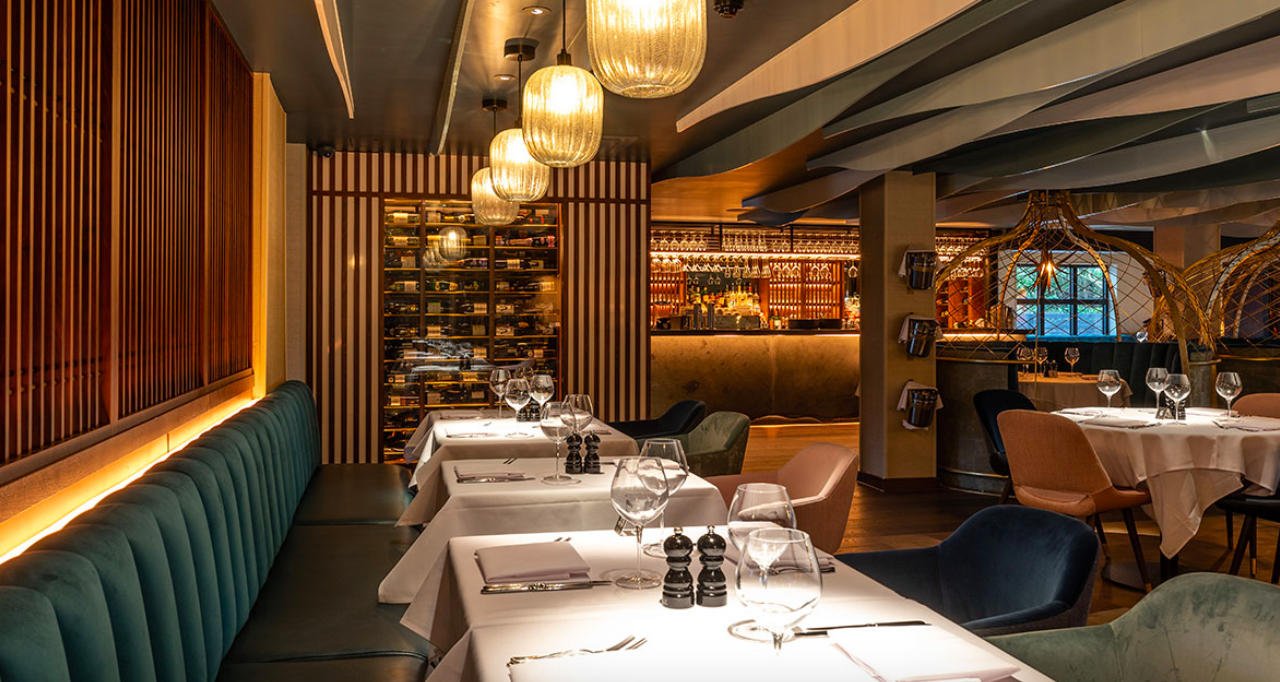
This project demonstrates CDC Engineering’s ability to translate ambitious hospitality design concepts into high-quality manufactured metalwork.
From bespoke etched finishes and feature gantries to balustrades and decorative architectural details, our team delivered precision-engineered solutions that contribute to the unique atmosphere and identity of Felix Warley.
CDC Engineering works closely with architects, designers and contractors to deliver bespoke architectural metalwork for restaurants, hotels, commercial spaces and luxury interiors.
Whether your project requires feature bars, balustrades, decorative metalwork, specialist finishes or custom fabricated elements, our team can support your project from concept through to installation.
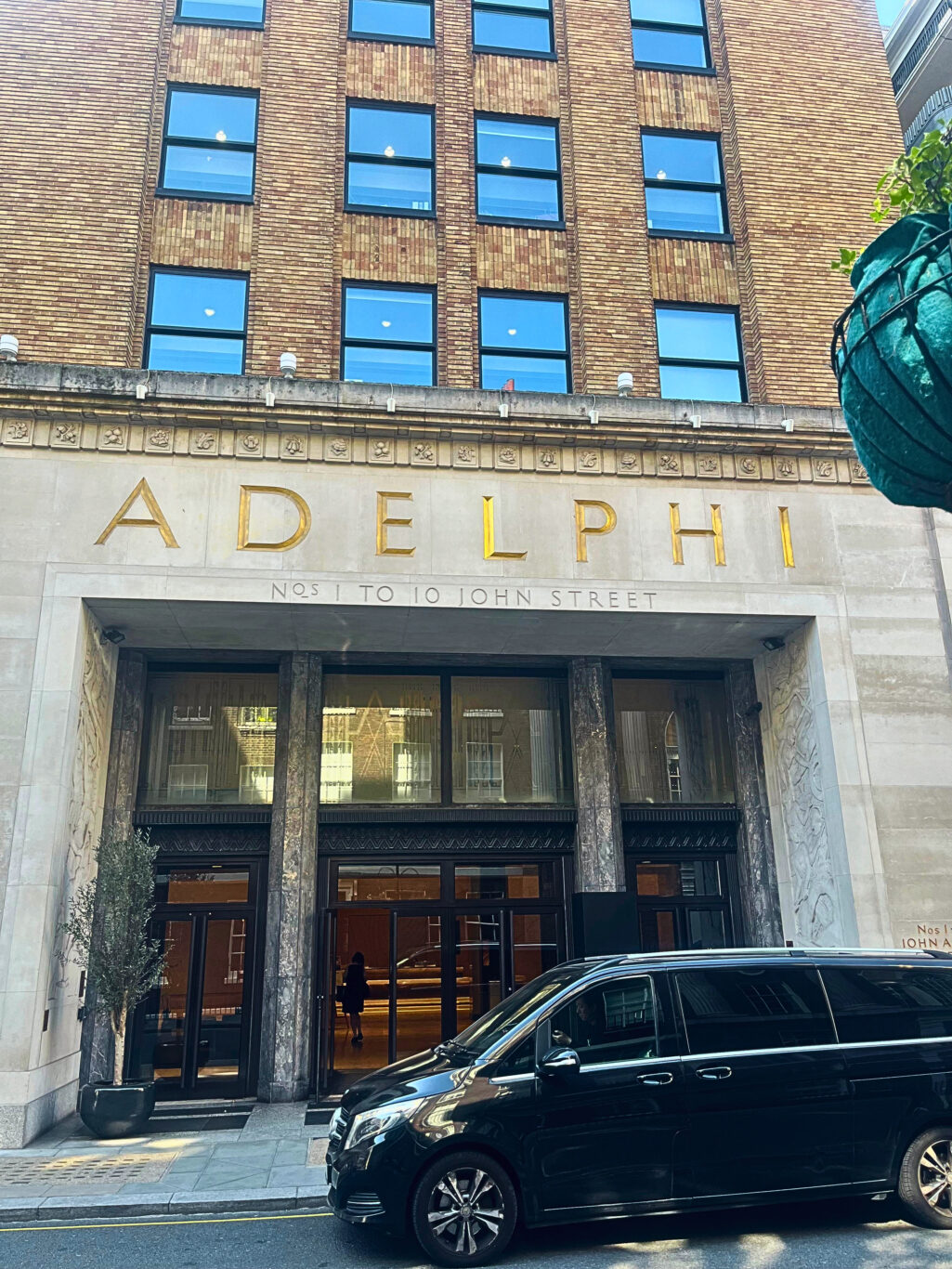
Located on London’s iconic Embankment, The Adelphi Building is one of the capital’s most recognisable Art Deco landmarks, renowned for its architectural heritage and elegant design.
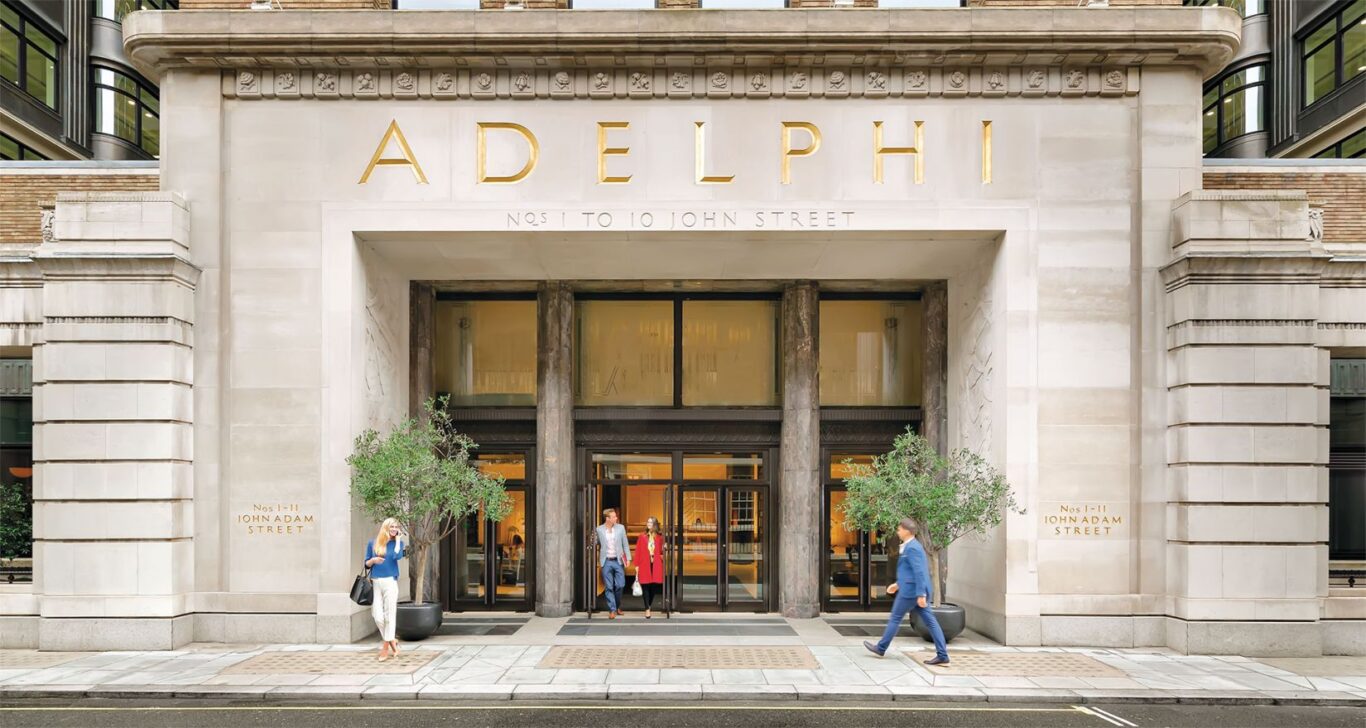
Working on behalf of Intrabuilt, CDC Engineering was commissioned to manufacture, supply and install a series of bespoke decorative railings as part of ongoing improvement works to the building.
Drawing inspiration from the building’s original Art Deco character, the railings feature a distinctive geometric pattern that complements the architecture while providing a contemporary, high-quality finish. Fabricated from mild steel, each section was precision manufactured in-house before receiving a durable dark brown powder-coated finish, selected to harmonise with the surrounding stonework and historic façade.
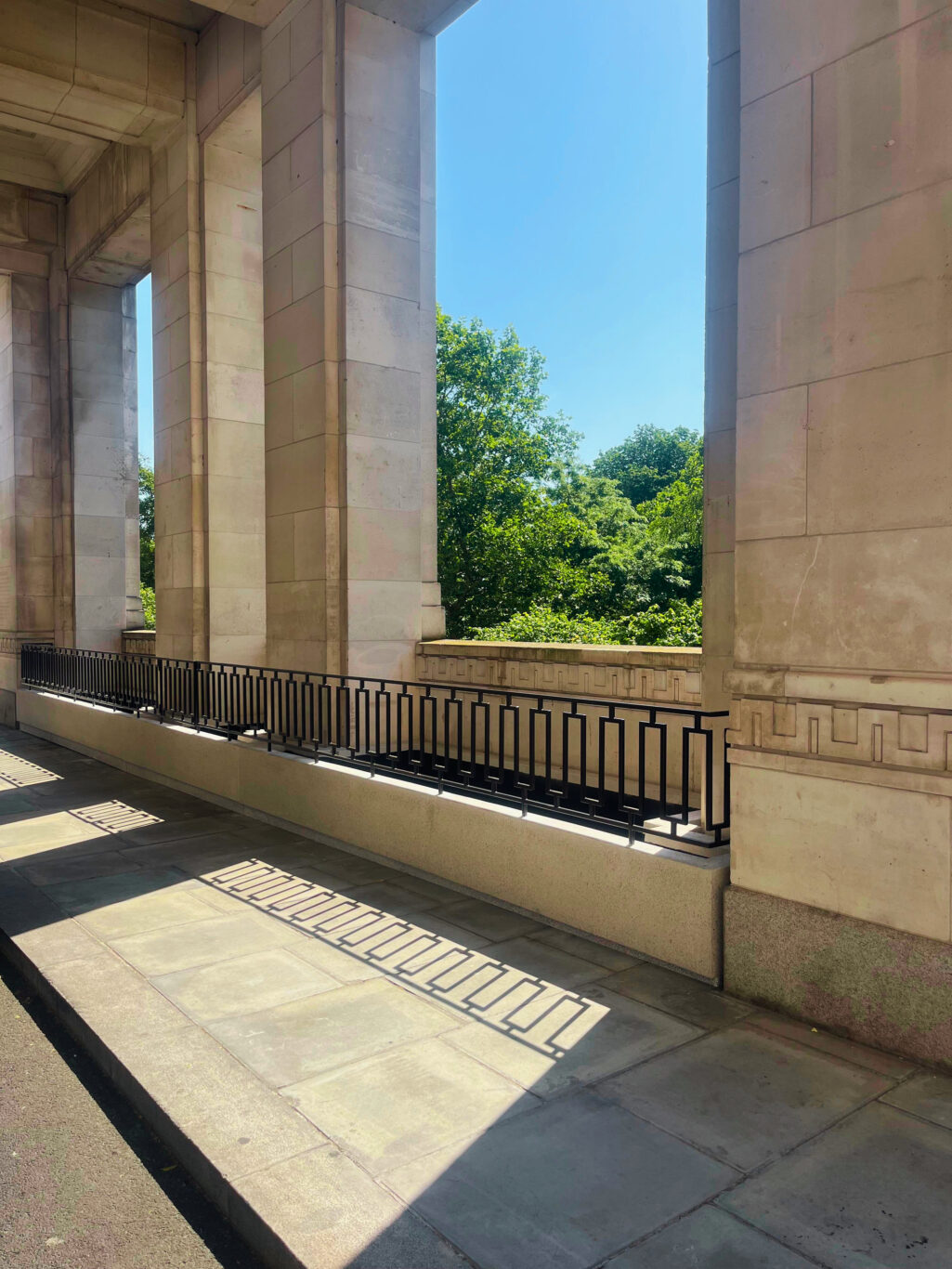
The project required careful attention to detail to ensure the new metalwork respected the building’s heritage while meeting modern standards of quality, durability and performance. From fabrication through to final installation, CDC Engineering delivered a complete package, ensuring a seamless fit and finish throughout.
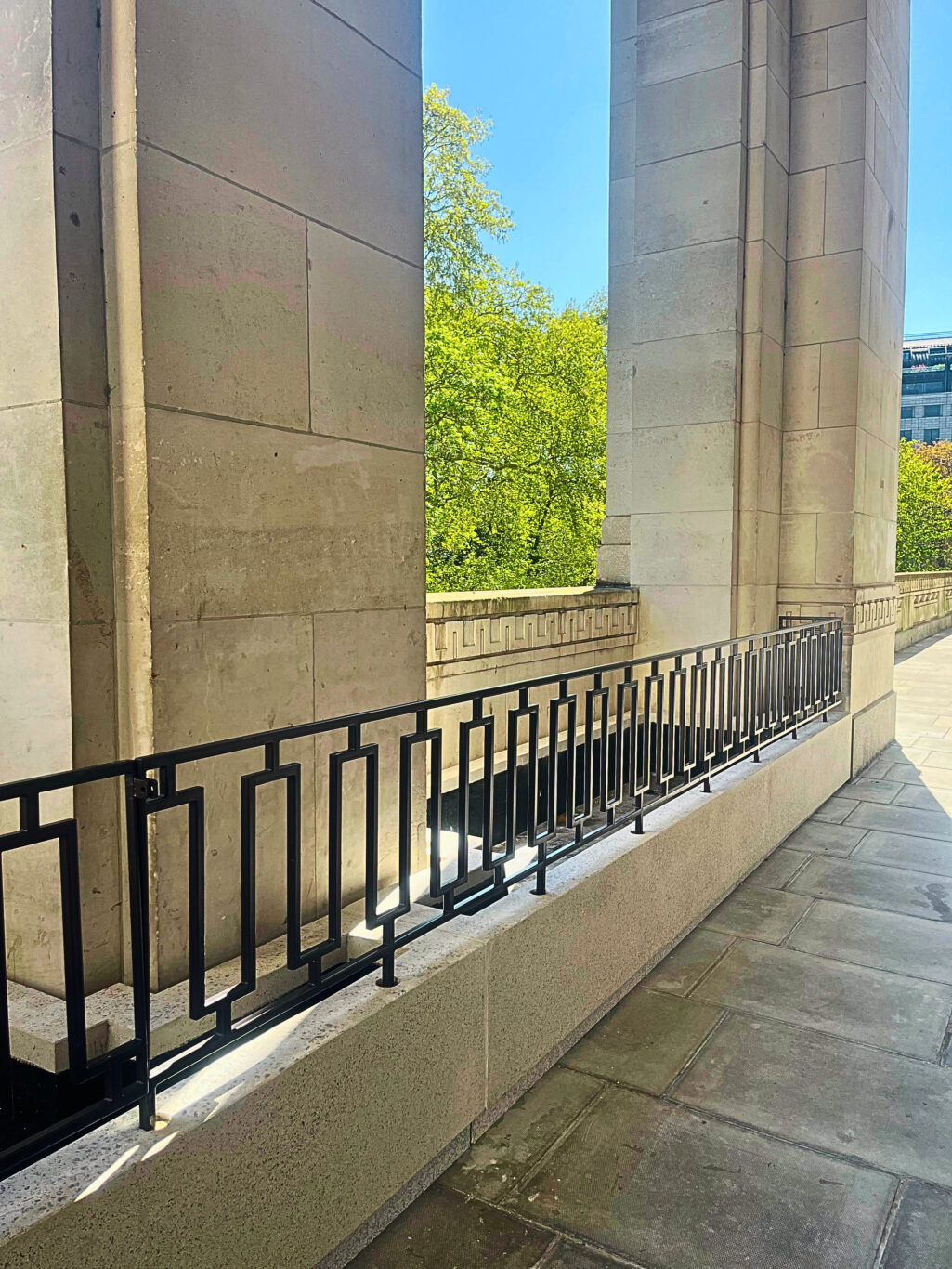
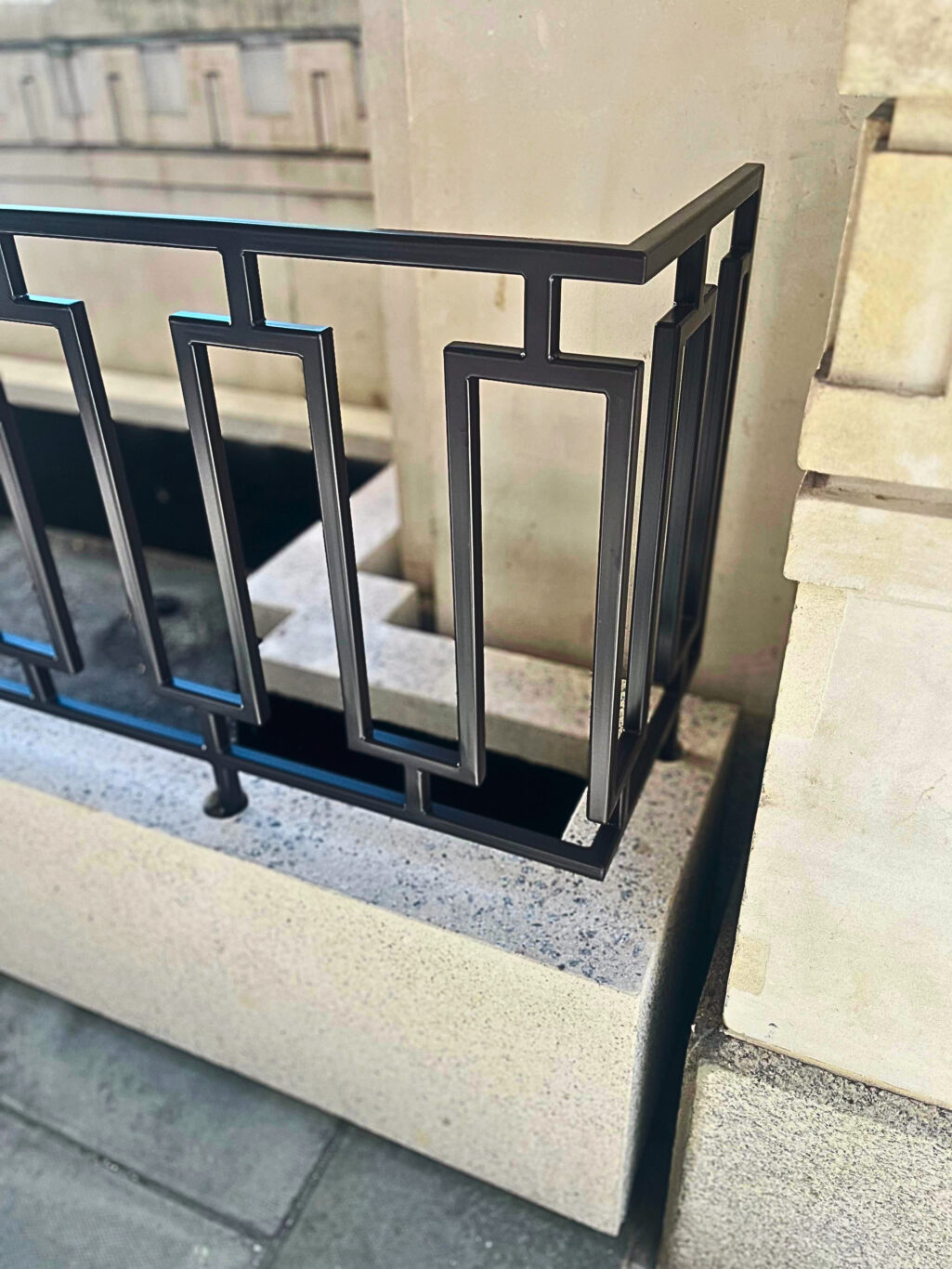
The completed railings enhance both the safety and appearance of the external areas, providing a refined architectural feature that sits naturally within one of London’s most prestigious historic buildings.
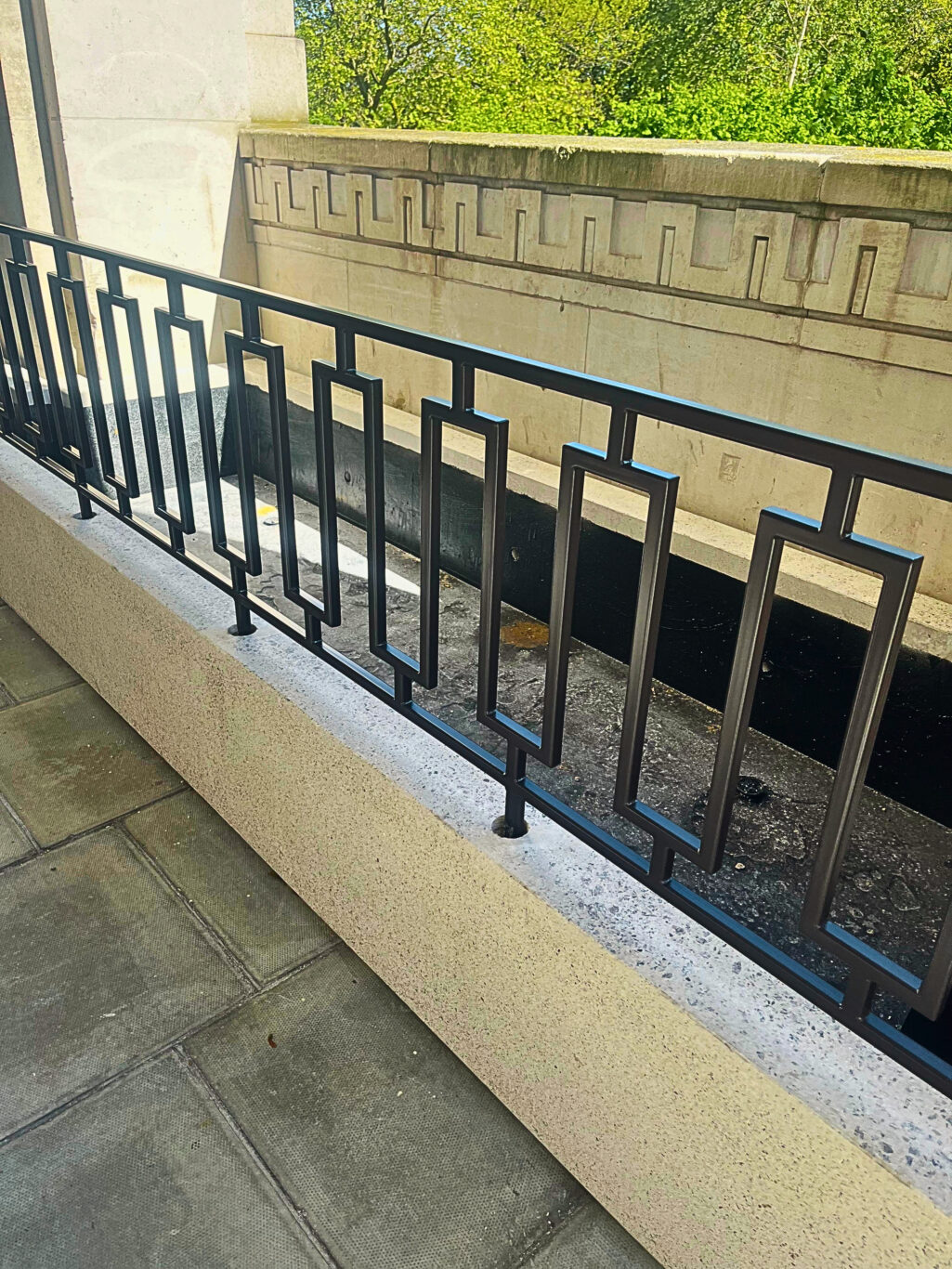
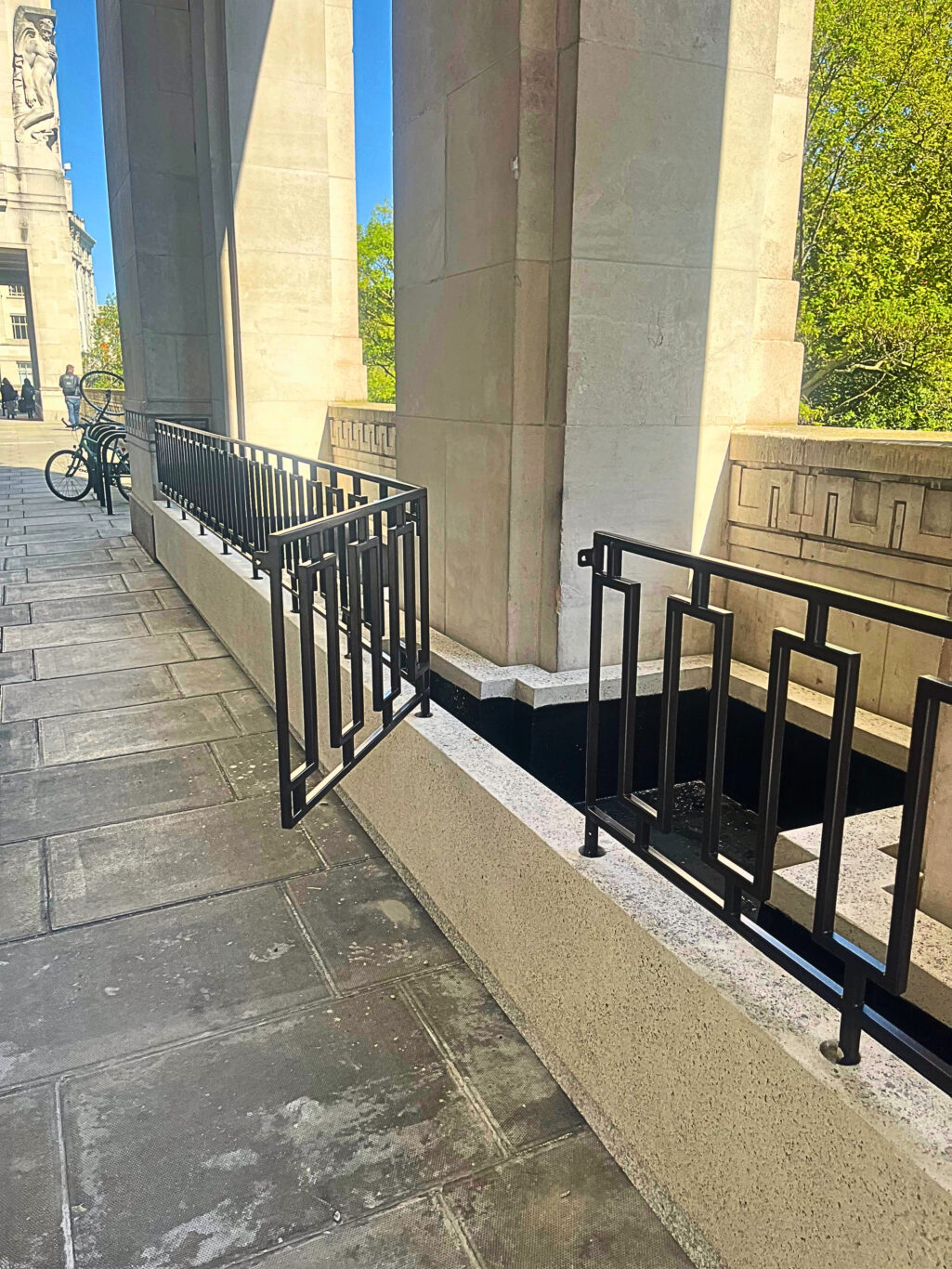
Whether you’re delivering a heritage refurbishment, commercial development, or bespoke architectural metalwork package, CDC Engineering provides a complete service from manufacture through to installation.
Get in touch with our team info@cdc-engineering.co.uk to discuss your project requirements and discover how we can bring your design to life with expertly crafted metalwork solutions.
Located in the heart of Camden Town, London, Jamestown Courtyard is a thoughtfully reimagined commercial destination that blends heritage architecture with a vibrant contemporary identity. Designed to foster community, wellbeing, and creativity, the development features a central courtyard space that serves as a focal point for occupiers and visitors alike.
CDC Engineering was commissioned by QOB Interiors to manufacture and install bespoke architectural metalwork elements that reinforce the site’s distinctive brand identity and enhance the arrival experience.
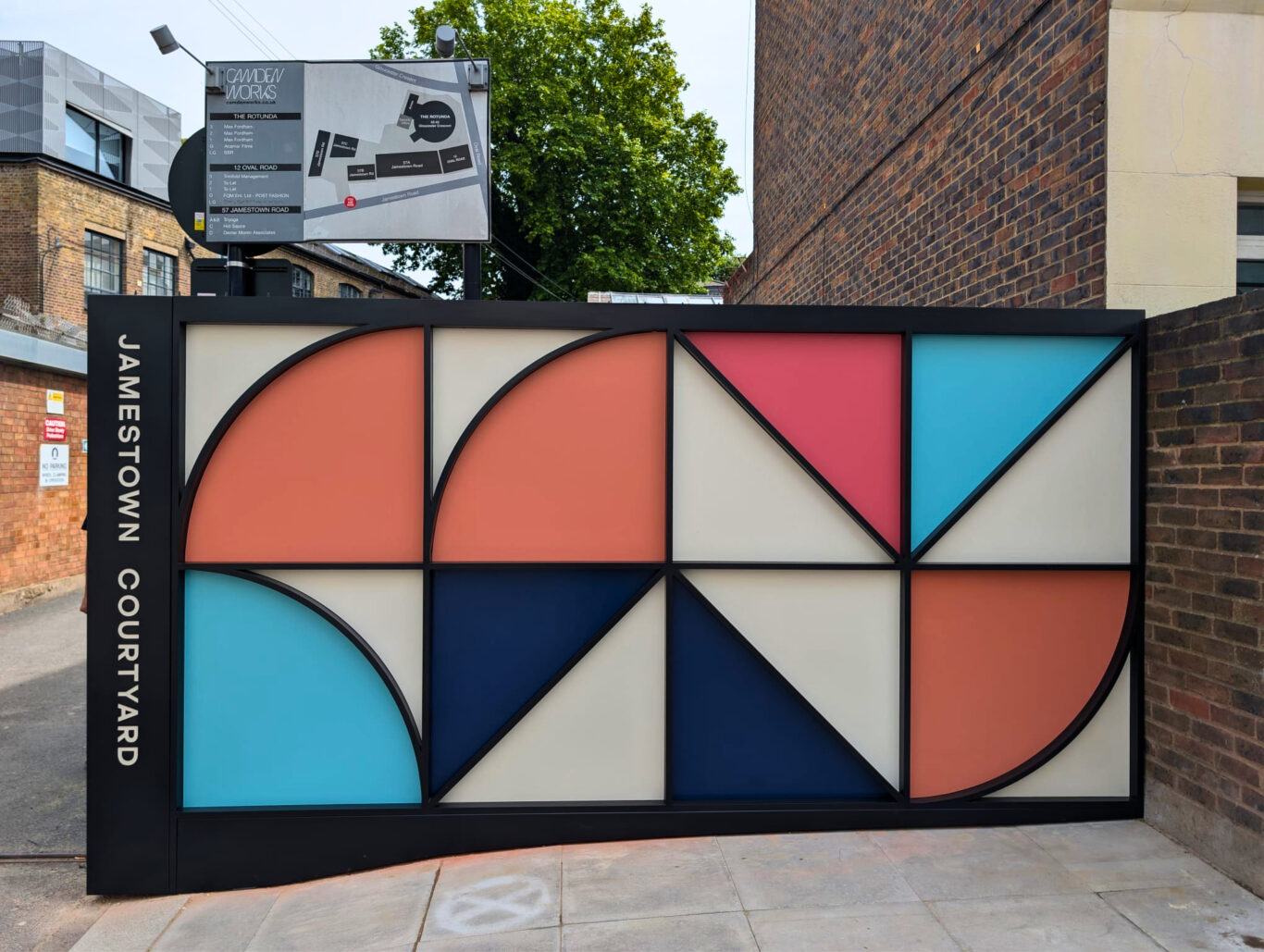
The centrepiece of the project is a large-format external feature sign positioned at the entrance to the courtyard. Working from the designer’s vision, CDC Engineering fabricated a robust steel framework designed to accommodate a striking arrangement of geometric forms and vibrant coloured infill panels.
Manufactured from mild steel, the structure was precision fabricated in-house to ensure clean lines, accurate geometry, and long-term durability within a demanding external environment. The steel framework was finished in a high-quality black powder coating, creating a bold architectural outline that contrasts with the colourful geometric elements while providing excellent corrosion resistance and longevity.
The design combines circles, triangles, and linear forms within a modular grid, creating a visually engaging landmark that reflects the creative energy and contemporary character of Jamestown Courtyard. Particular attention was paid to fabrication tolerances and installation accuracy to ensure perfect alignment of the geometric elements across the full structure.
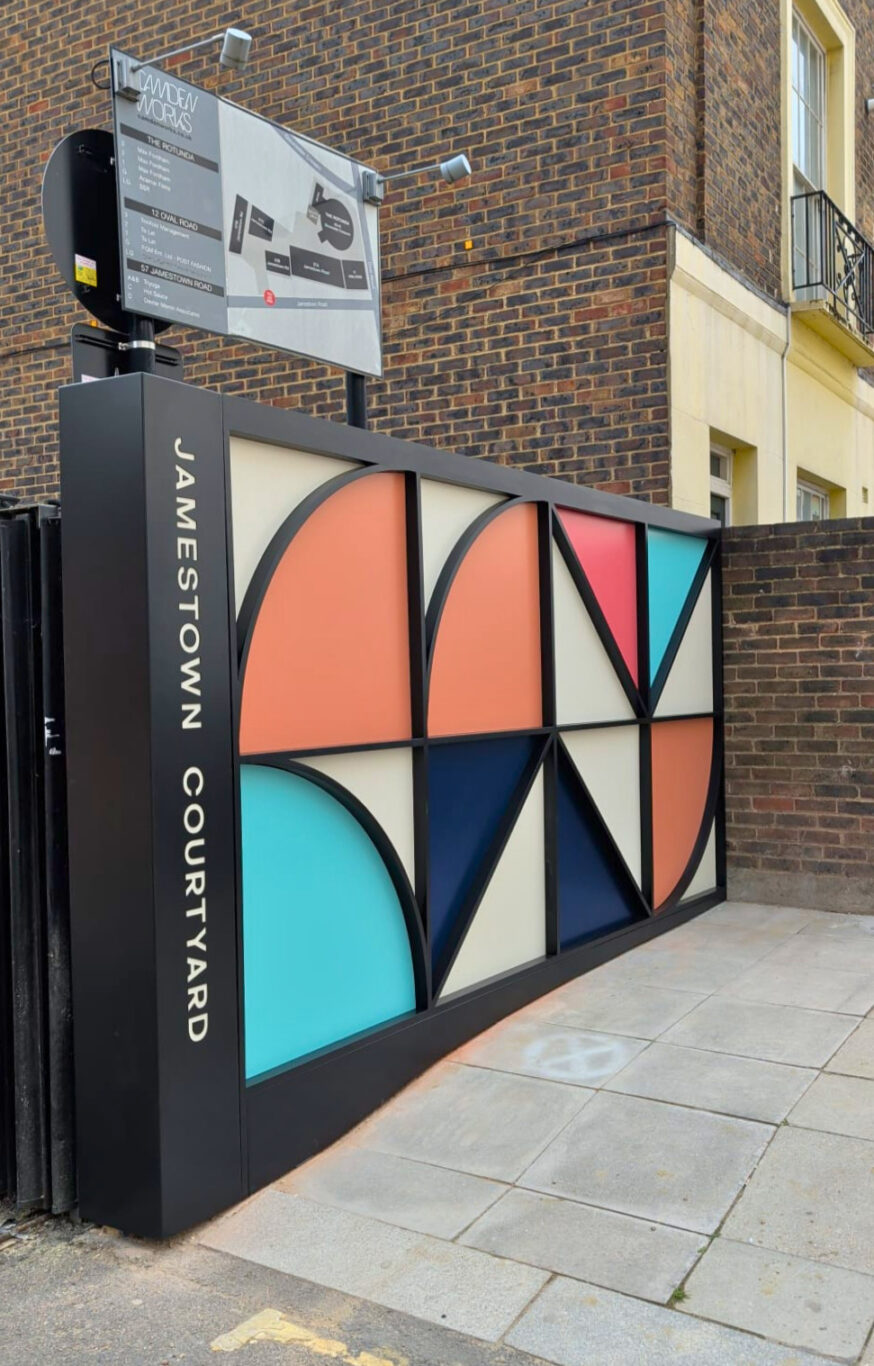
In addition to the feature installation, CDC Engineering manufactured and installed bespoke entrance signage totems that establish a strong visual presence at key access points to the development.
Fabricated from mild steel and finished with the same durable black powder-coated finish, the monolithic signage columns provide clear site identification while maintaining consistency with the wider branding strategy. The sleek, minimalist forms complement the industrial heritage architecture of the surrounding buildings while delivering a contemporary aesthetic that aligns with the redevelopment’s vision.
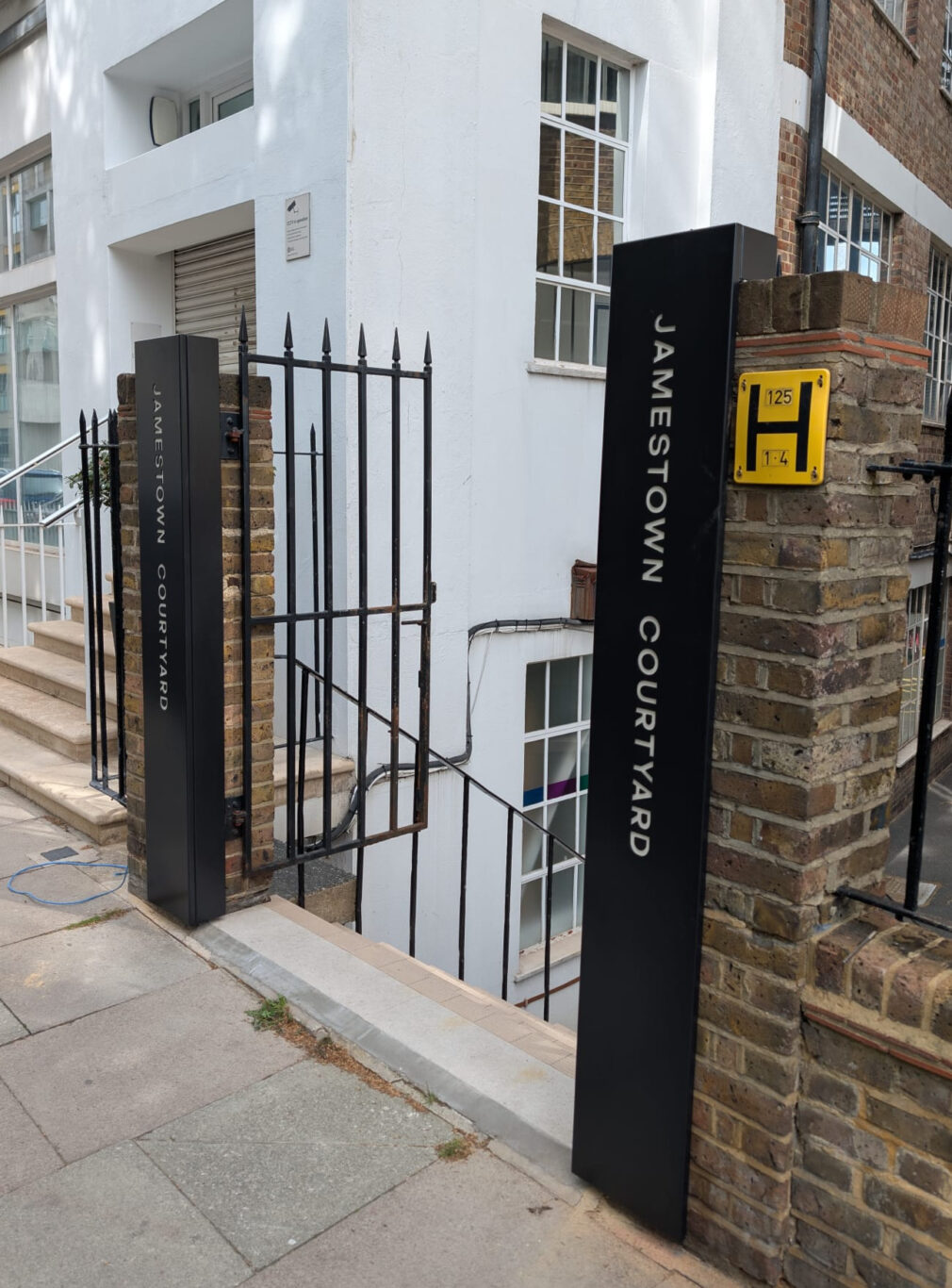
This project demonstrates CDC Engineering’s ability to translate creative concepts into high-quality fabricated metalwork. From structural fabrication and finishing through to on-site installation, every element was delivered with a focus on craftsmanship, durability, and visual impact.
The completed signage installations now form an integral part of the Jamestown Courtyard experience, creating a memorable arrival point and contributing to the vibrant identity of one of Camden Town’s most distinctive workplace destinations.
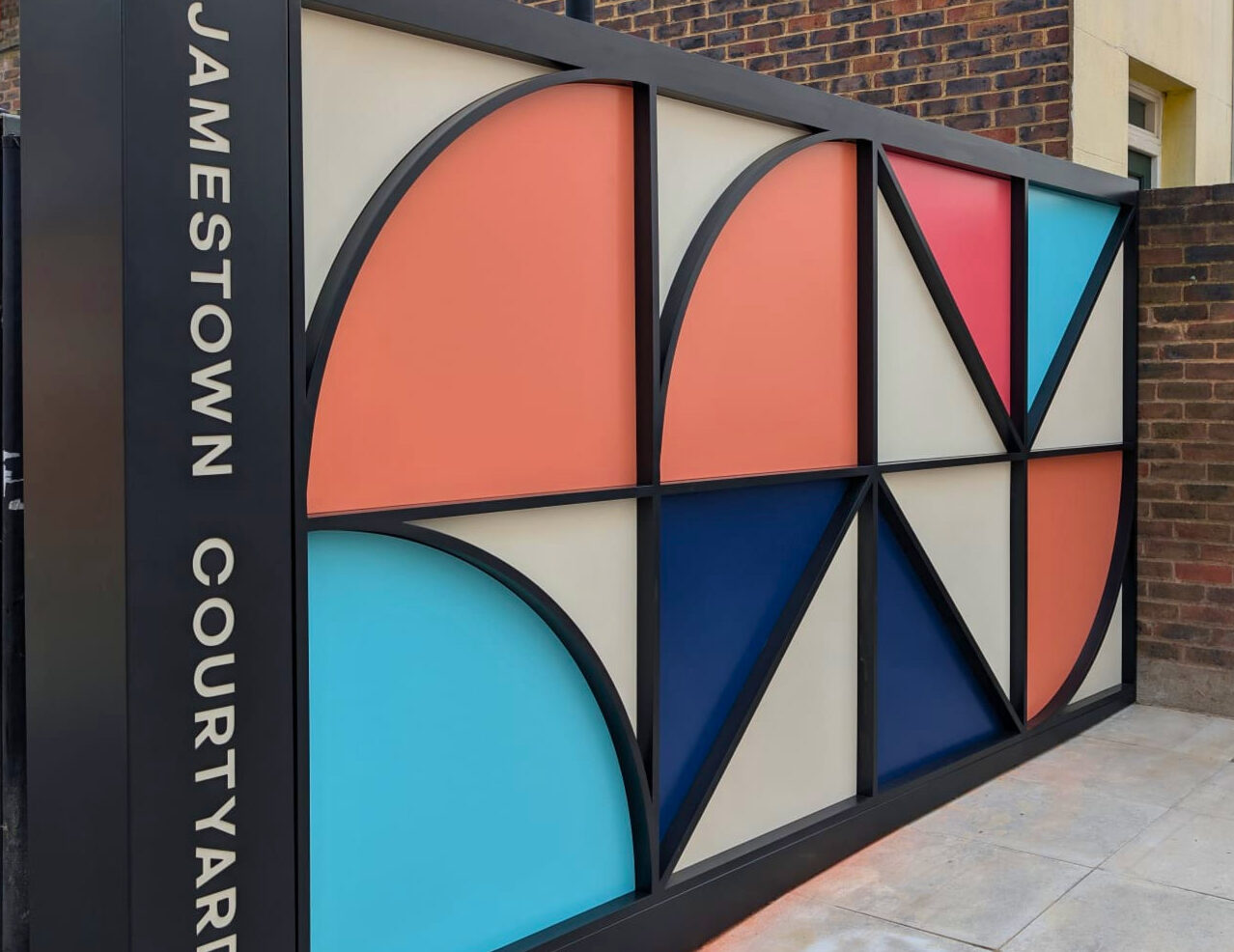
The project highlights CDC Engineering’s expertise in delivering high-quality architectural metalwork, combining precision fabrication, durability, and design-led manufacturing.
Since the Mondrian Shoreditch London hotel’s acquisition by the Reuben Brothers in 2020, the property has undergone a dramatic renovation, becoming a destination where contemporary luxury meets the artistic energy of Shoreditch.
Throughout this project, CDC Engineering worked closely with Goddard Littlefair design team to manufacture and install a variety of architectural metalwork features. Copper played a central role in the design narrative, and our ability to create bespoke finishes entirely in house allowed us to deliver the precise aesthetic and atmosphere envisioned by the designers.
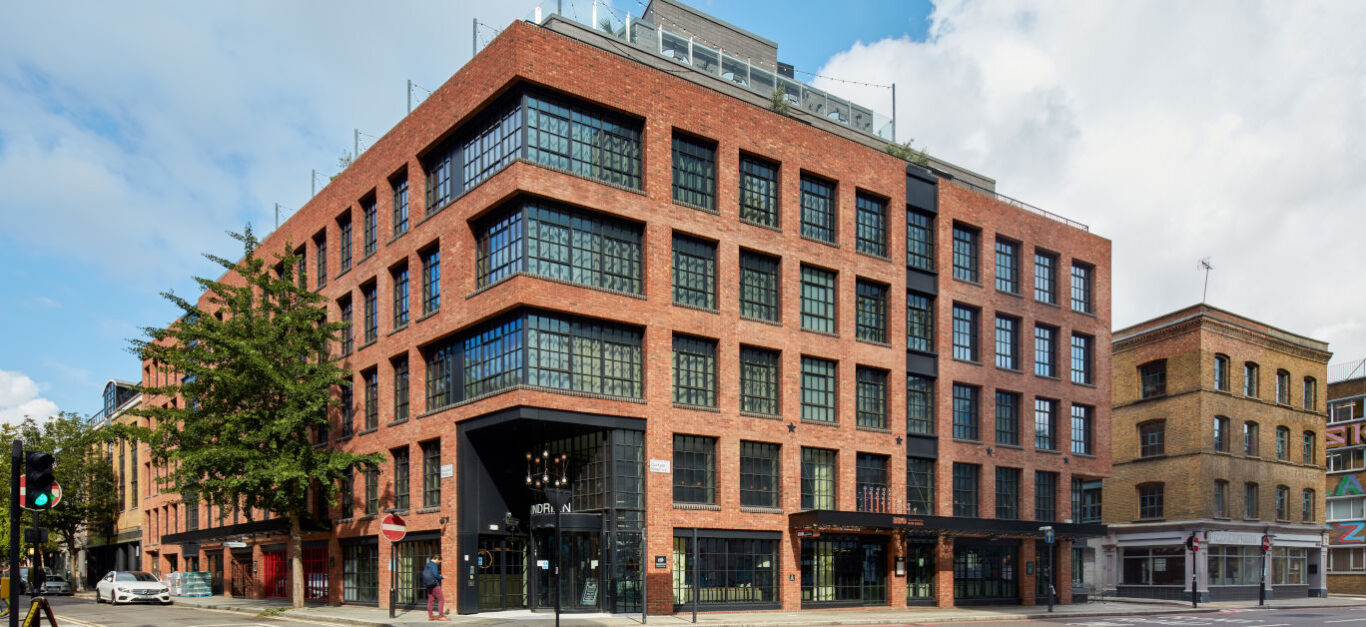
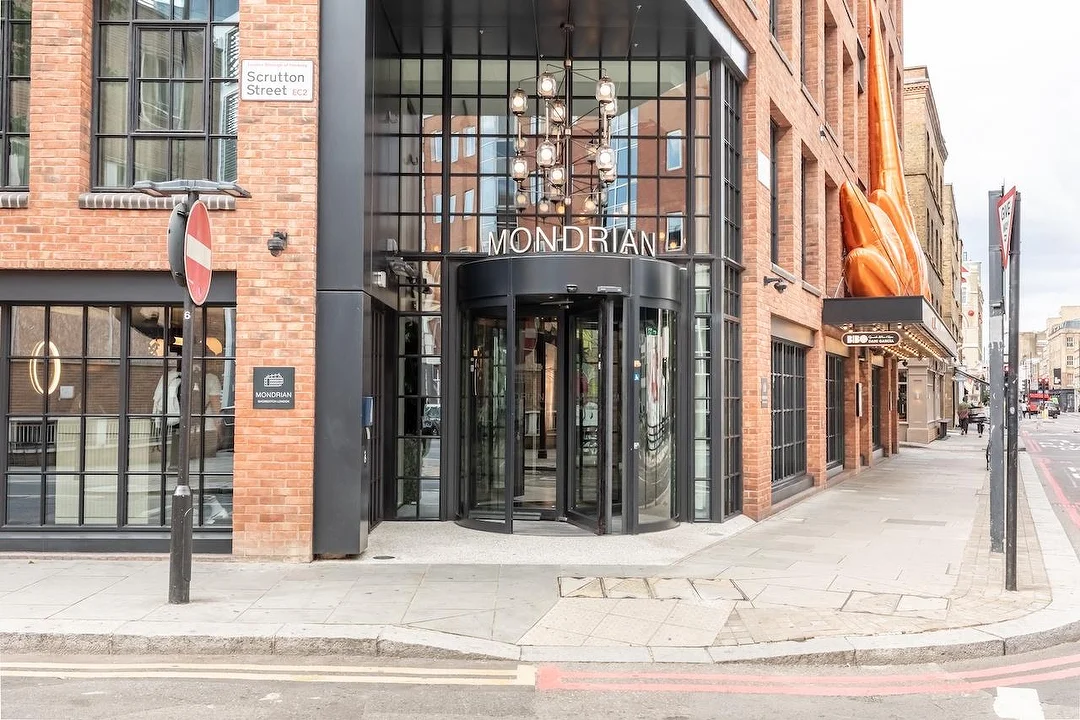
The interior concept relied heavily on copper’s ability to bring warmth, brightness, and a playful sense of reflection into the spaces. To achieve this, each area of the hotel required a distinct copper finish, ranging from deep, aged surfaces to vibrant polished tones. Because CDC Engineering develops all finishes internally—including acid etching, patination, antiquing, and protective lacquering—we were able to respond directly to the designers’ requirements, refining tones, textures and reflectivity until the exact look was achieved.
With many years of experience working with metal finishes, our workshop is designed to give architects and designers full creative control. Every finish can be prototyped, adjusted, and perfected on site, ensuring consistency and high performance in the final installation.
Upon entering the hotel, guests are greeted by an installation of aged antique mottled copper that forms the backdrop to the reception desk. This finish continues around the lift surrounds, creating a cohesive and atmospheric first impression. The designers asked for a darker, richer tone that would anchor the space, while still offering a gentle reflective quality. By applying a lacquered topcoat, we were able to introduce a subtle play of light across the surface, enhancing the lobby’s warm and welcoming feel.
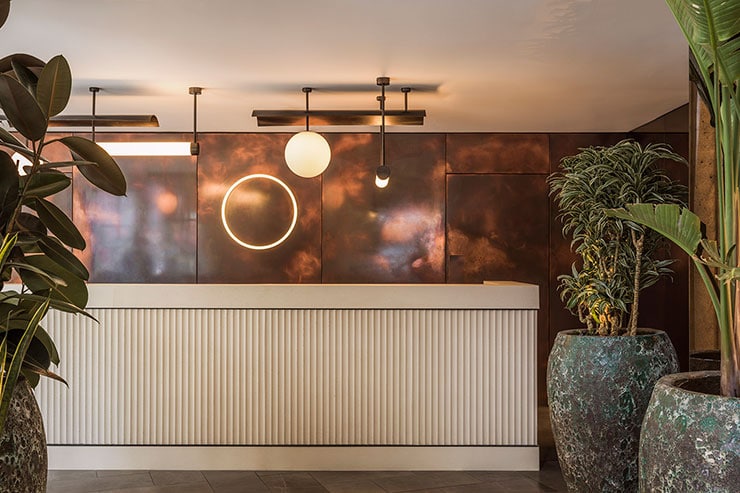
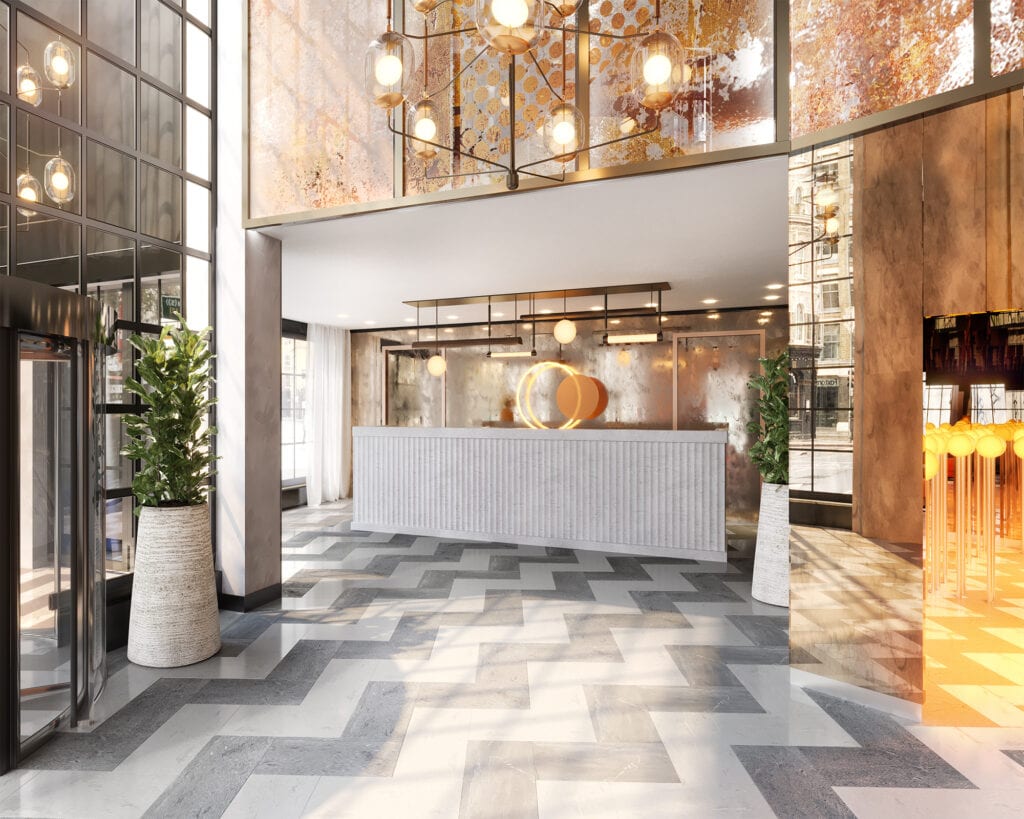
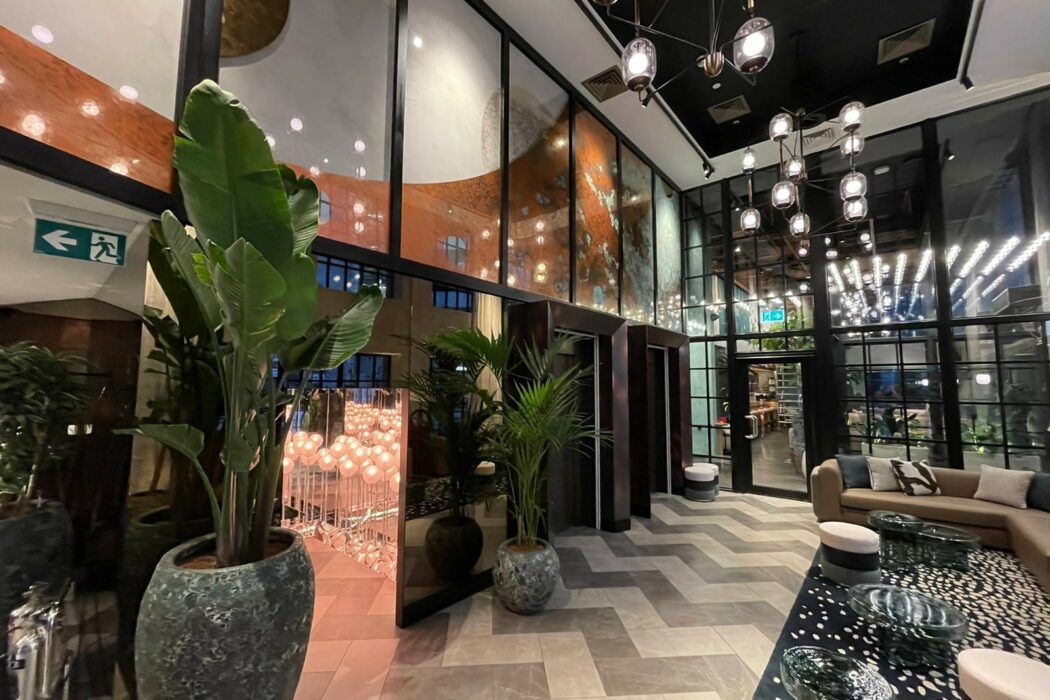

Acid etching is a process when material, in this case copper, is cut using specifically formulated acid. Acid etching metal is a non-contact process. The acid dissolves the metal sections around the part features that are not coated with a photoresist laminate. The process avoids any contact with hard tooling that is often used in conventional methods such as stamping and CNC machining. For this reason, etching metal is favored over the other processes when the absence of burrs is critical to the part’s requirements.
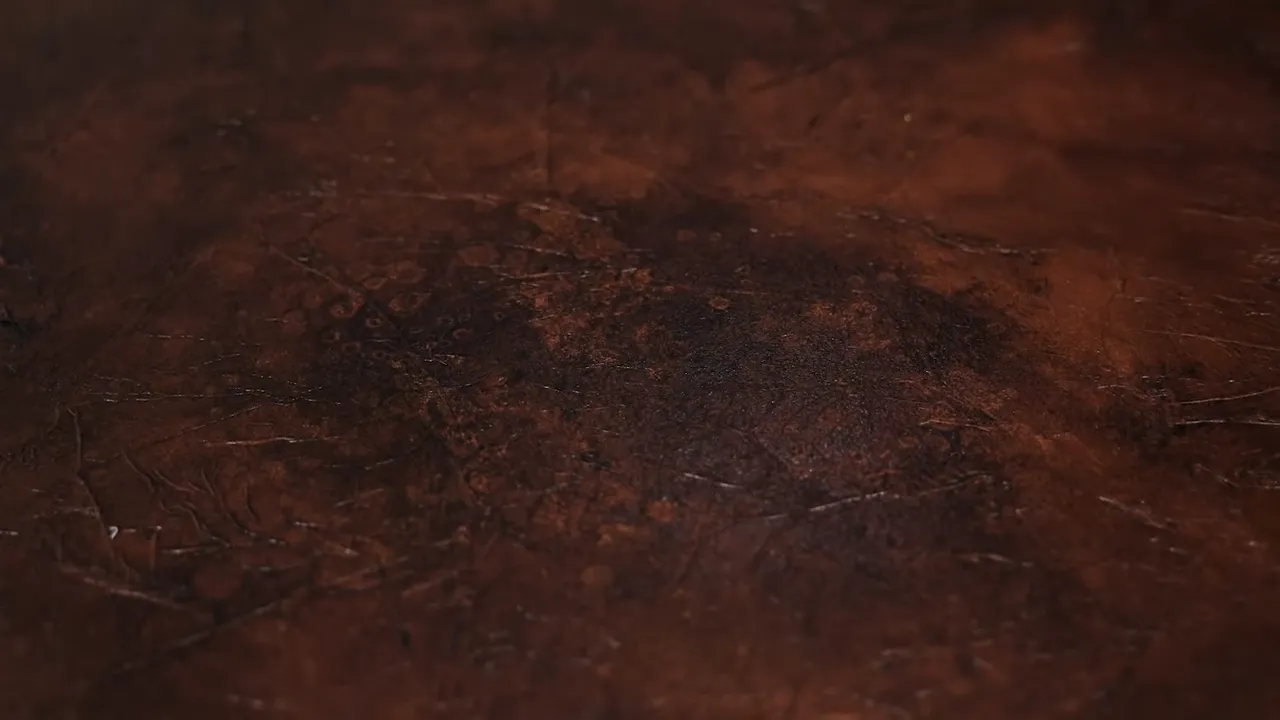
The mottled finish itself evokes the appearance of naturally aged copper, with its deep base colour and delicate variations of lighter tones. This character is achieved through a controlled antiquing method, where the metal is aged and then refined by hand to reveal the soft contrasts that give it depth and authenticity. The result is a surface that feels both timeless and tactile, with an artisanal quality that avoids the uniformity of mechanically polished metals.

In contrast to the reception space, the restaurant required copper elements that would bring brightness and vibrancy to the interior. CDC Engineering manufactured polished copper wall cladding, a copper rod bar gantry, and a polished footrest for the bar area.
The gantry, featuring a globe lamp suspended at its centre, became one of the key focal points of the restaurant. The highly polished copper amplified the light from the globe, producing a lively and dynamic interaction between material and illumination. Achieving this level of clarity and reflectivity involved precise fabrication and an intensive polishing process, ensuring that the copper surfaces remained seamless and visually fluid.
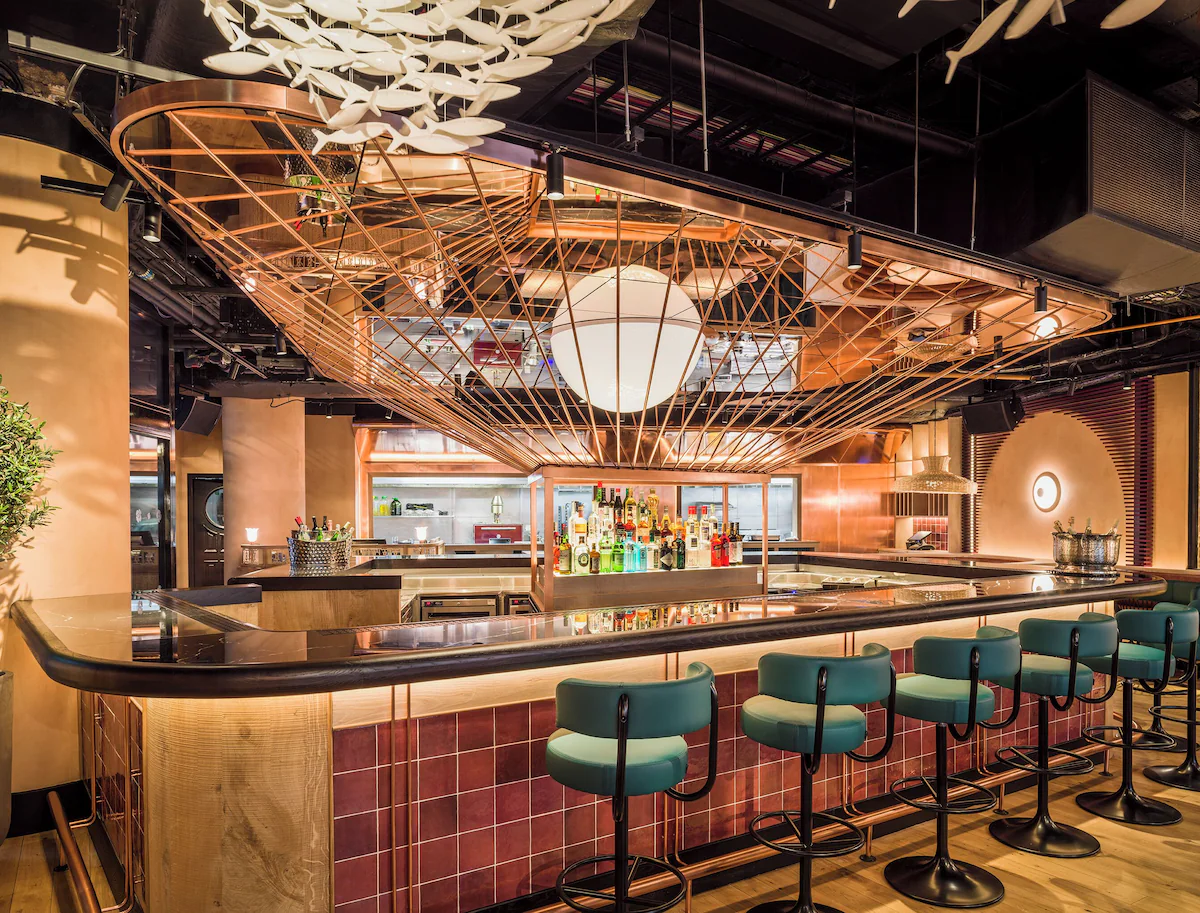

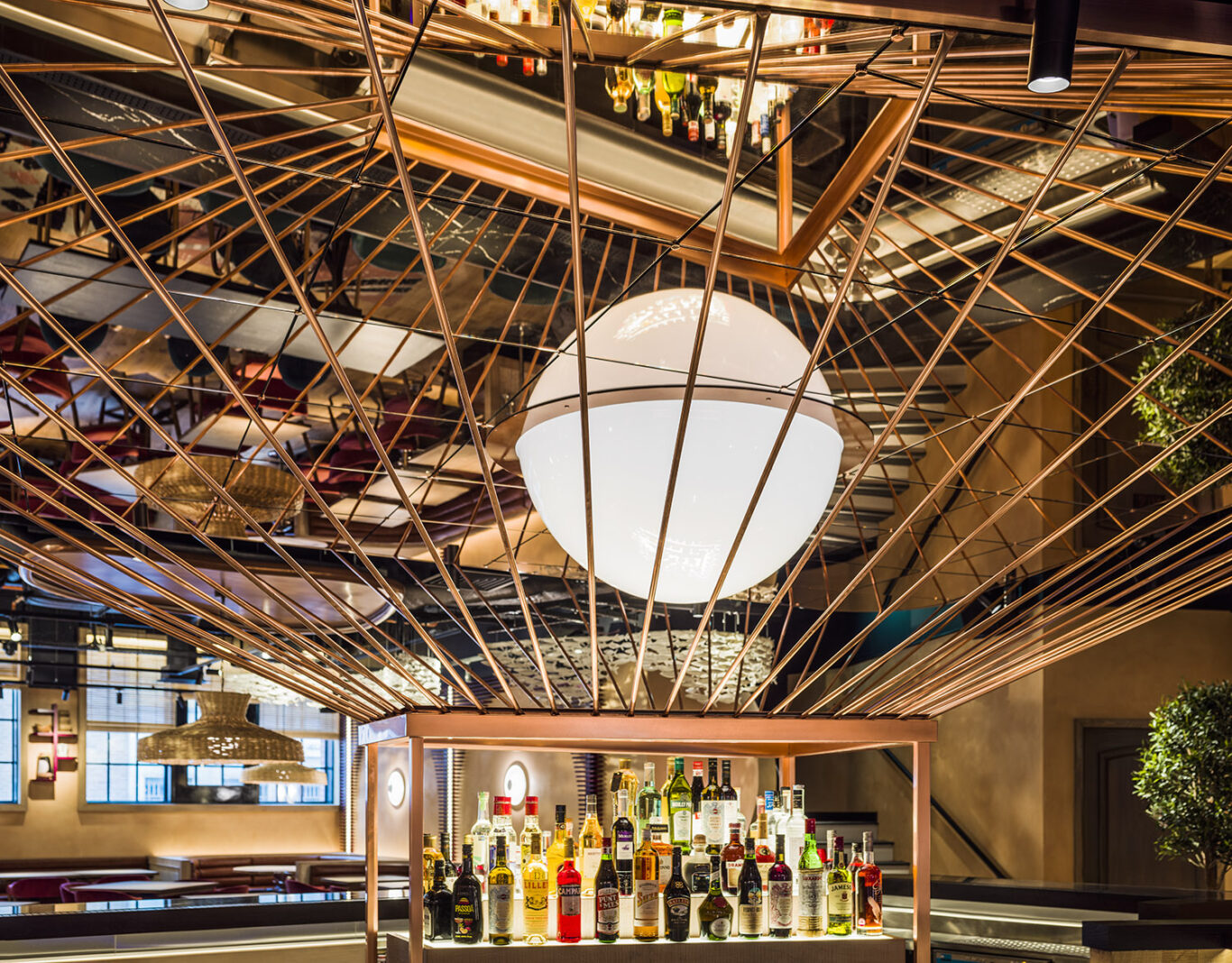

A polished copper finish is created by first smoothing the metal through a series of sanding or abrasive stages, gradually refining the surface until all imperfections are removed. The copper is then mechanically polished using specialised wheels and compounds, which build up the bright, reflective shine. Once the desired clarity is reached, the surface is cleaned and typically sealed with a protective lacquer or wax to preserve its brilliance and prevent oxidation. The result is a smooth, mirror-like finish that enhances copper’s natural warmth and elegance.


One of the most technically demanding features of the project was the bright antique copper bar in the lounge area. Manufactured entirely at our factory, this installation includes a curved ceiling element that blends gracefully into the bar cladding below. Creating a finish that remained consistent across these flowing surfaces required careful control of both the fabrication and finishing processes.
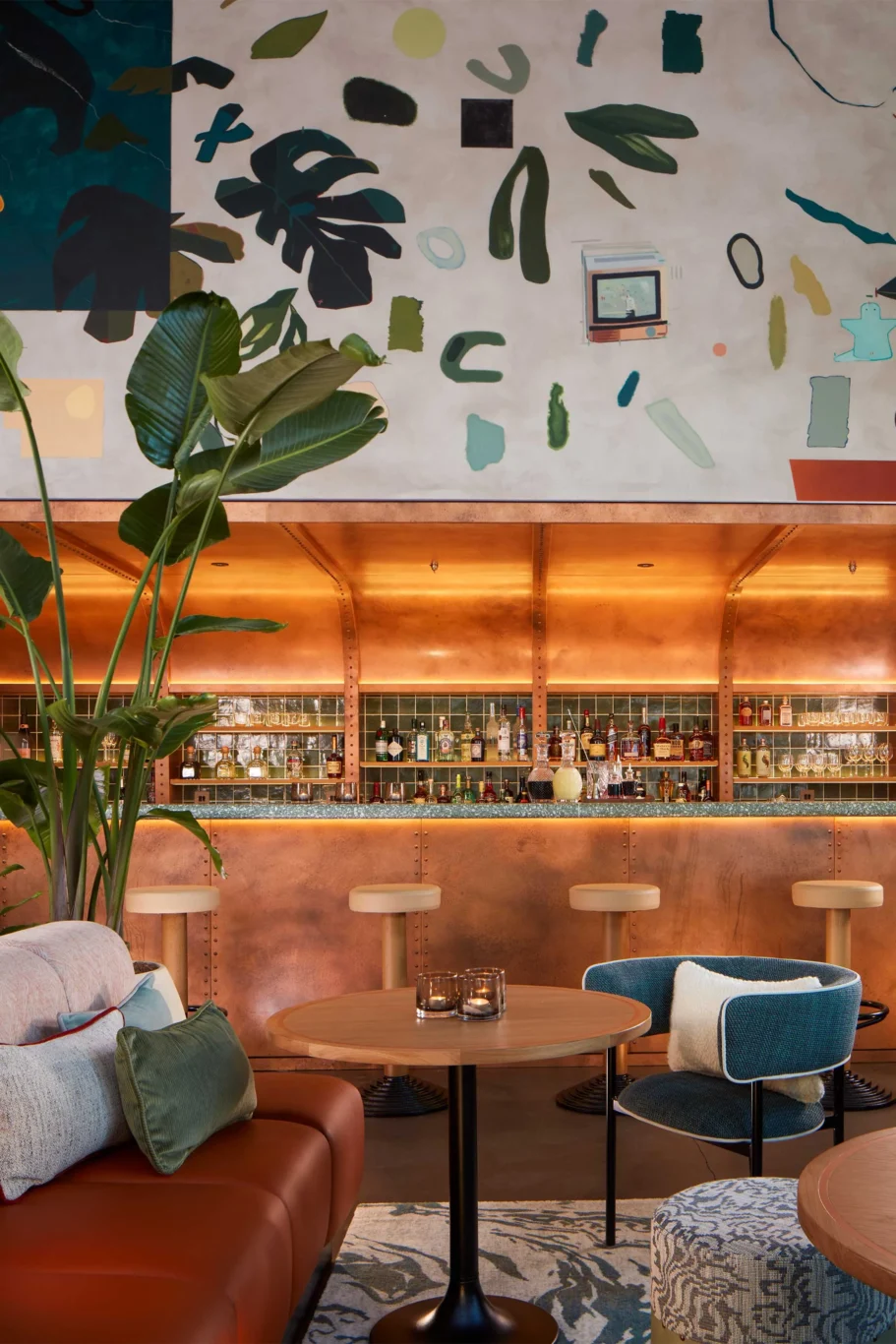
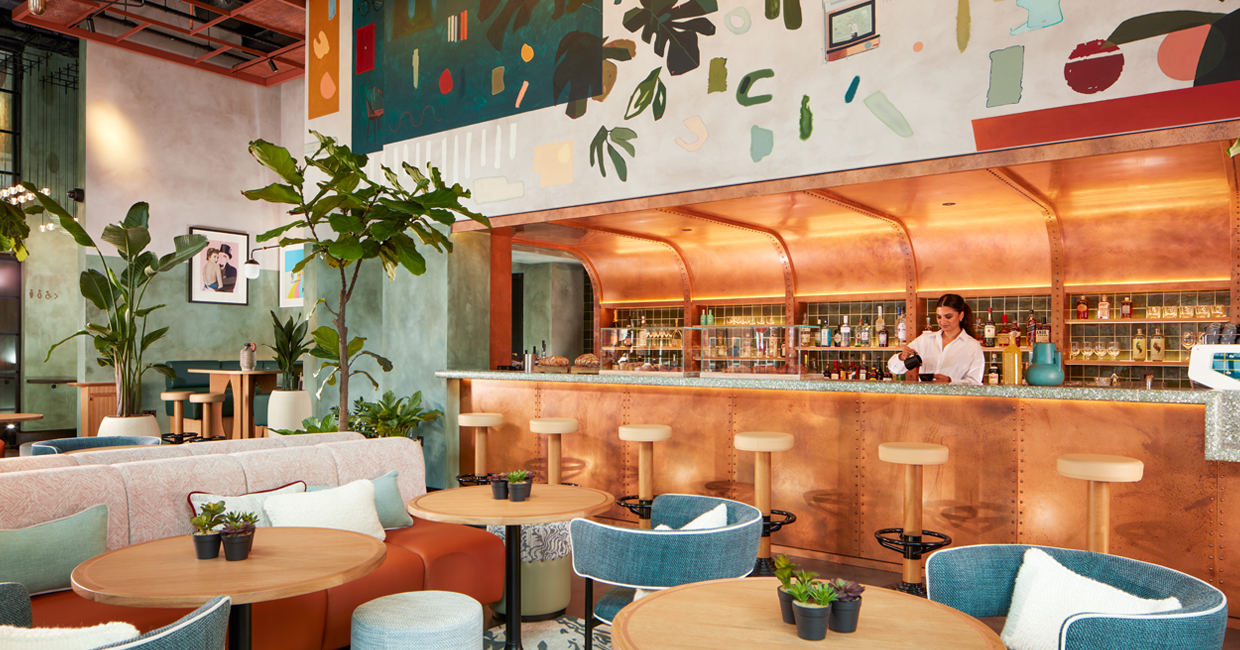
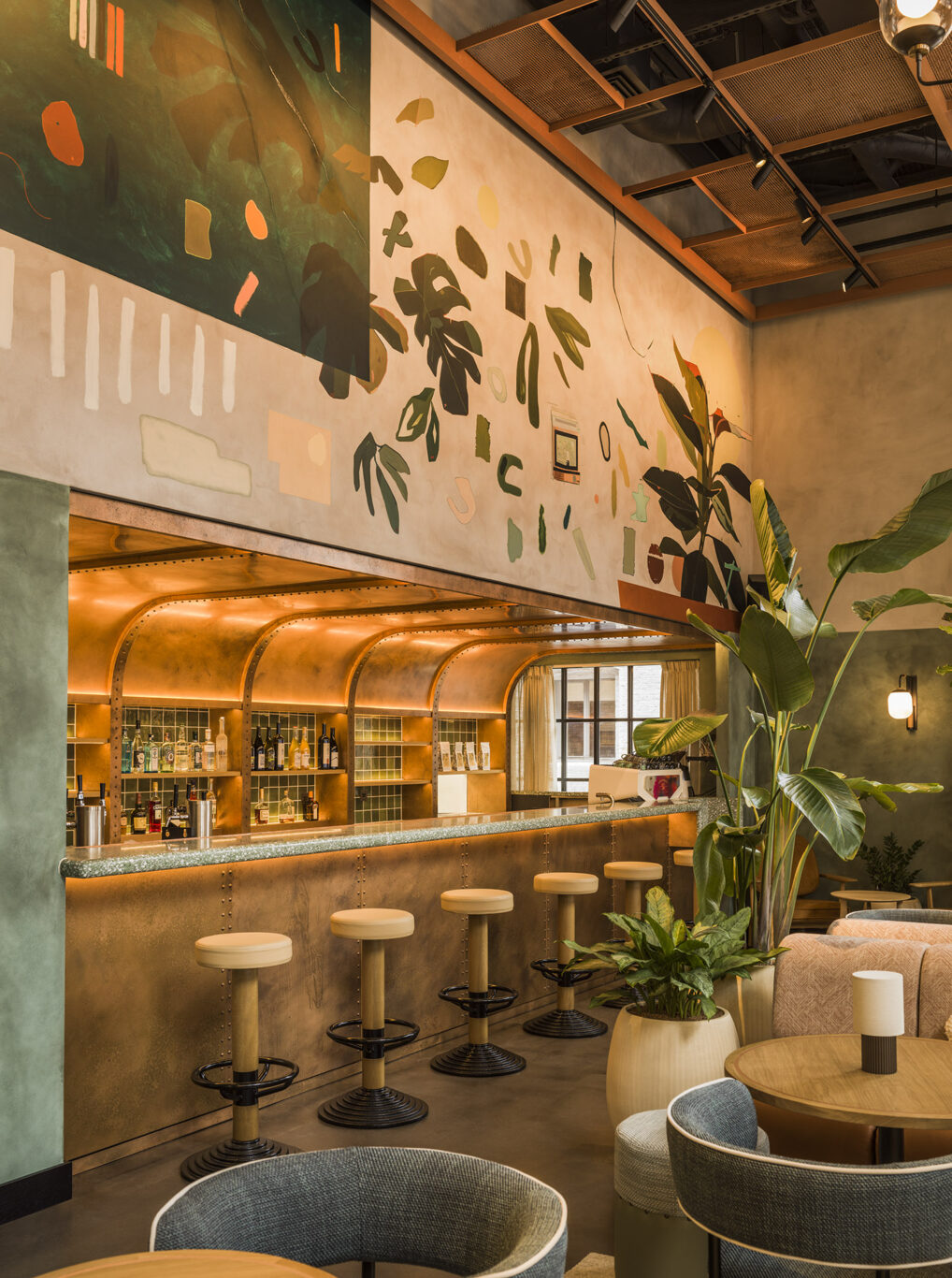
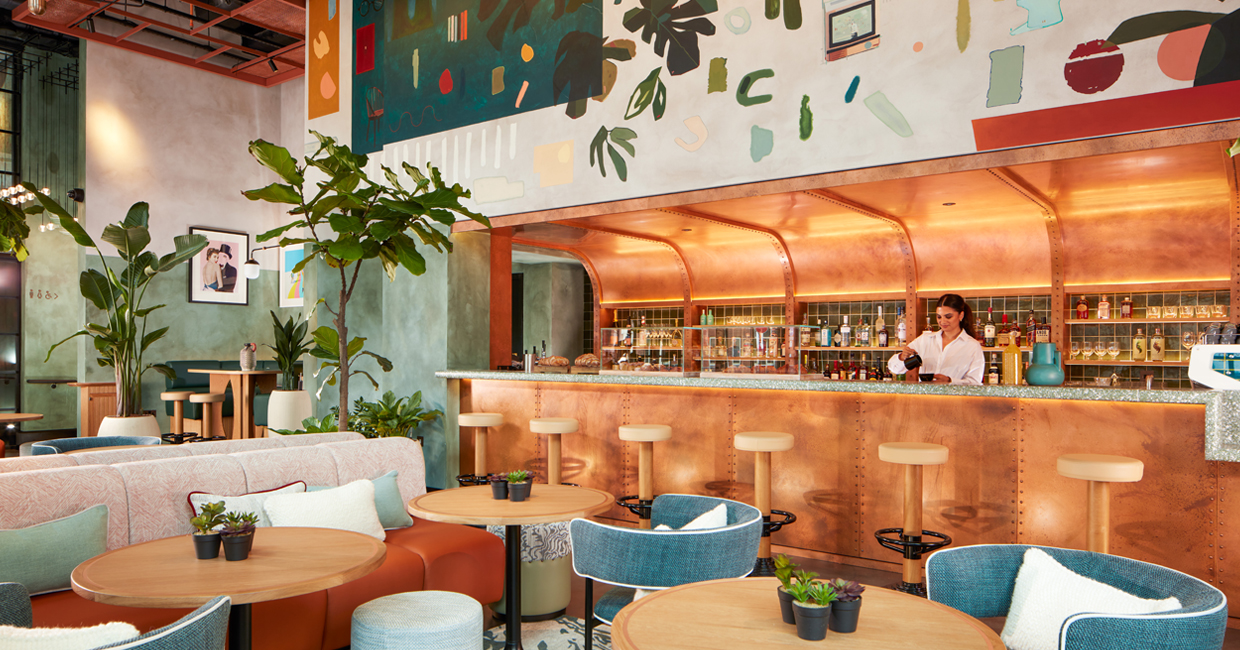
Our team developed a vivid antique copper tone with an orange warmth that complemented the lighting and overall design scheme. The reflective quality of the finish added energy to the room, enhancing the sense of movement created by the curved geometry. The bar was finished in the same material, ensuring continuity throughout the space and reinforcing the sense of craftsmanship that runs through the hotel’s interior.


The Mondrian Shoreditch project showcases how impactful bespoke metalwork can be when design ambition is supported by technical expertise. With all finishing carried out under one roof, CDC Engineering is able to guide designers from concept to completion with a level of control and consistency that is essential in complex hospitality environments. Each copper element in the project reflects a close collaboration between design vision and material capability, resulting in interiors that feel rich, expressive, and beautifully crafted.
Get in touch with our team to discuss your project:
T: 01702 294449
E: admin@cdc-engineering.co.uk
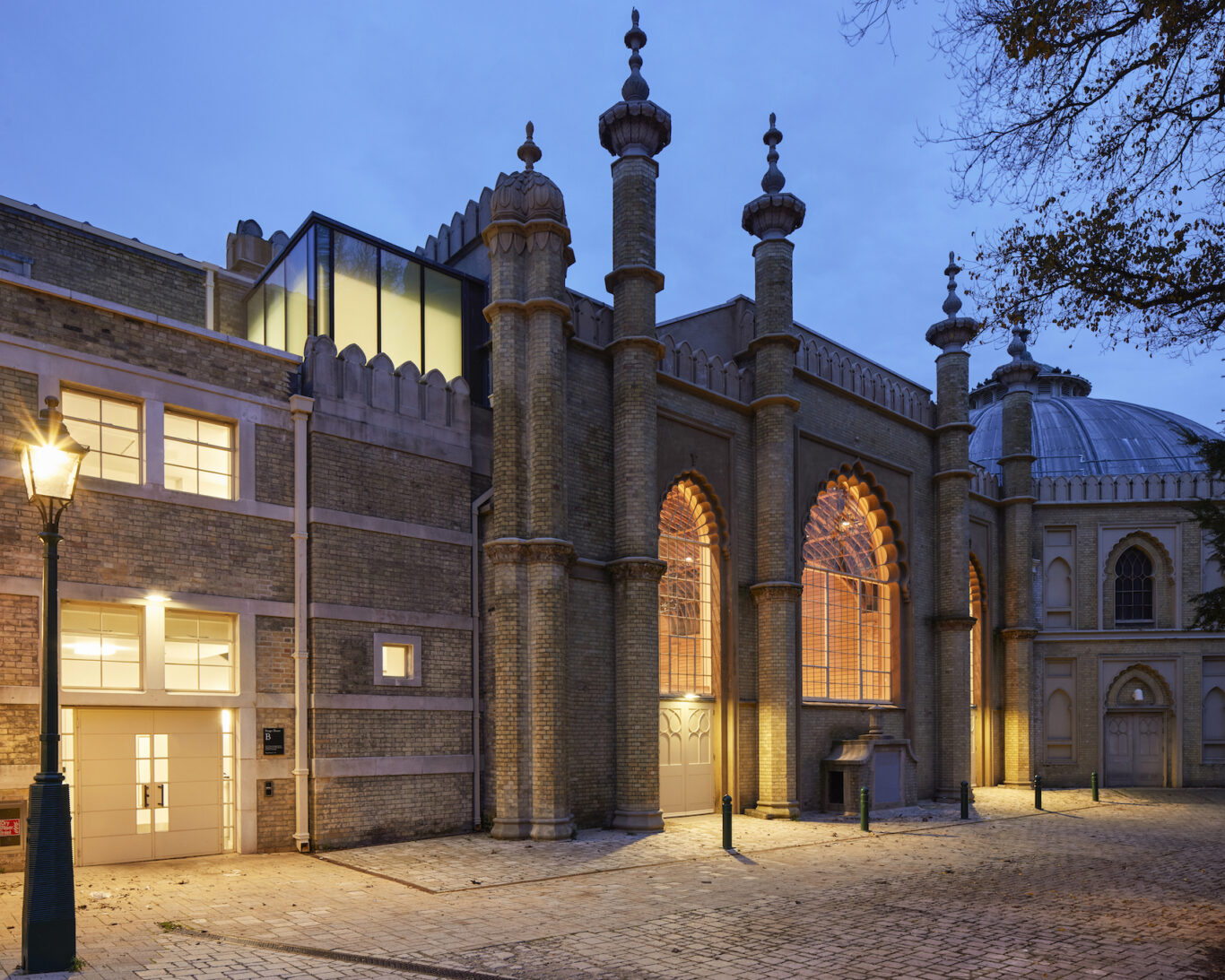
The Brighton Dome is one of the UK’s most treasured cultural landmarks — a complex of heritage-listed buildings at the heart of Brighton’s Royal Pavilion Estate. Recently restored by Feilden Clegg Bradley Studios (FCBStudios), the project revitalises four Grade I and II listed buildings, breathing new life into their 19th-century architecture while ensuring the complex meets the demands of modern audiences and performers.
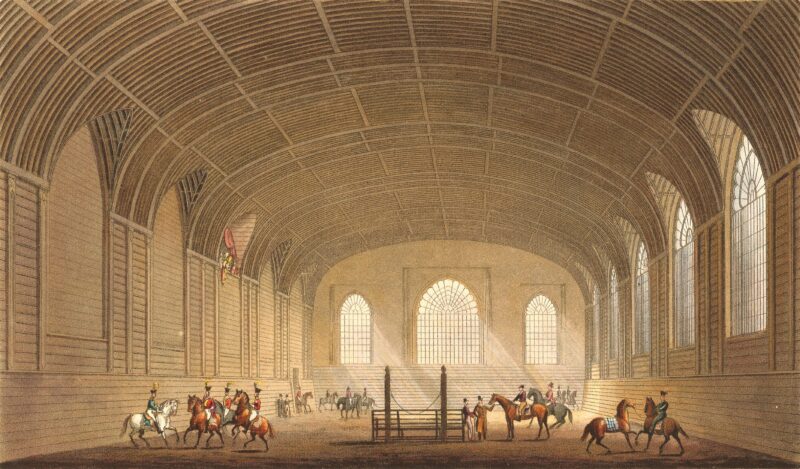
At the centre of the redevelopment stands the Corn Exchange, a magnificent Grade I listed building originally commissioned in 1803 as a riding house for the Prince Regent.
Over the centuries, it evolved into a celebrated performance space. The restoration sought to peel back layers of history, revealing original details while introducing contemporary materials and finishes that complement the building’s rich heritage.
To achieve this delicate balance between preservation and innovation, FCBStudios collaborated with a range of specialist craftspeople, including CDC Engineering, who were invited to bring their expertise in metal fabrication and architectural detailing to the project.
Our brief was to design, manufacture, and install bespoke metalwork that seamlessly integrates with both the historical fabric and the new architectural interventions. The goal was not only to replicate the precision and beauty of the original craftsmanship but also to embody the elegance and durability expected from a modern cultural venue.
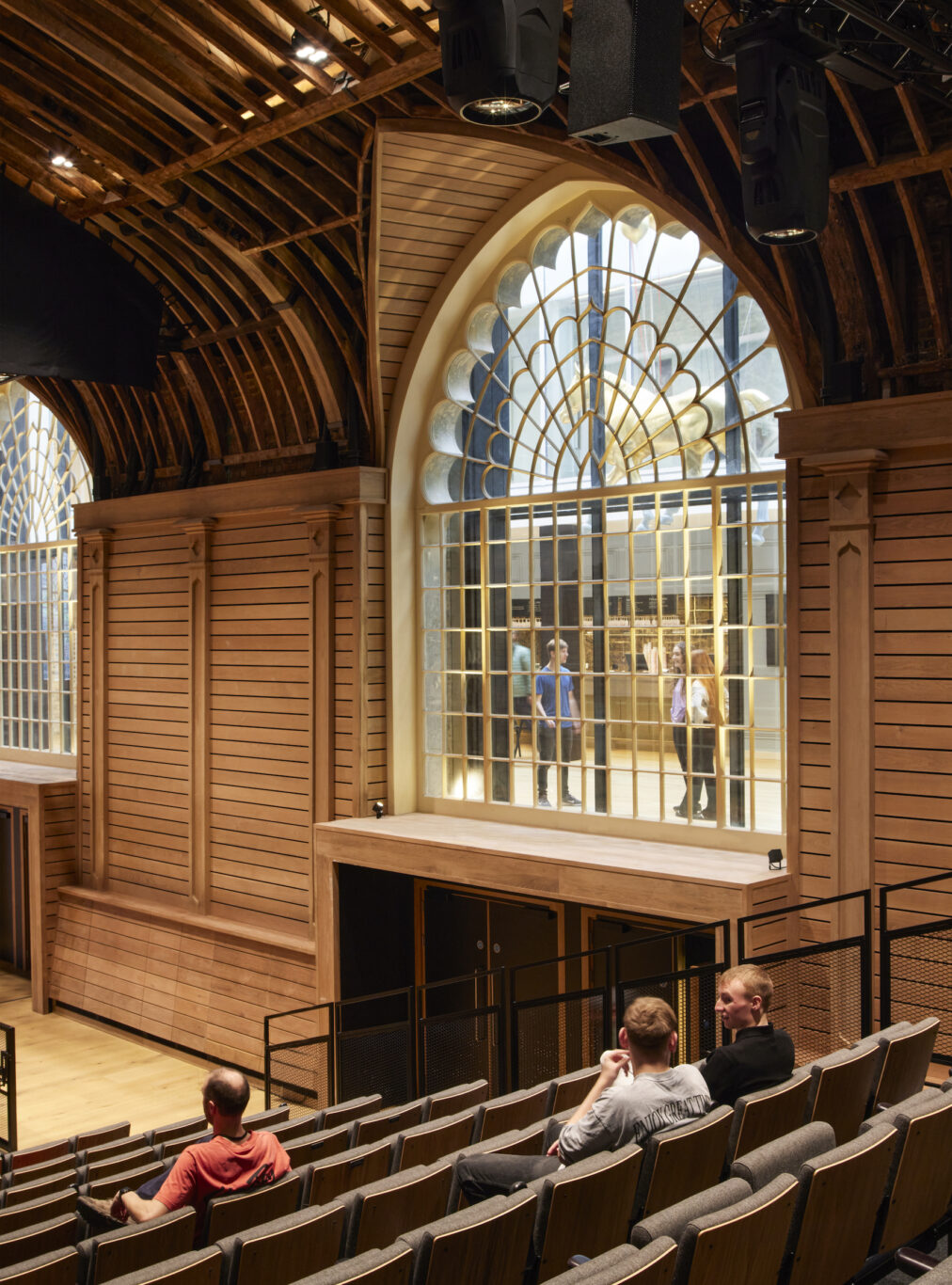
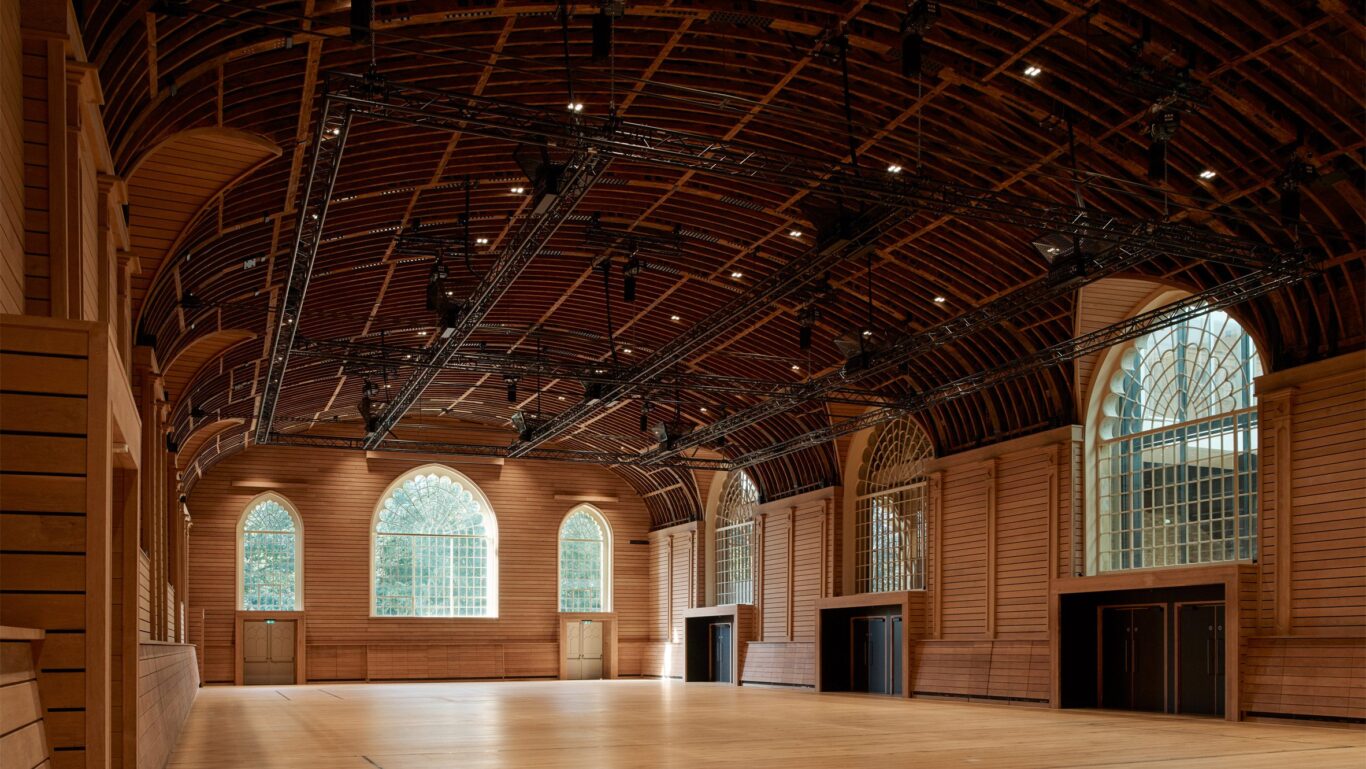
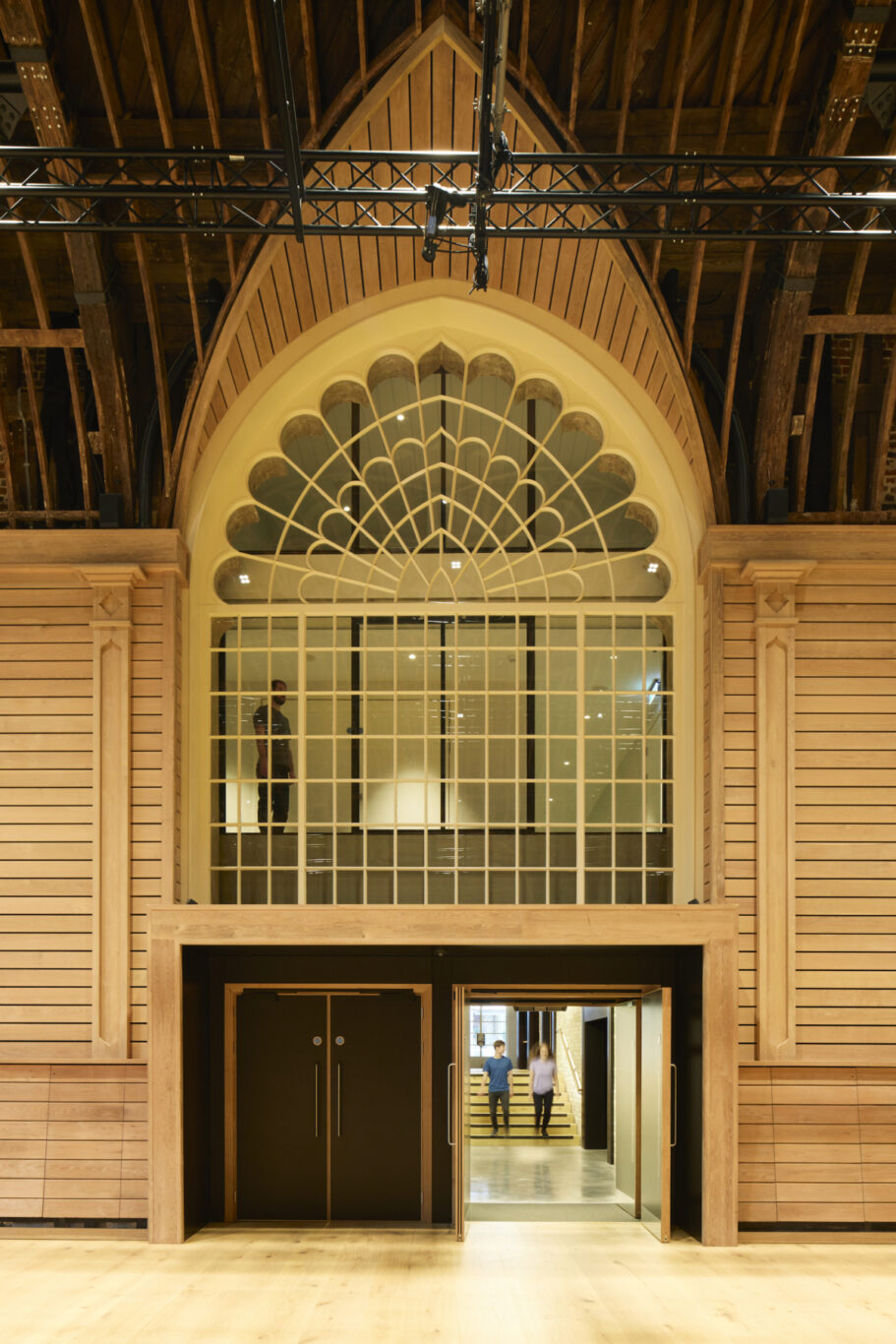

At CDC Engineering, we pride ourselves on our attention to detail and mastery of metalwork. For the Brighton Dome refurbishment, our scope included:
Every element was meticulously manufactured in our in-house facilities in Shoeburyness, Essex, ensuring complete control over quality and precision. Working with mild steel allowed us to deliver a balance of strength, lightness, and versatility, crucial for such a large-scale architectural project.
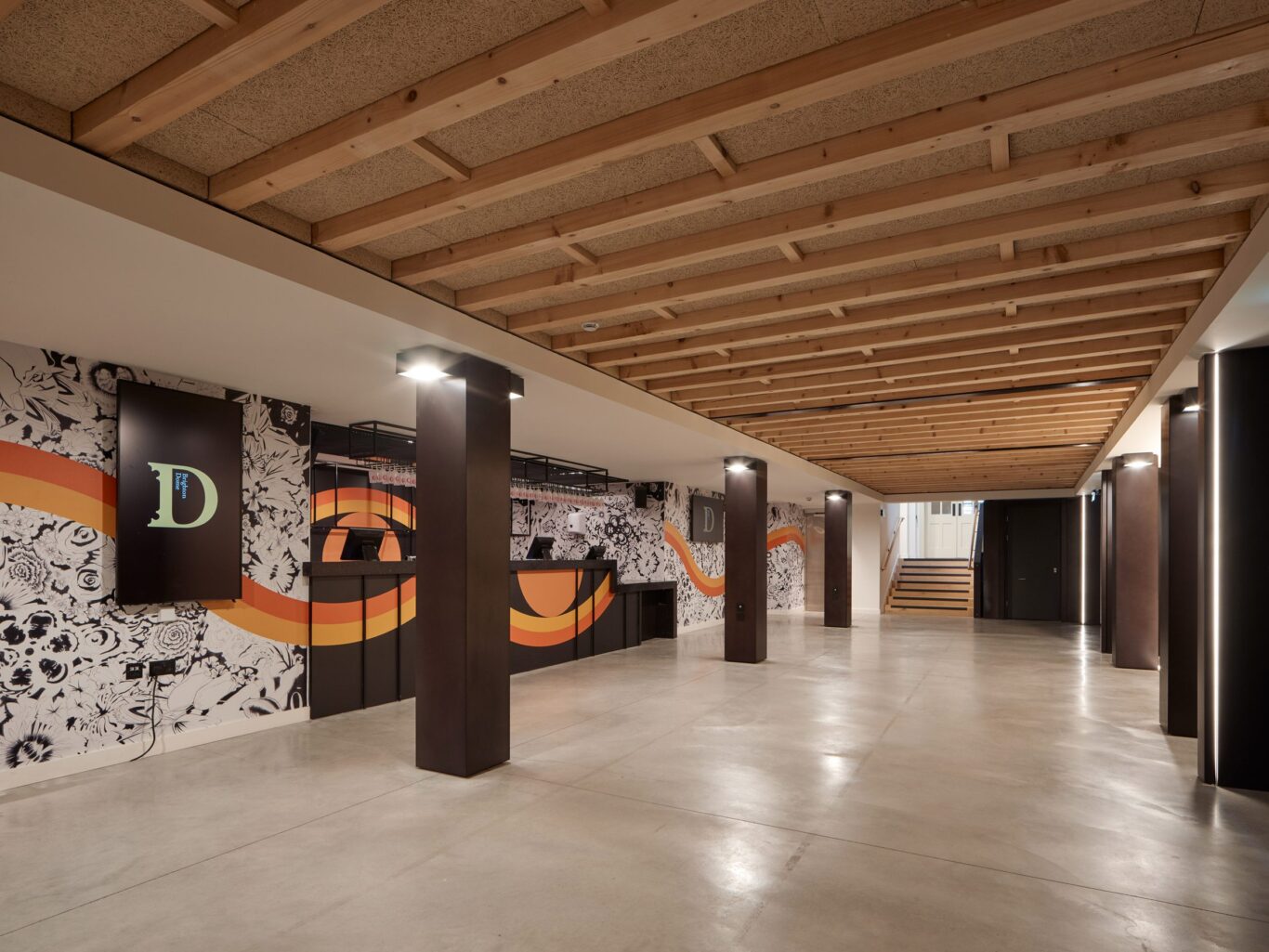
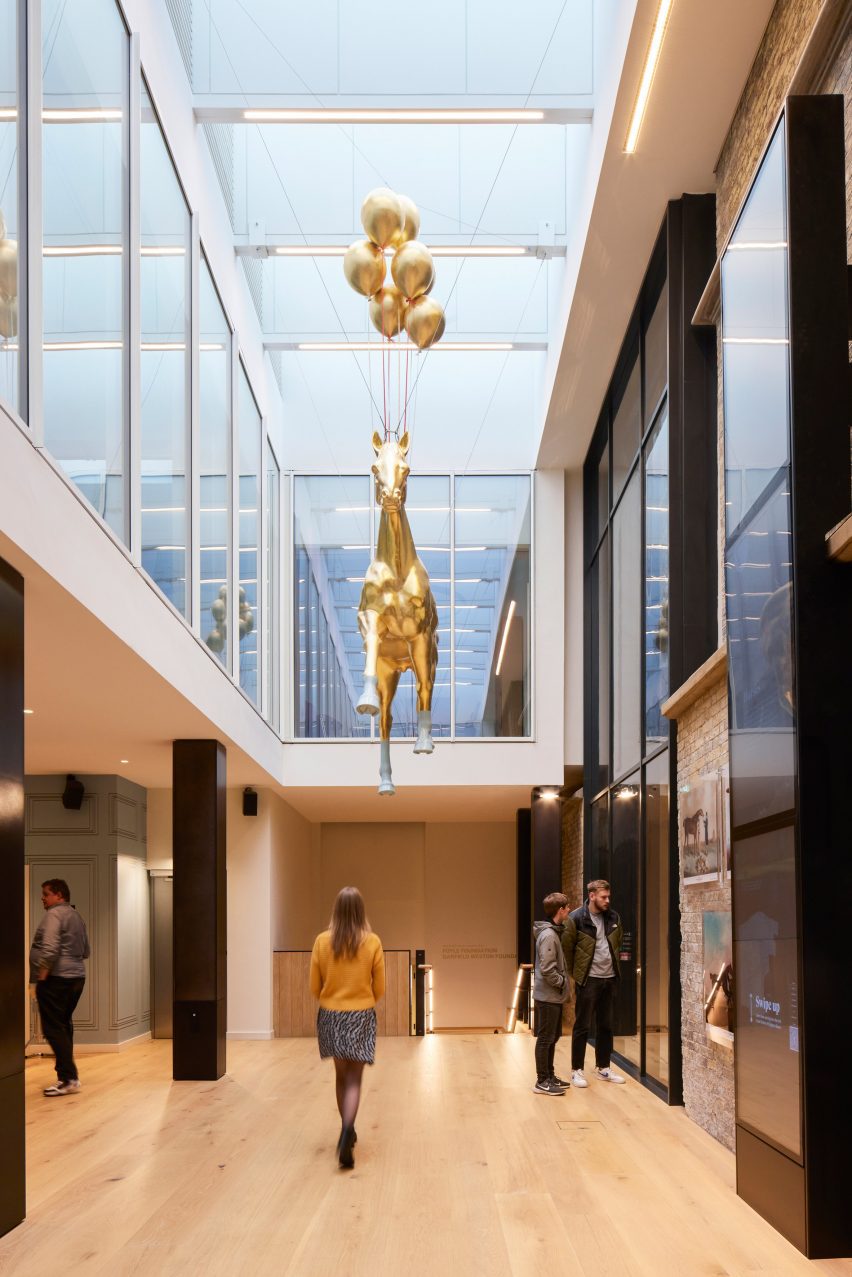
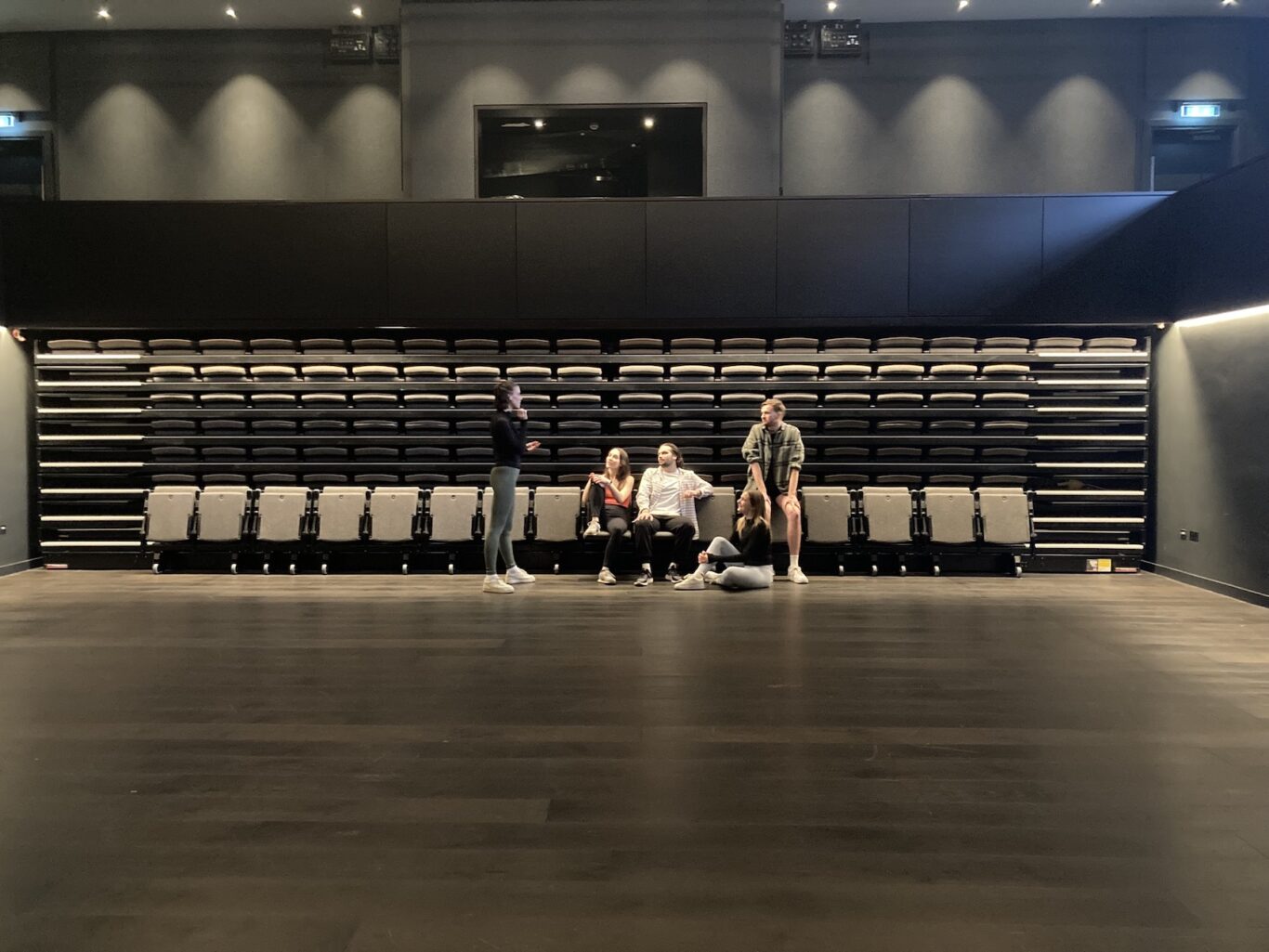
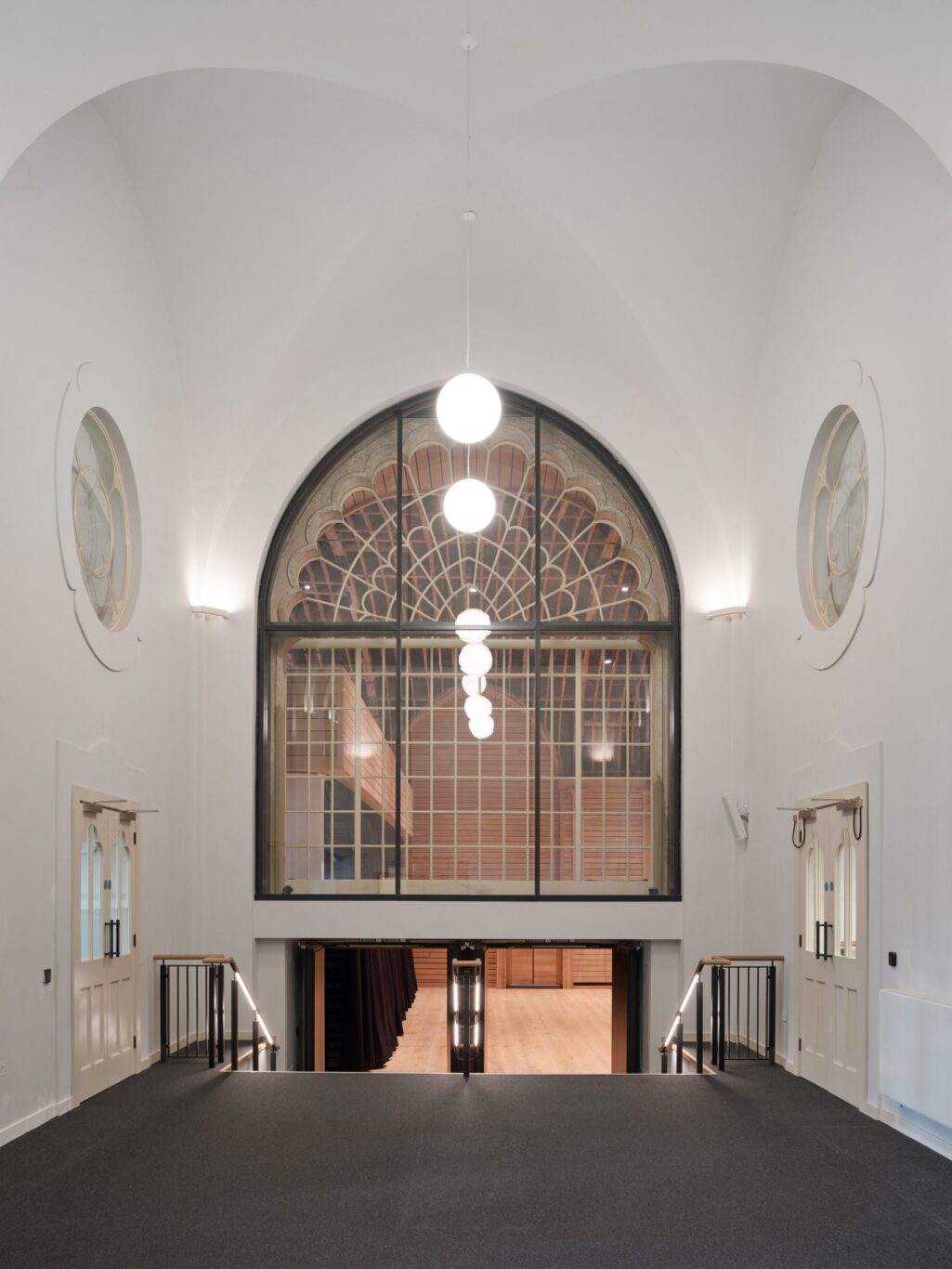
Before installation, all fabricated components were black powder-coated in our on-site spray shop, achieving a durable, contemporary finish that complements the timber-rich interiors. The contrast between the sleek matte-black steel and warm oak surfaces embodies the project’s design philosophy, a refined dialogue between past and present.
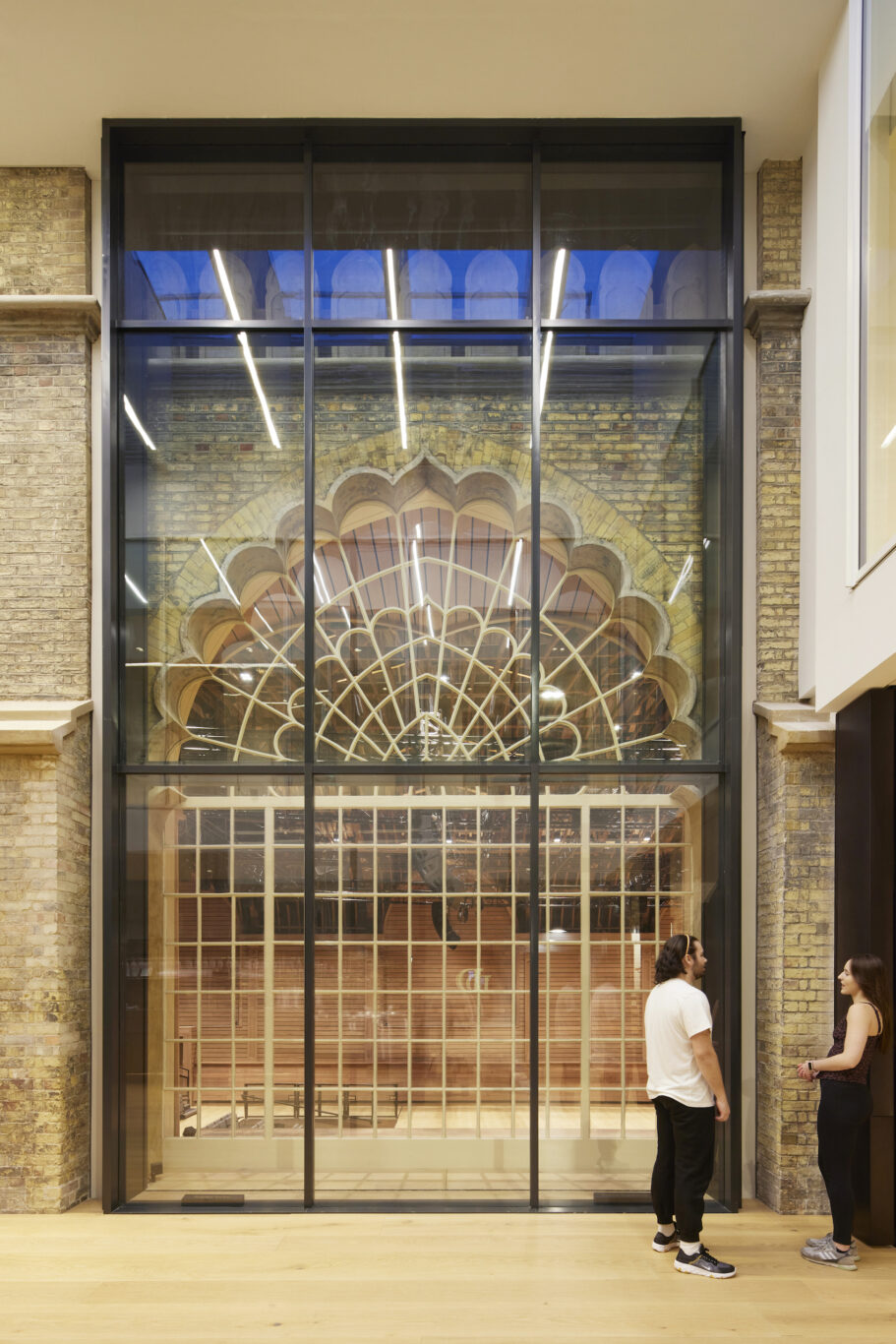
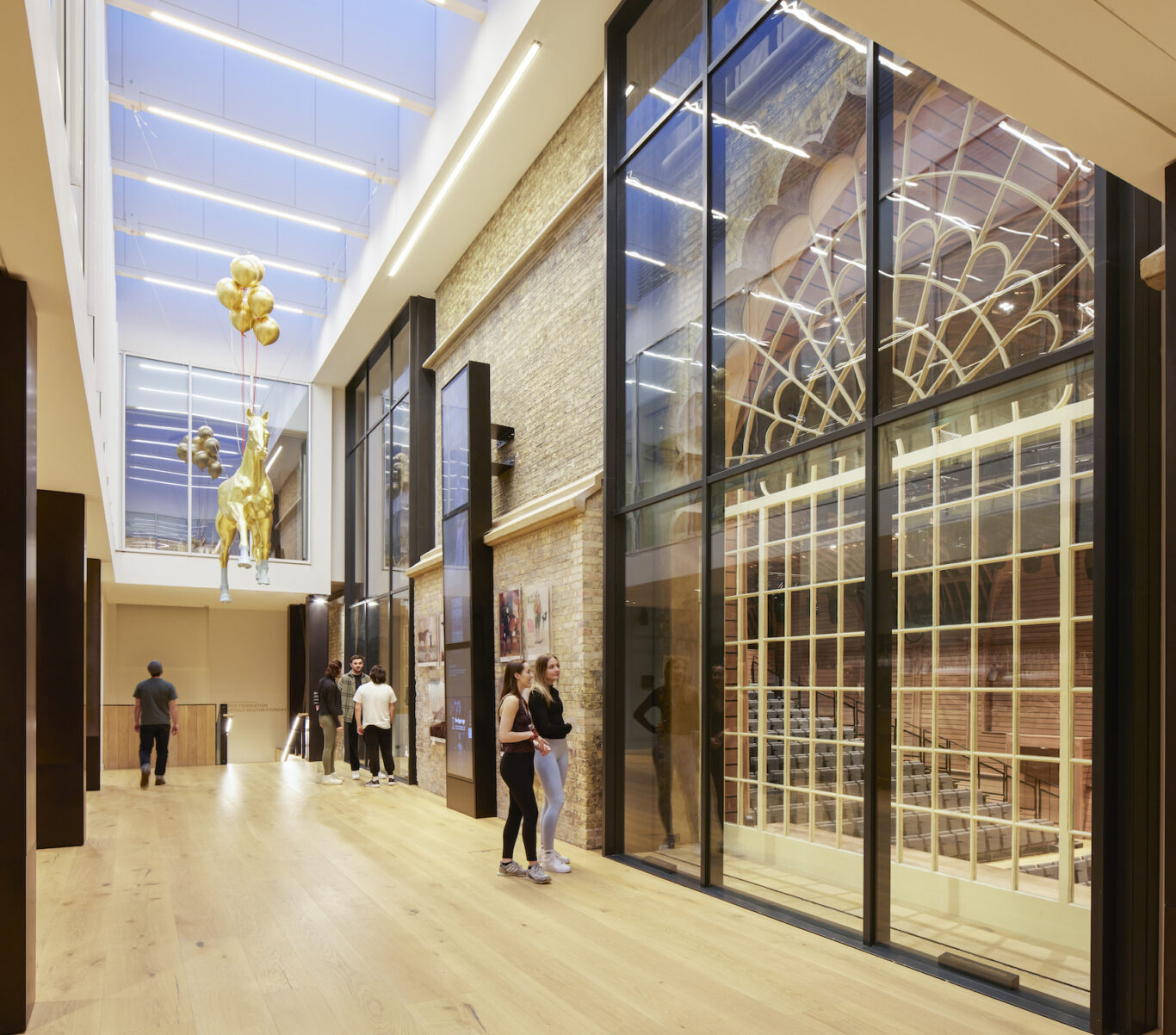
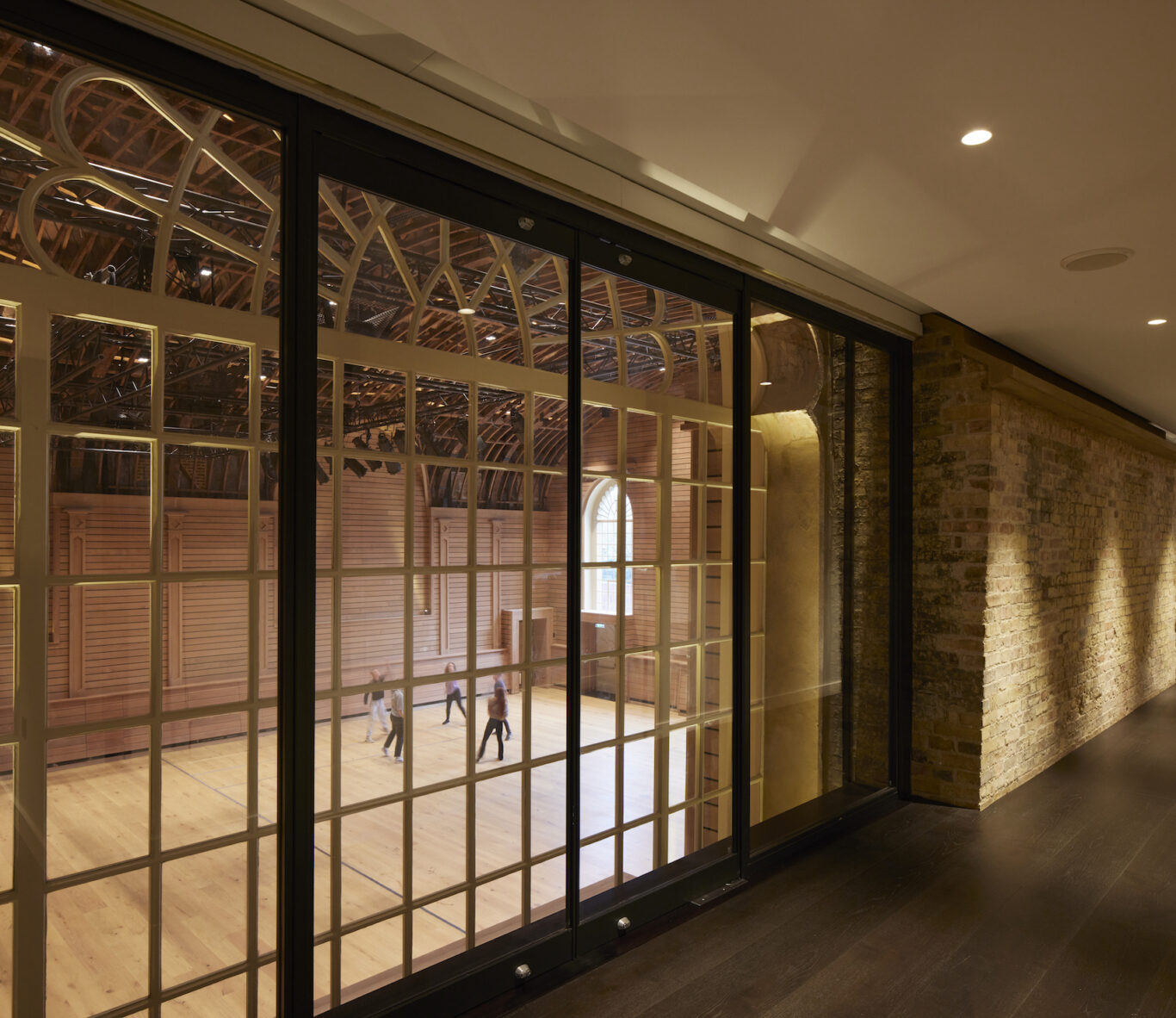
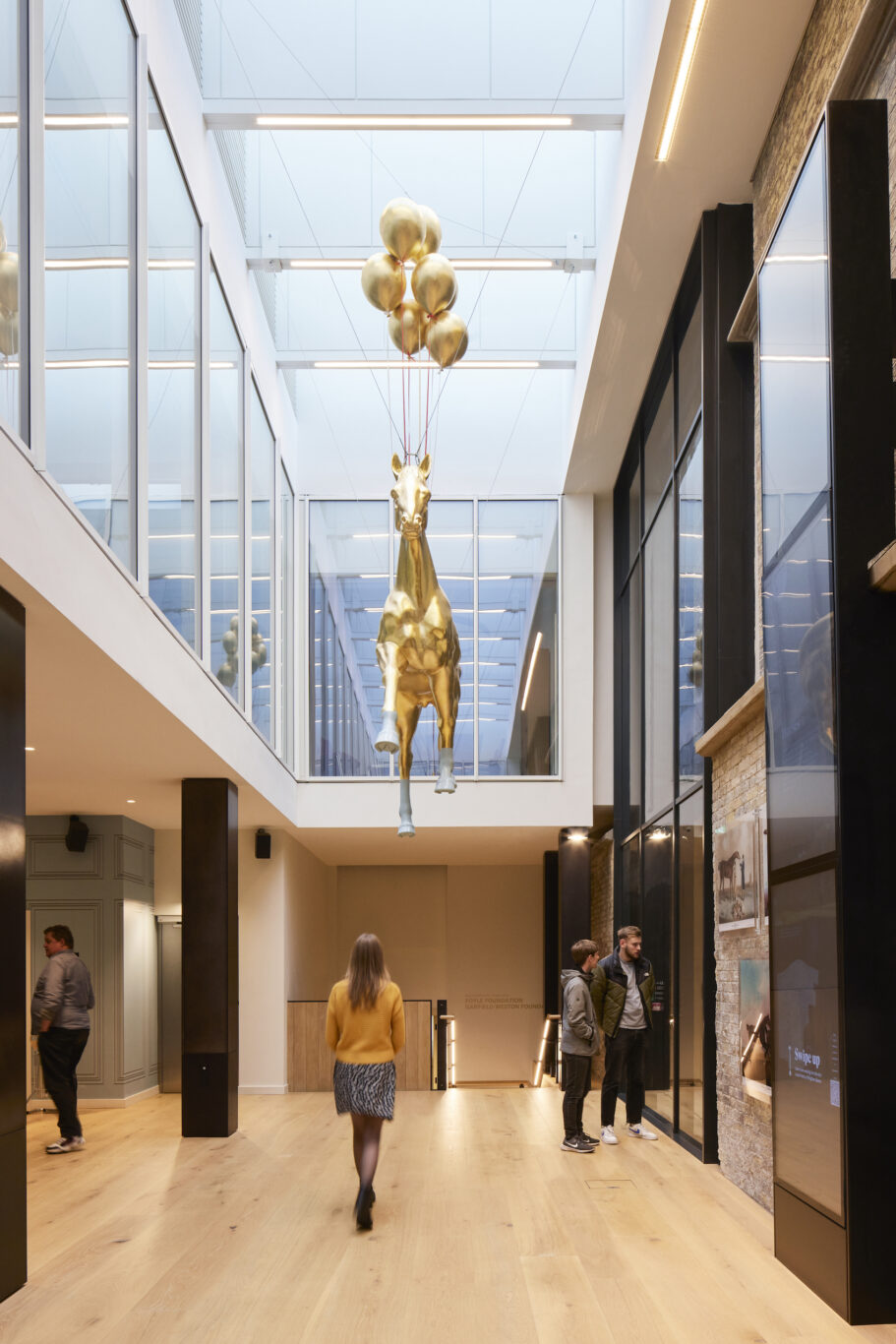
The scale and complexity of the Brighton Dome meant our team had to combine engineering precision with adaptive craftsmanship.
Installation required close coordination with multiple contractors, as large cladding sections were fitted while other trades were actively working on site. Communication, planning, and flexibility were essential to ensure the project’s smooth progress and timely delivery.
Certain architectural components, due to their size and geometry, needed to be TIG welded directly on site by our skilled craftsmen. This process demanded not only technical proficiency but also a deep respect for the surrounding historic structure ensuring all work was executed with minimal disruption to the existing fabric.
Our engineers and fabricators brought a problem-solving mindset to every challenge, combining traditional hand skills with advanced fabrication techniques to achieve a flawless finish that met both aesthetic and structural expectations.
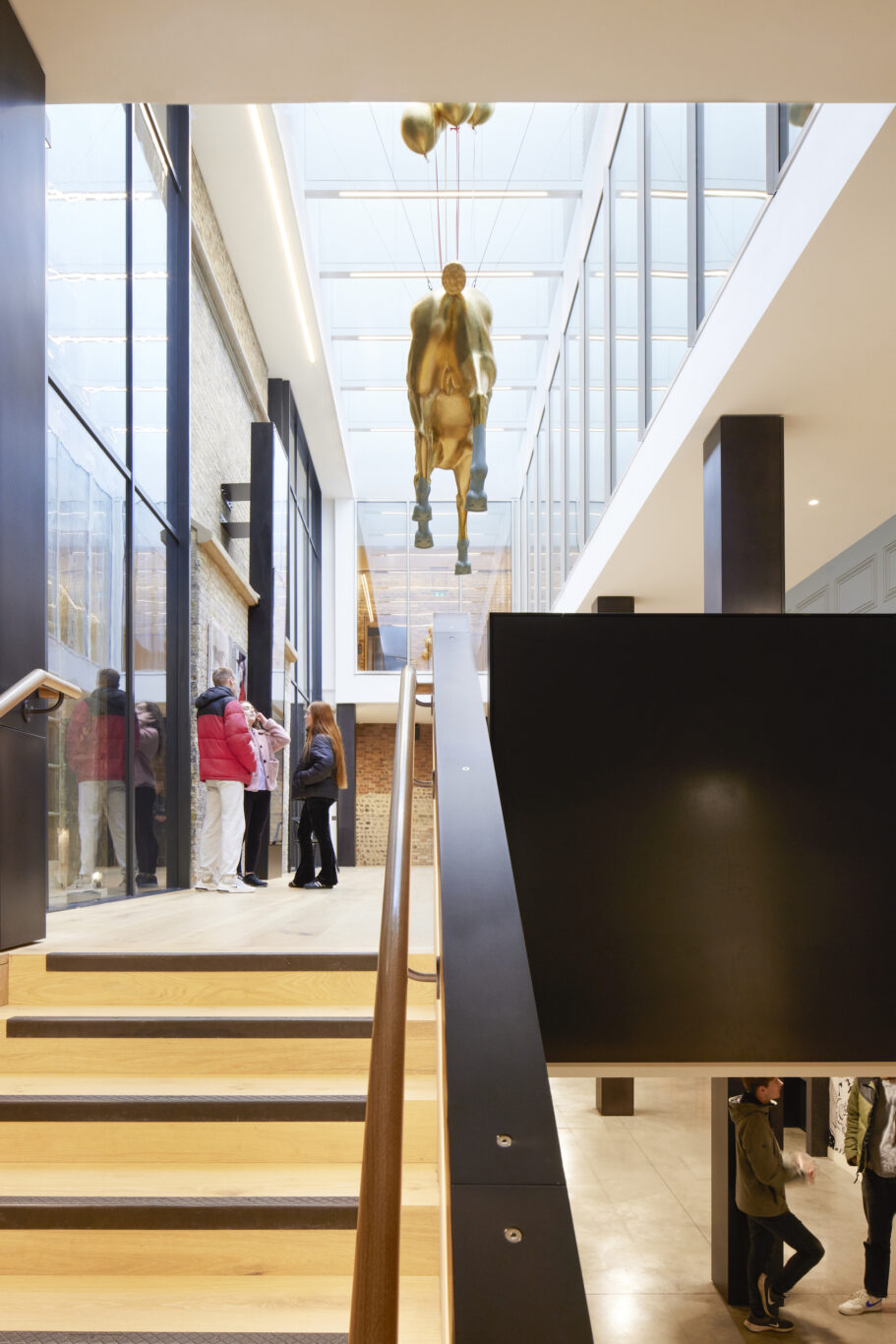
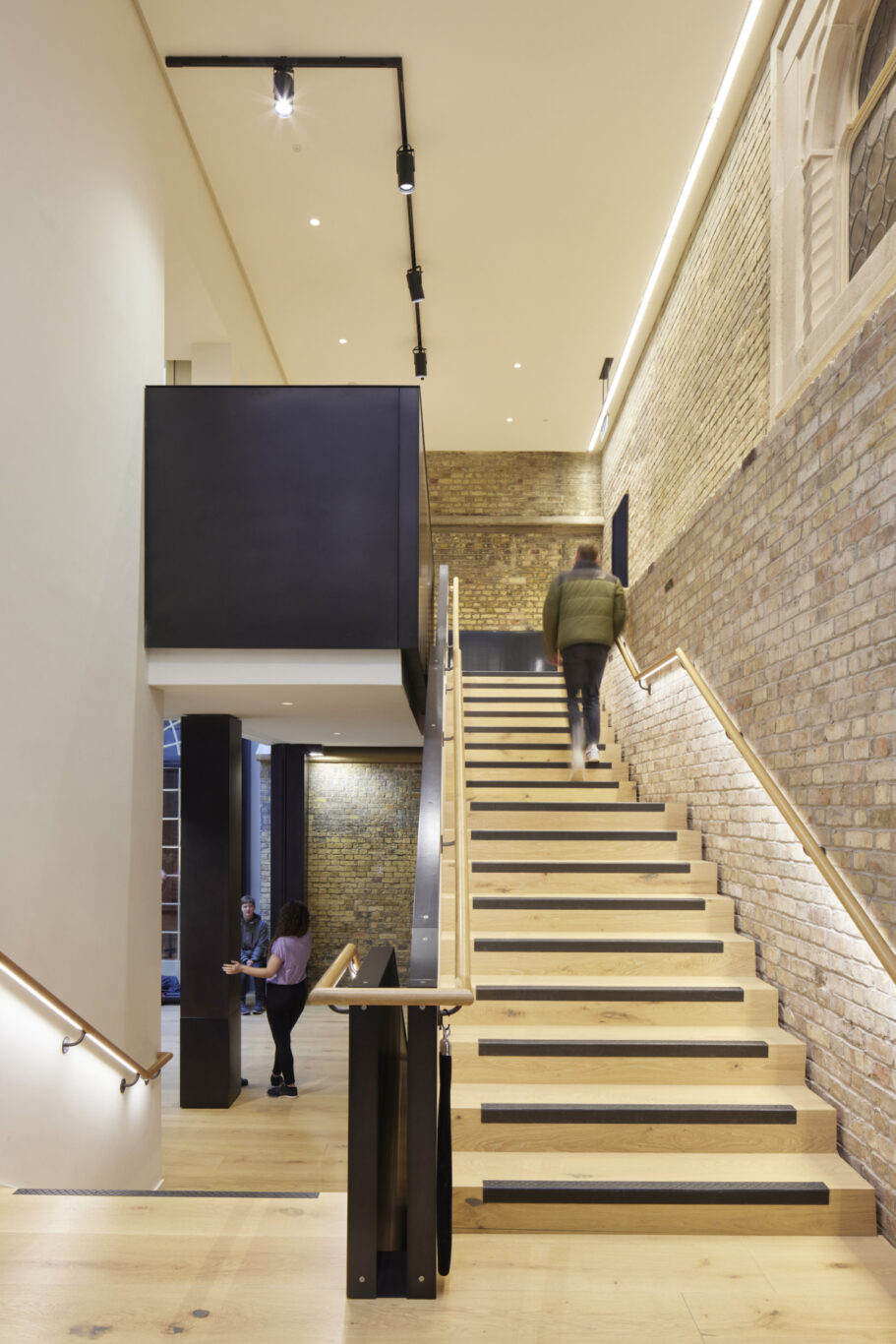
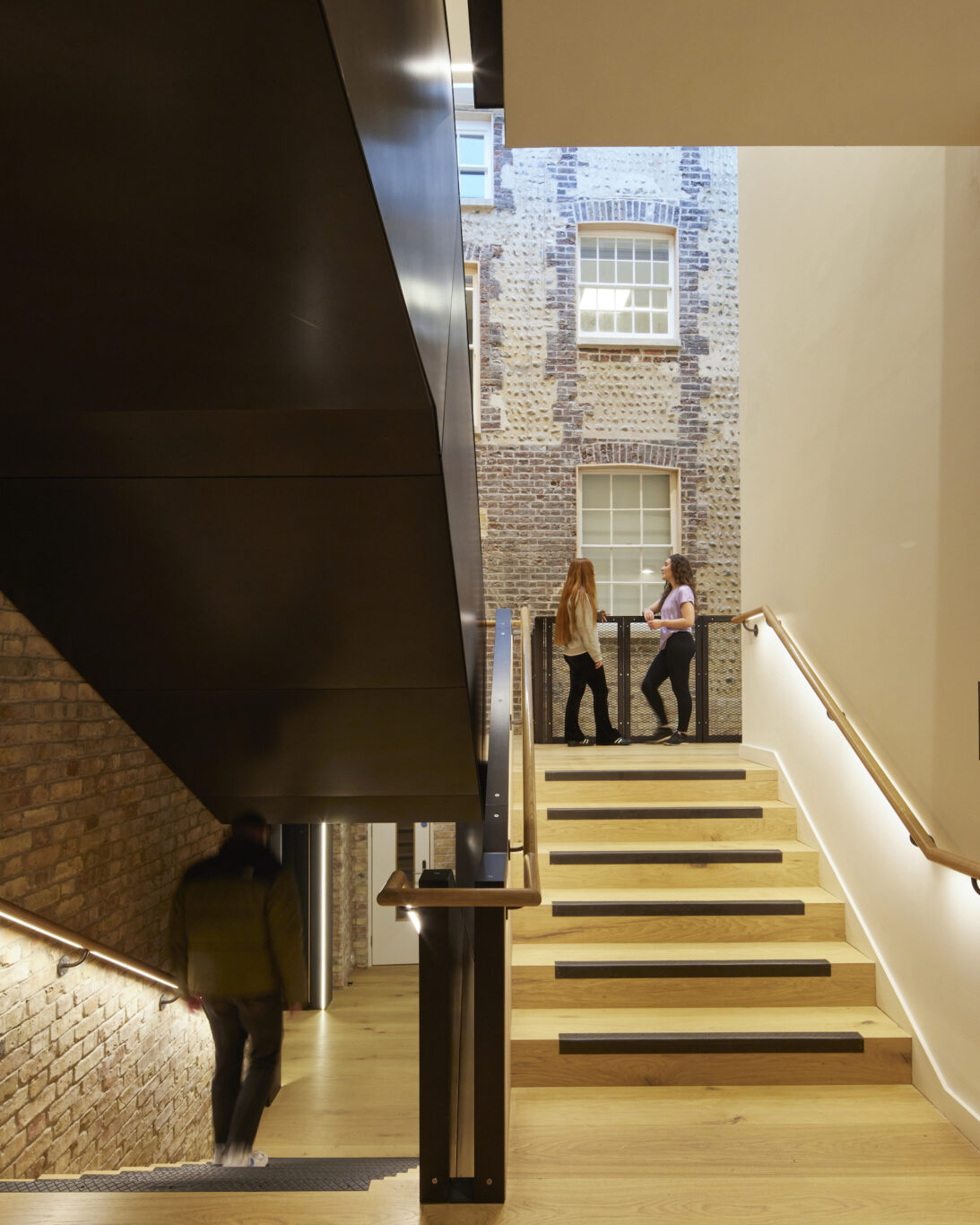
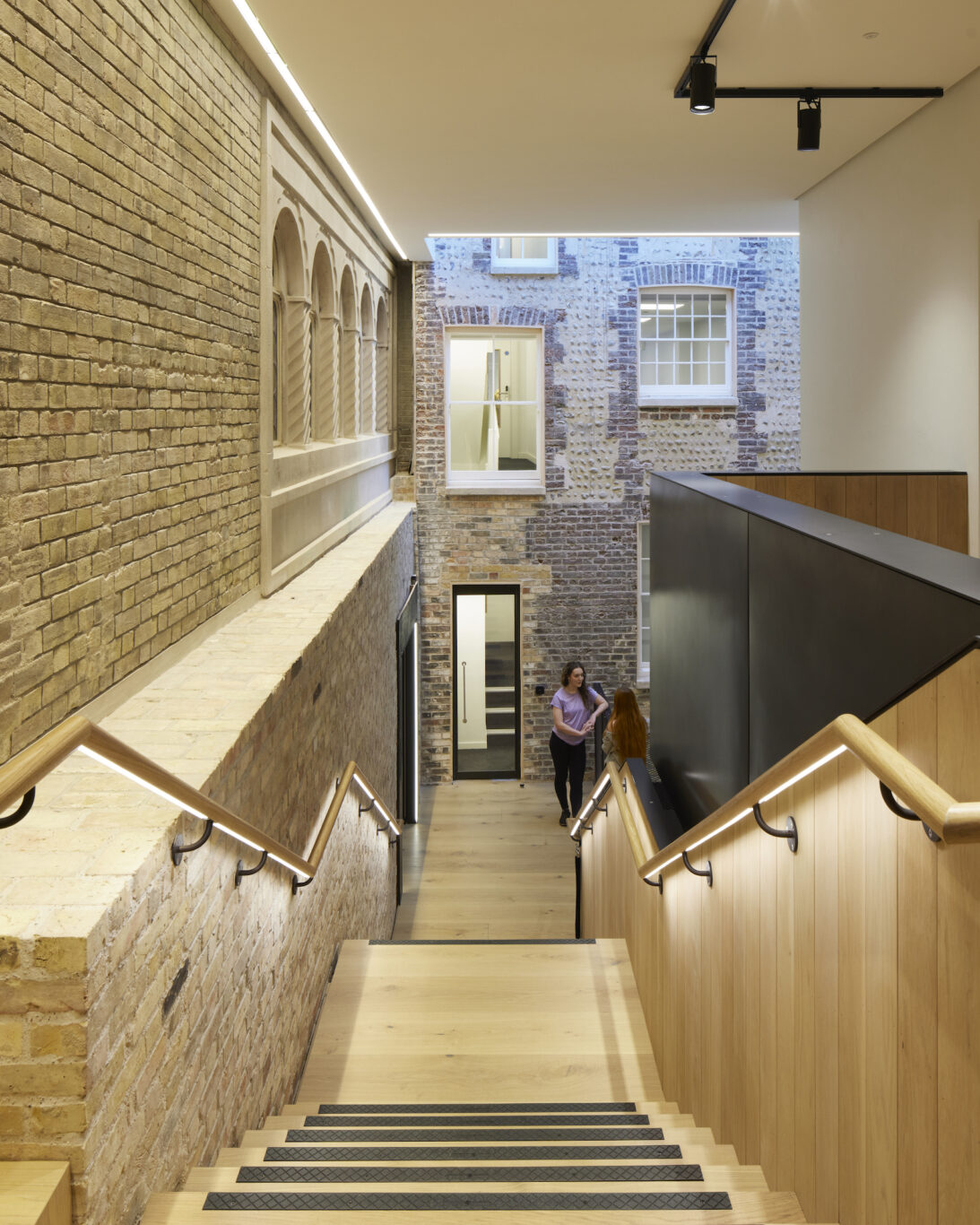
The completed Brighton Dome restoration showcases how heritage architecture and contemporary engineering can coexist beautifully. The essential conservation work undertaken by FCBStudios and the project team has restored hidden features, unveiled historic spaces, and introduced modern amenities that elevate the visitor experience.
New foyers, a top-lit bar, gallery spaces, and a restaurant opening onto New Road now connect the cultural complex to the wider city, while accessibility upgrades and improved circulation have made the venue more inclusive for audiences, performers, and staff alike.
For CDC Engineering, contributing to such a landmark project stands as a testament to our commitment to craftsmanship, precision, and collaboration. Our metalwork forms part of the building’s renewed identity, a contemporary layer that celebrates the past while looking confidently to the future.
Based in Shoeburyness, Essex, CDC Engineering specialises in architectural metalwork, structural fabrication, and bespoke design solutions for heritage restorations, commercial interiors, and large-scale public projects. Our dedicated team of engineers, welders, and fabricators combine technical expertise with artistic craftsmanship to deliver metalwork of the highest quality, designed, built, and finished in-house.
Architect: Buckley Gray Yeoman
Client: Private Developer
Sector: Commercial Refurbishment / Heritage
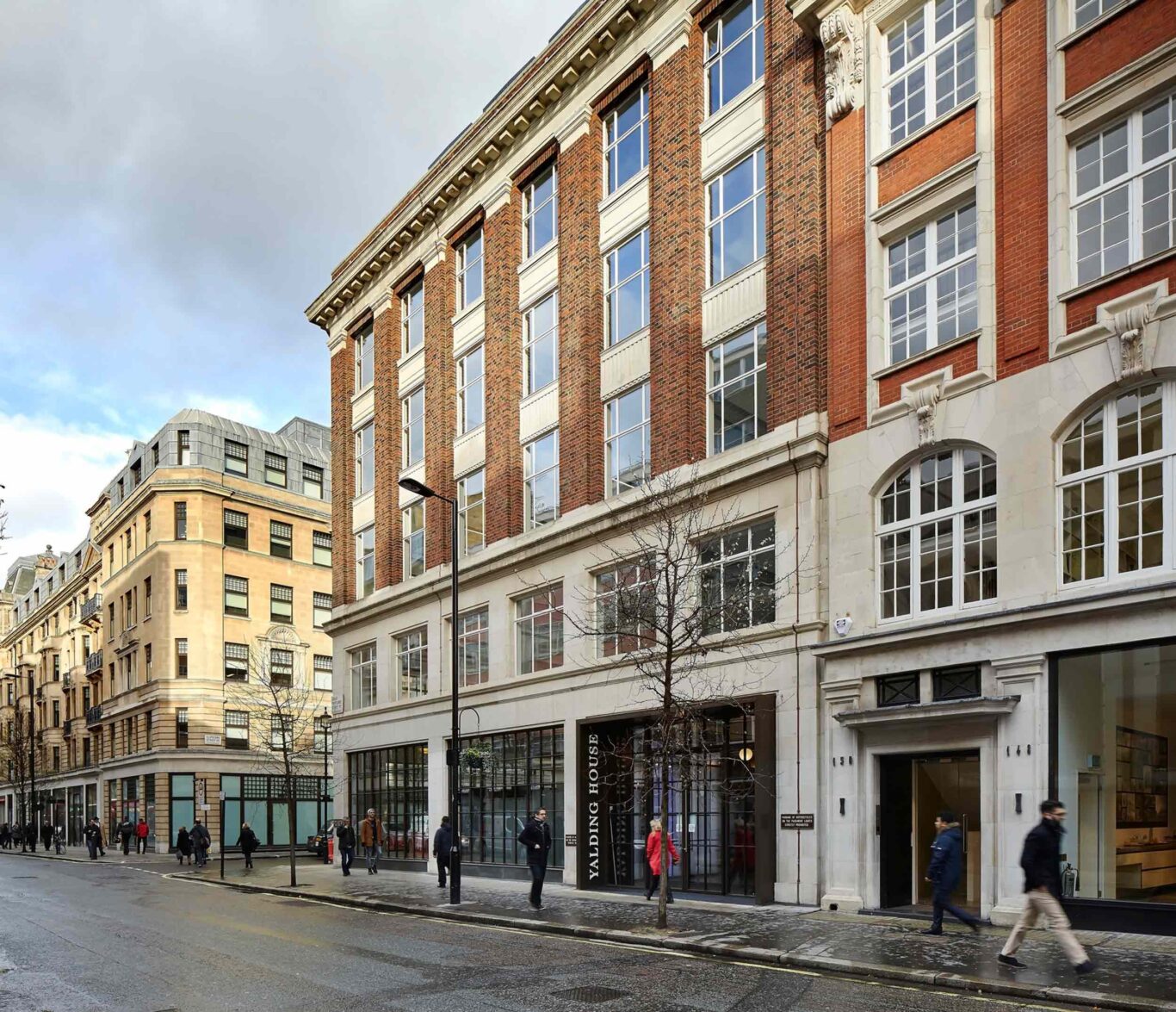
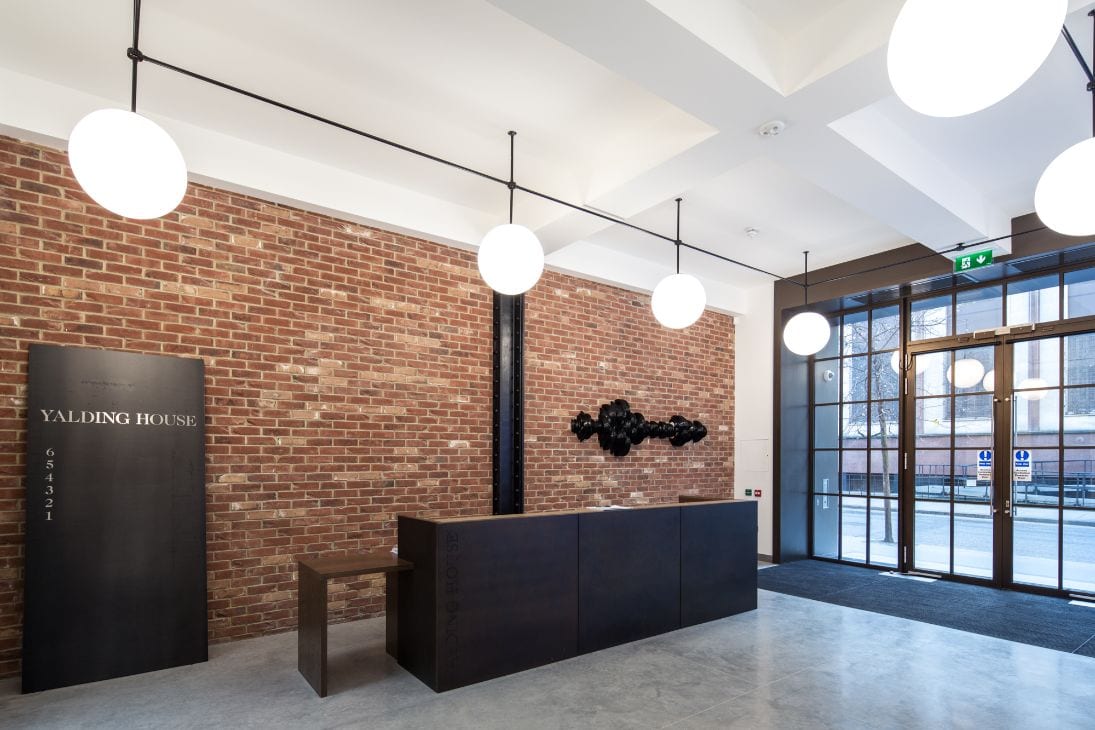
Yalding House, located on Great Portland Street in Fitzrovia, is a celebrated 1930s office building that served as the home of BBC Radio’s Music Department for over 60 years, housing Radio 1, Radio 3, and the BBC’s Central Music Library.
Following the BBC’s relocation in 2013, the building underwent a comprehensive refurbishment to return it to modern office use while preserving its unique heritage.
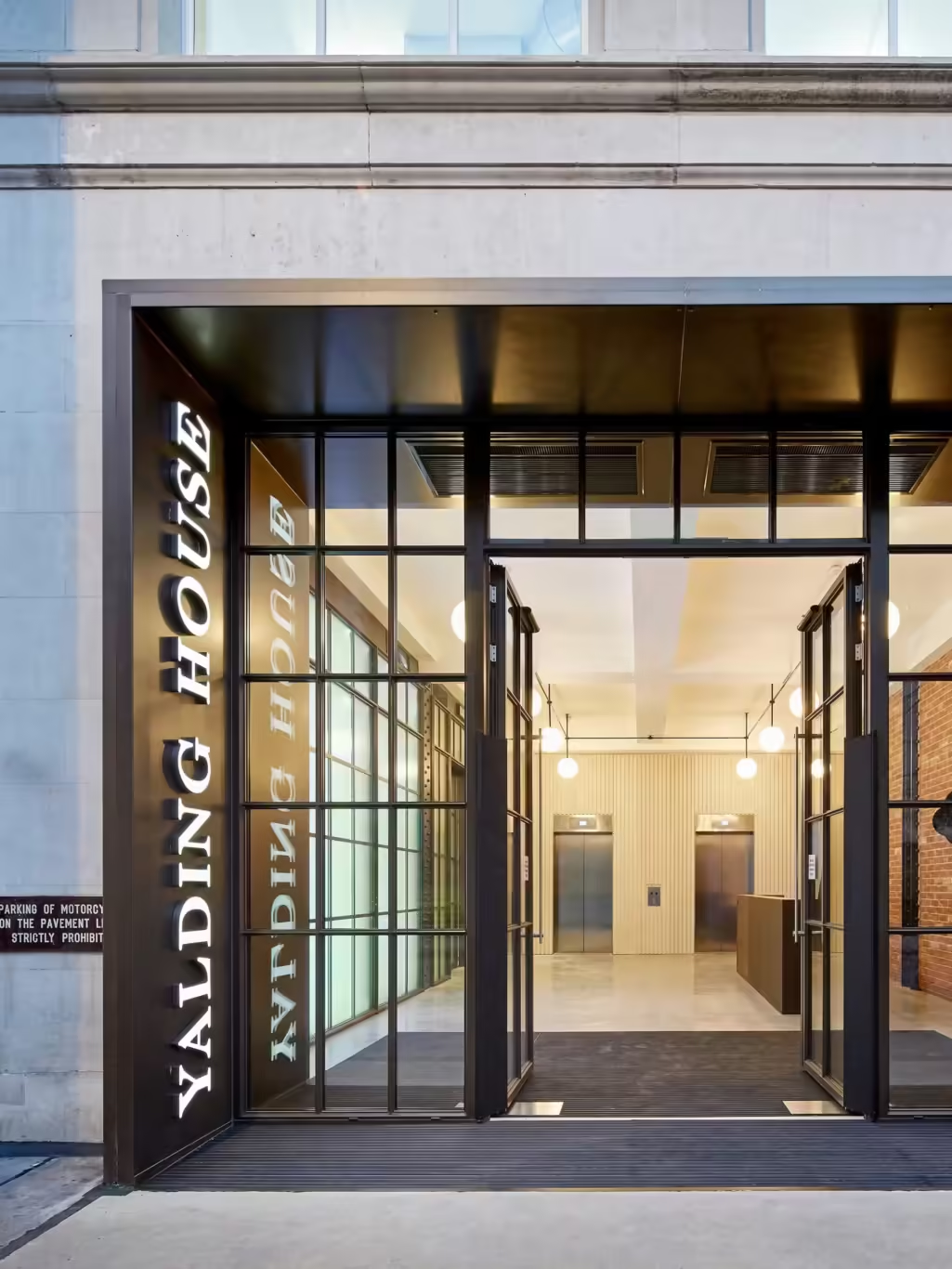
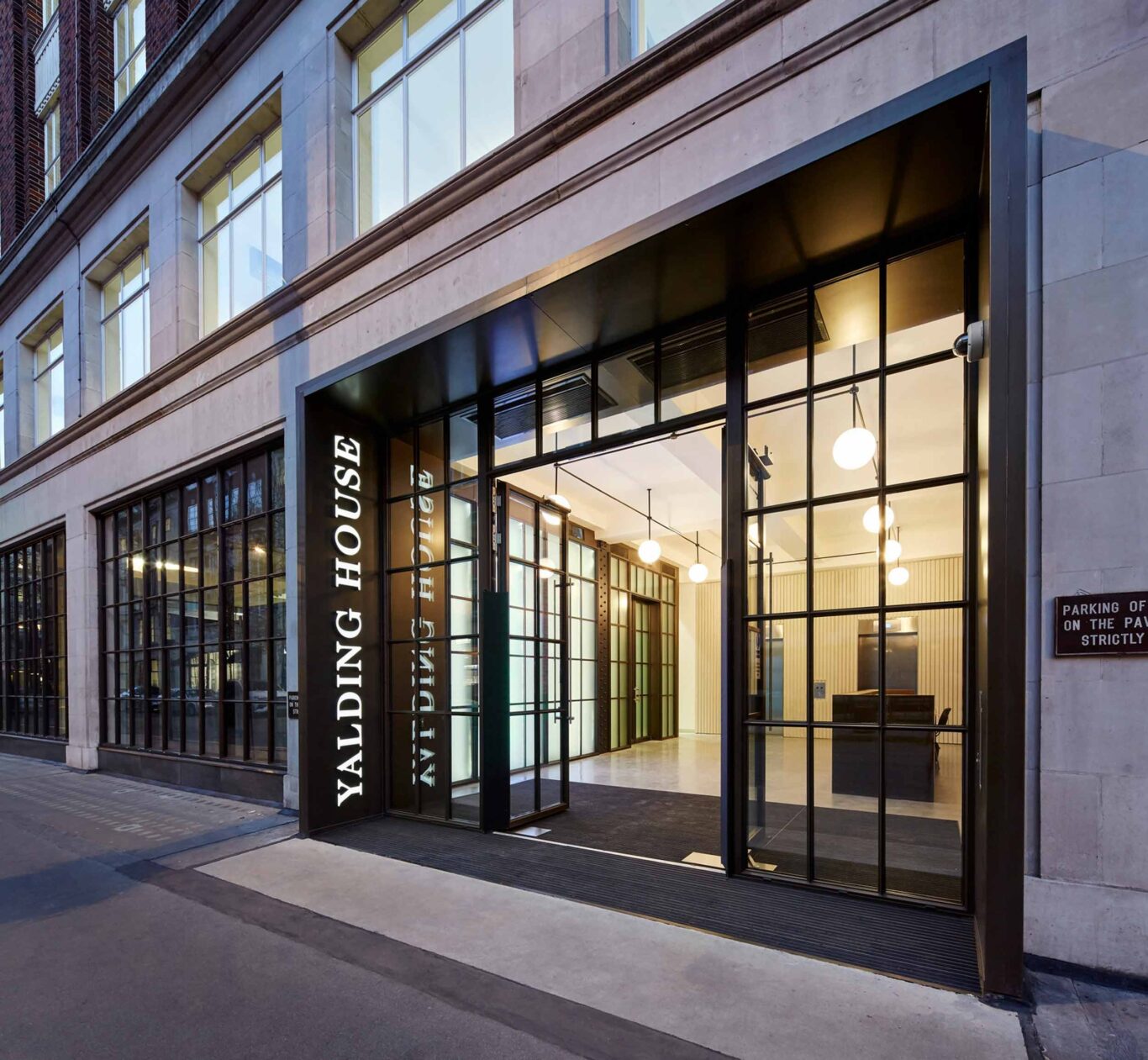
Appointed by Buckley Gray Yeoman Architects, CDC Engineering delivered a full suite of bespoke architectural metalwork that seamlessly bridges the building’s industrial past with its refined contemporary identity.
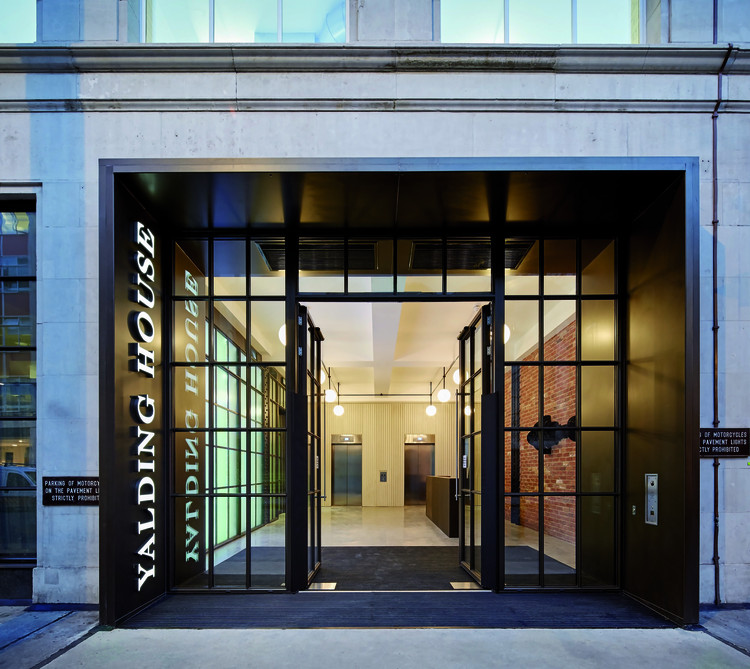
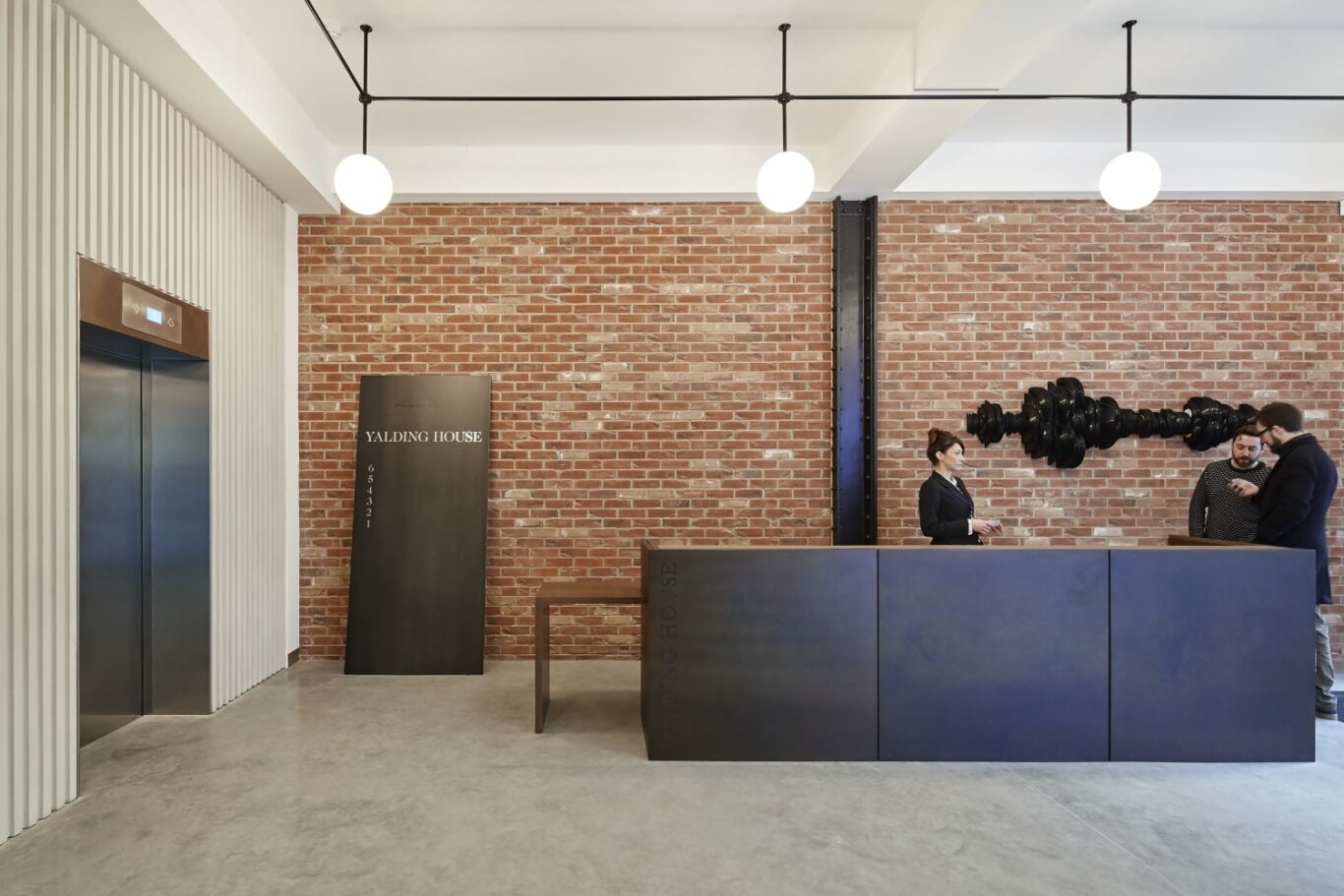
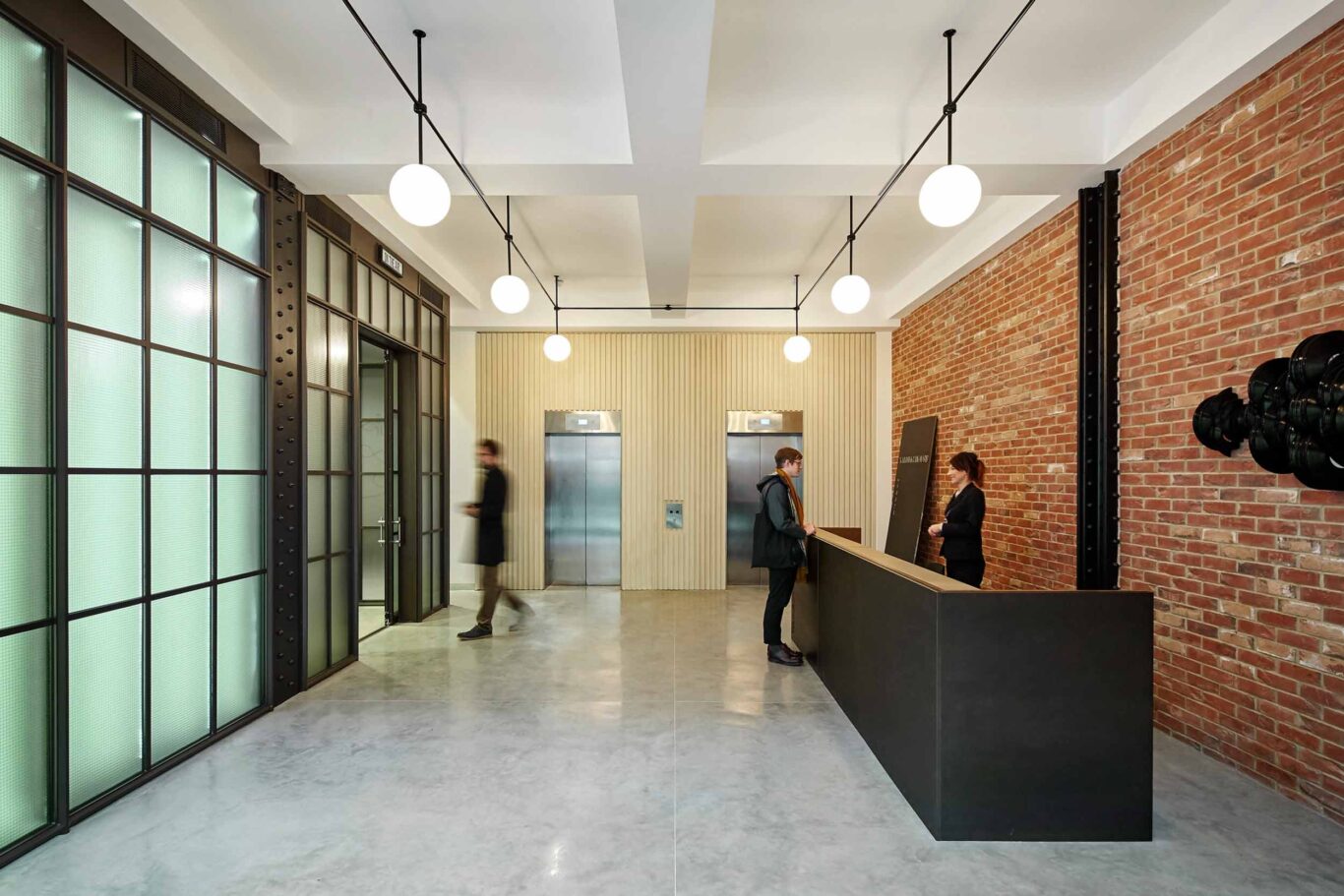
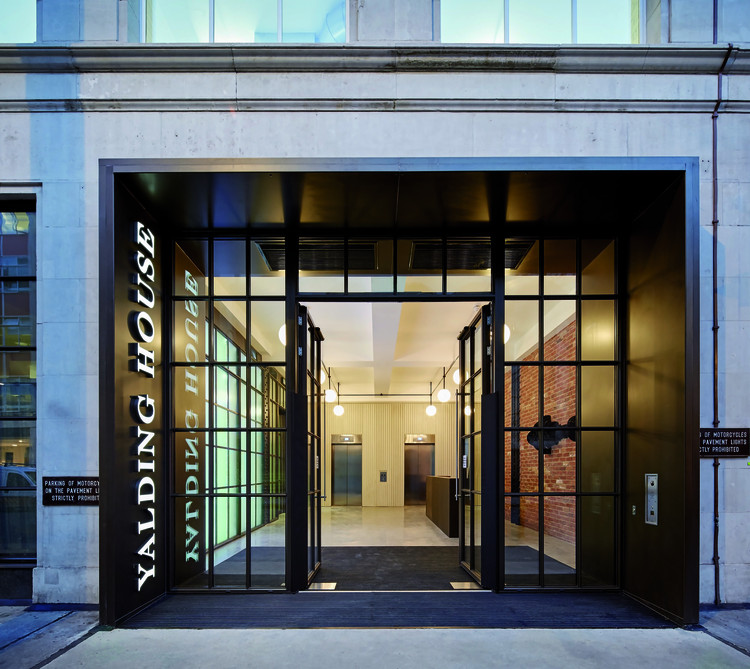
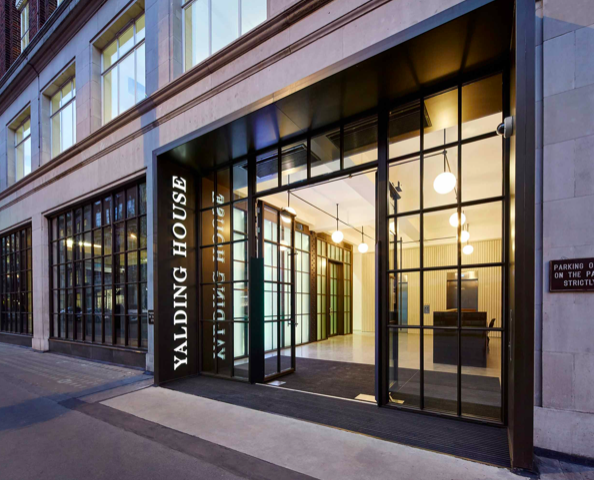
CDC Engineering was responsible for the design, engineering, manufacture, and installation of a range of feature metalwork elements across the building, combining hot rolled black lacquer finish with aged brass detailing to create a cohesive material language throughout.
Key Deliverables:
All components were designed, engineered, and finished entirely in-house by CDC Engineering’s specialist teams, ensuring absolute control over quality and visual consistency:

The completed metalwork integrates seamlessly with the building’s architectural narrative — robust yet refined, industrial yet elegant.
The use of hot rolled black lacquered steel and aged brass reflects the craftsmanship of the past while presenting a sophisticated, modern identity for today’s occupants.
Delivered on time and to exacting standards, the project highlights CDC Engineering’s full in-house capability — from concept design to specialist finishing — combining technical precision, aesthetic understanding, and meticulous execution on heritage-sensitive commercial refurbishments.
Client Testimonial
“CDC Engineering brought our design vision to life with precision and artistry. Their attention to detail and craftsmanship were exceptional throughout, and the final result at Yalding House perfectly balances modern refinement with historical integrity.”
— Project Architect, Buckley Gray Yeoman
Get in touch with our team via email admin@cdc-engineering.co.uk or calling 01702 294449
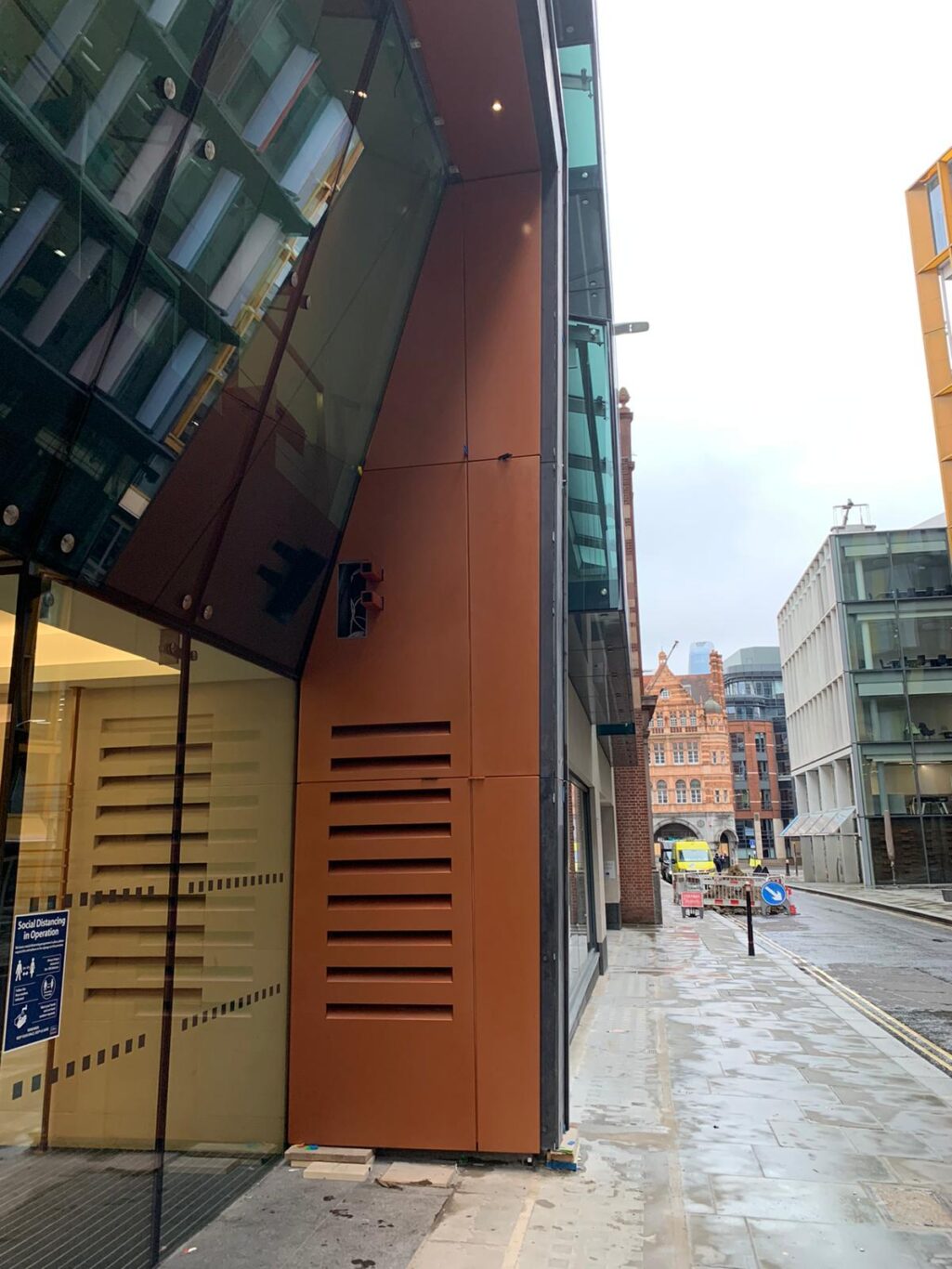
10 Old Bailey, completed in 2009, stands within the St Paul’s Conservation Zone and sits alongside the iconic Grade II* listed Central Criminal Court. The building was originally designed to provide high-quality office space, with a focus on blending modern functionality with the historic character of the area.
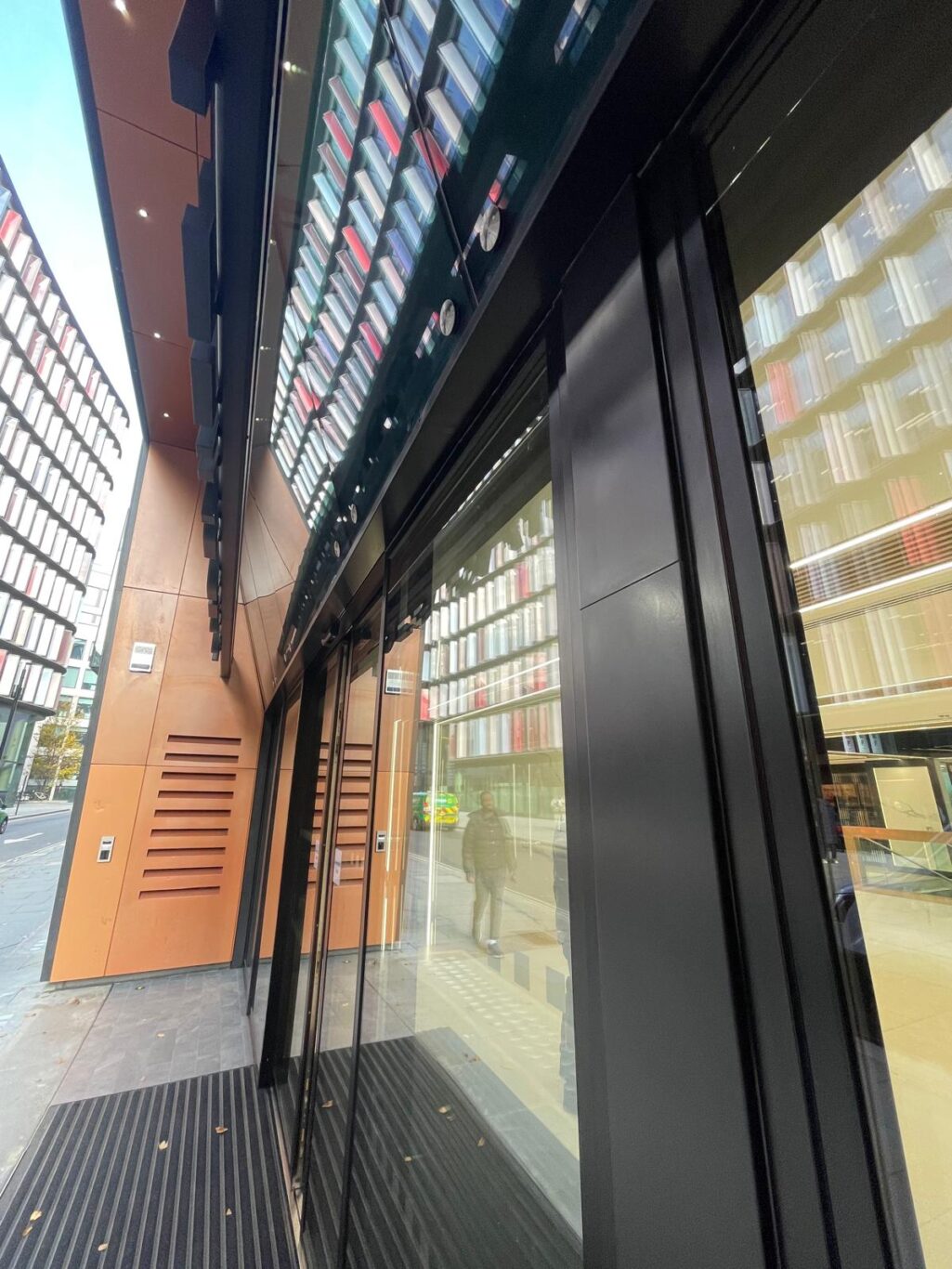
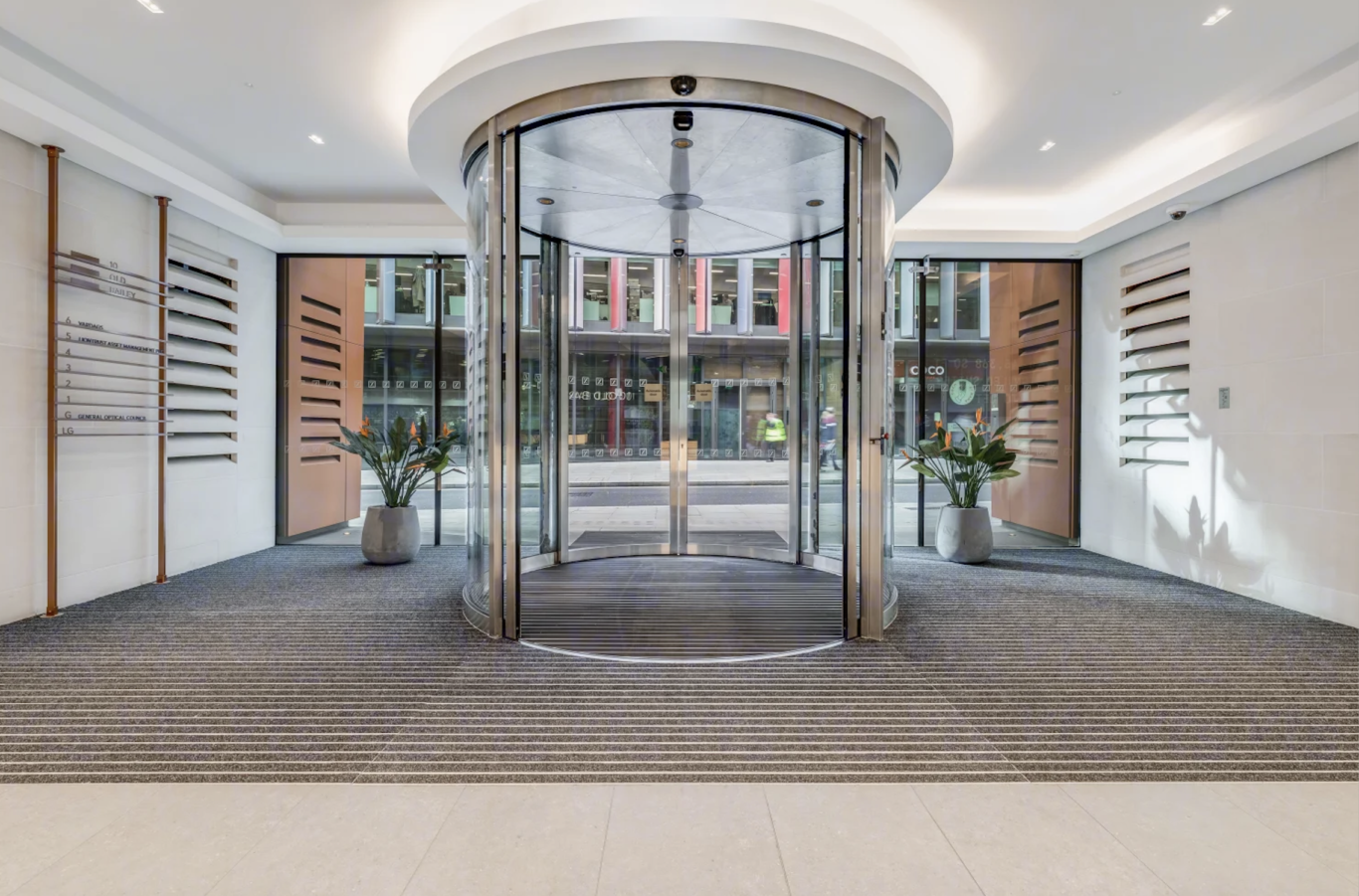
A recent refurbishment sought to elevate the building to a higher standard—differentiating it from conventional offices by introducing an executive lounge-style reception, a grand feature lightbox, and a reimagined entrance portico. These upgrades were carefully considered to reflect the building’s architectural surroundings while enhancing its street presence and internal environment.
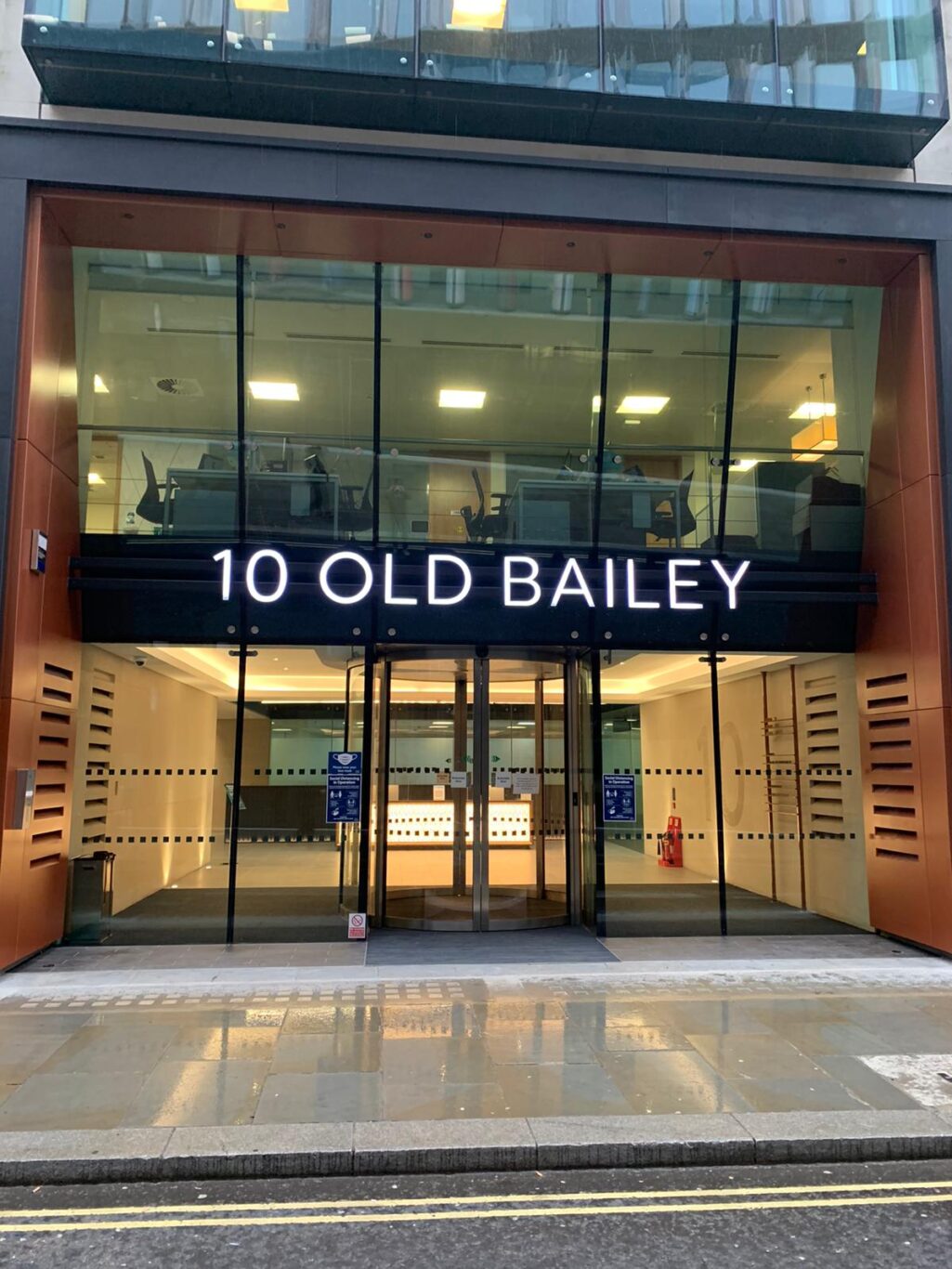
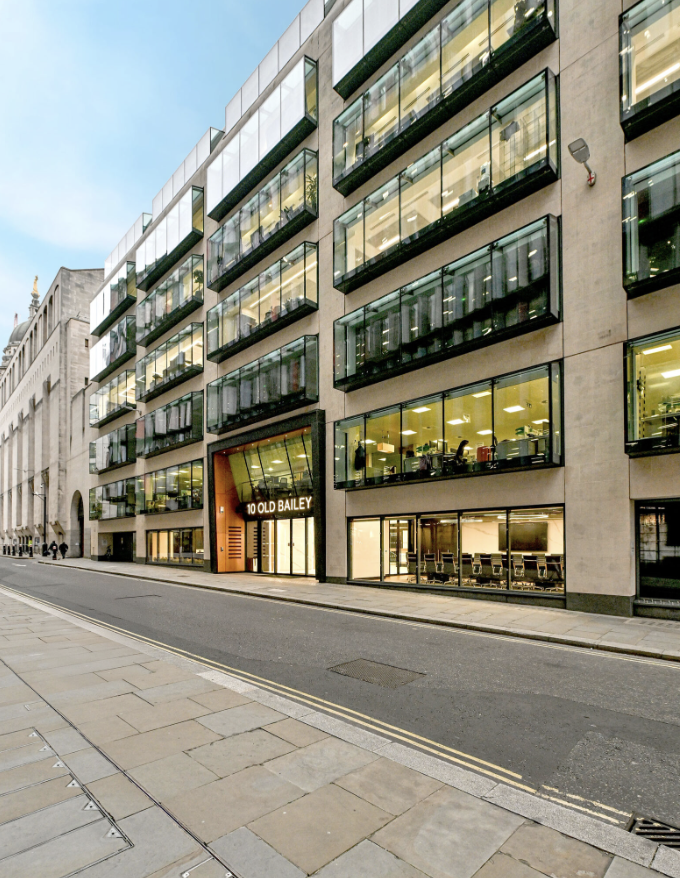
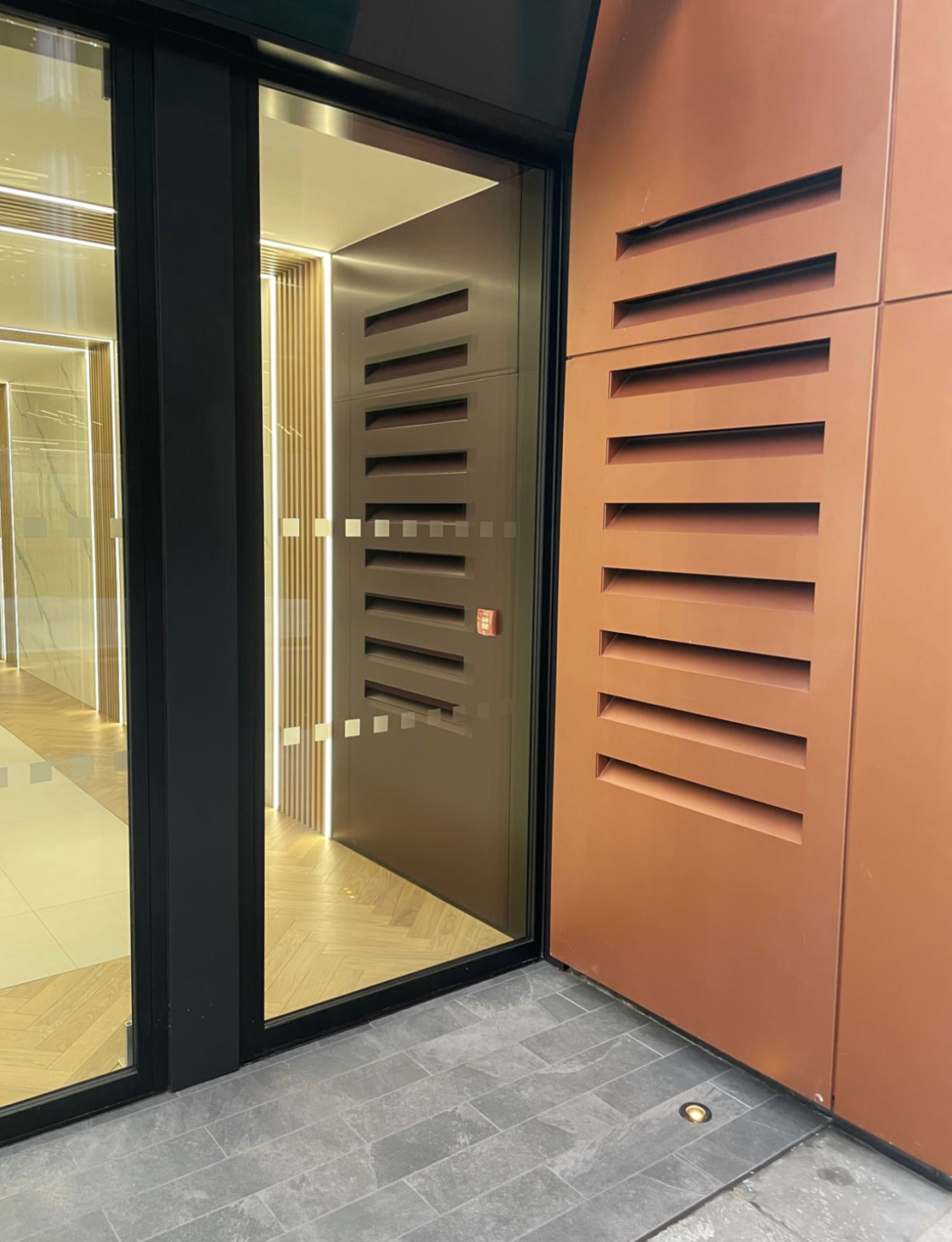
CDC Engineering was proudly subcontracted by Whittle Interiors to deliver specialist metalwork and architectural finishes for this landmark project. Our scope included two key elements:
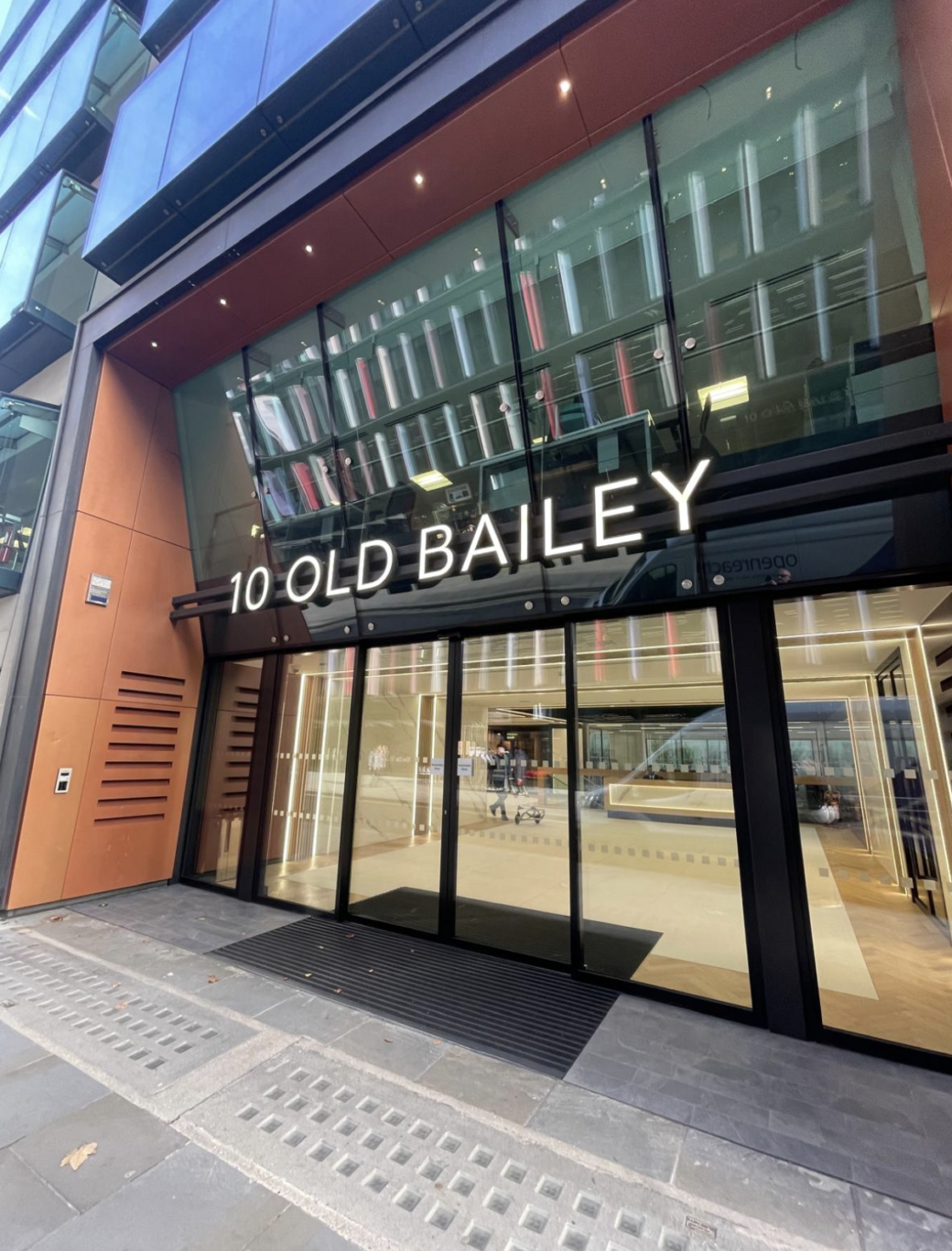
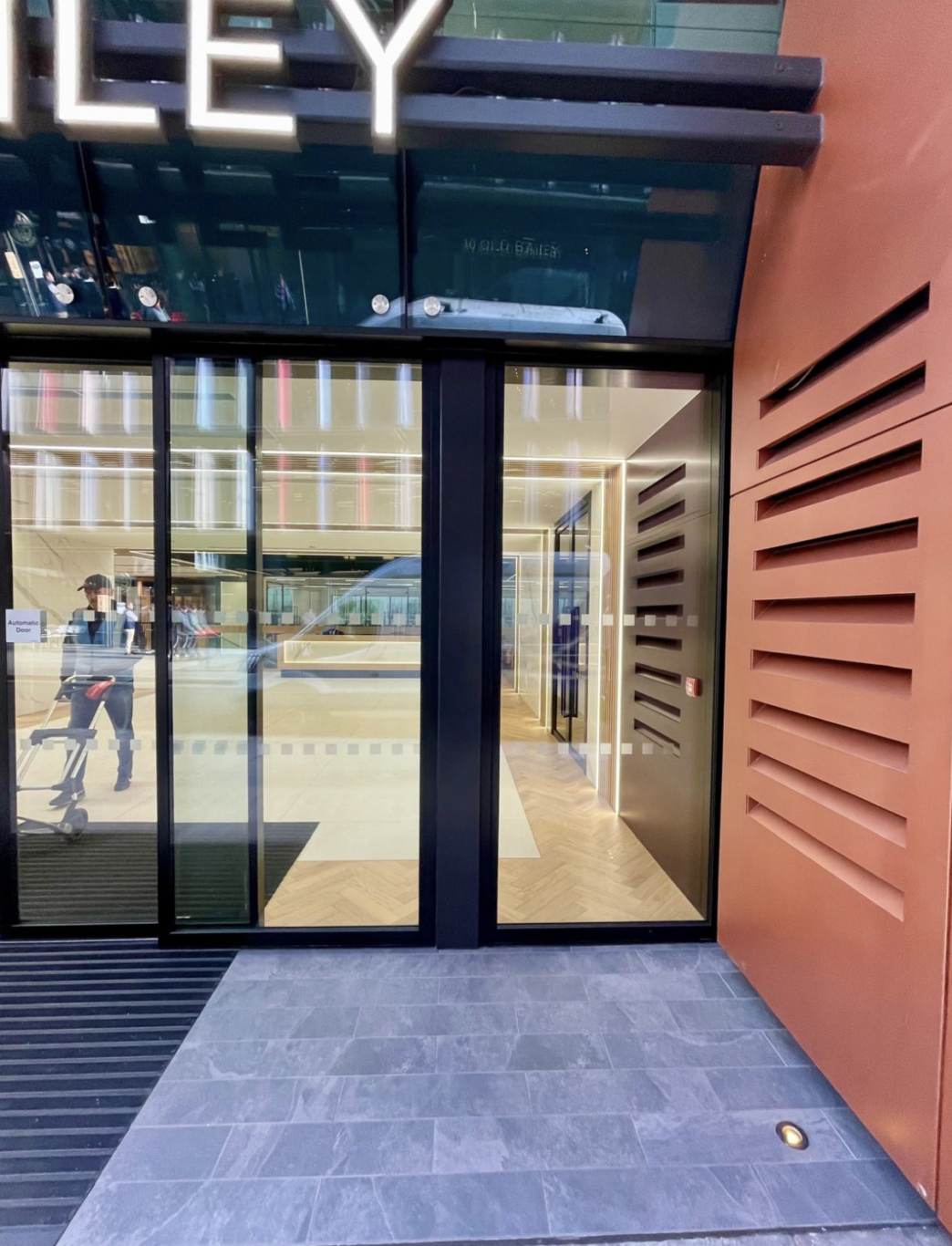
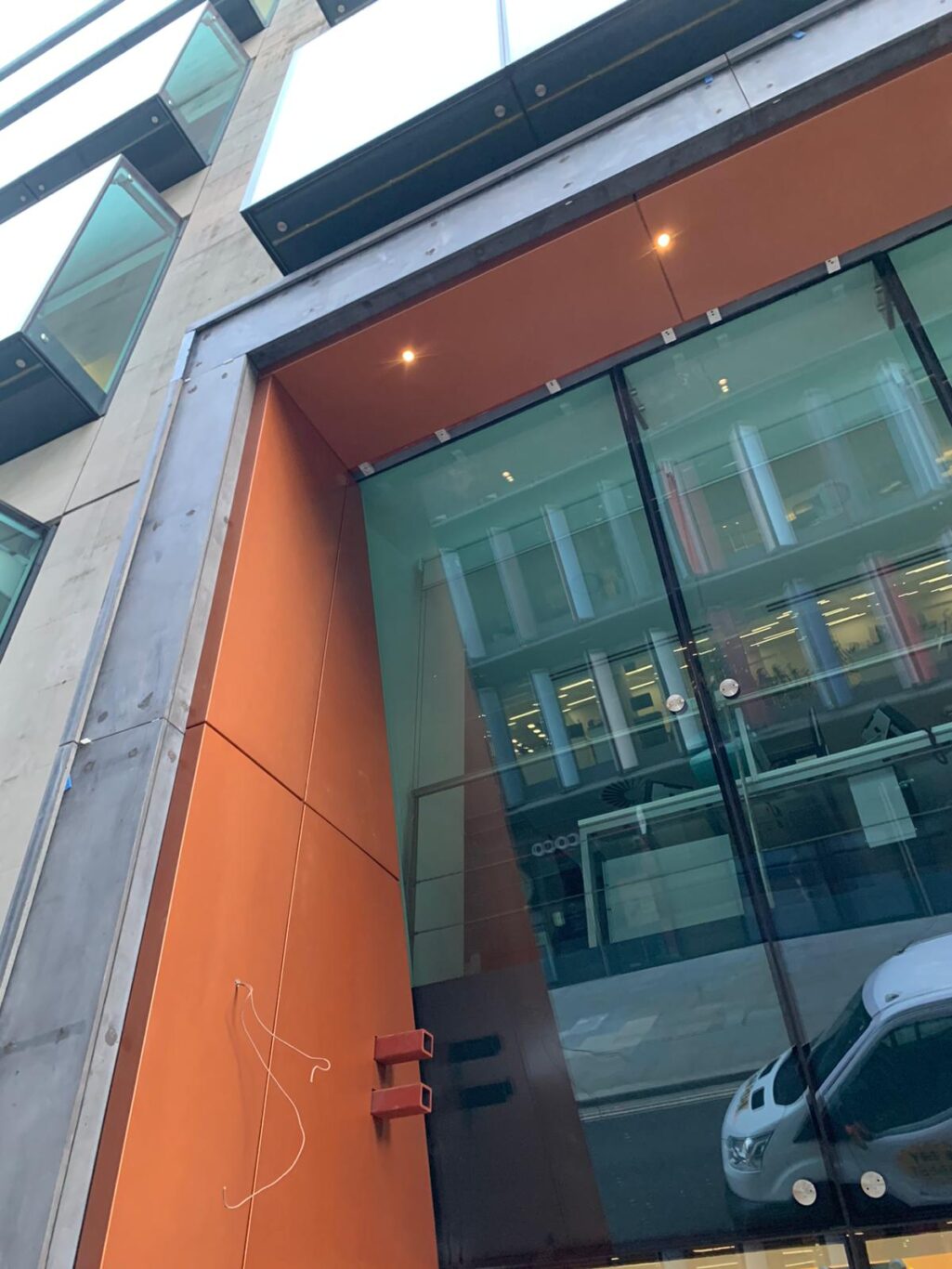
The result is a bold and refined building identifier that enhances the street presence of 10 Old Bailey and complements the architectural upgrades.
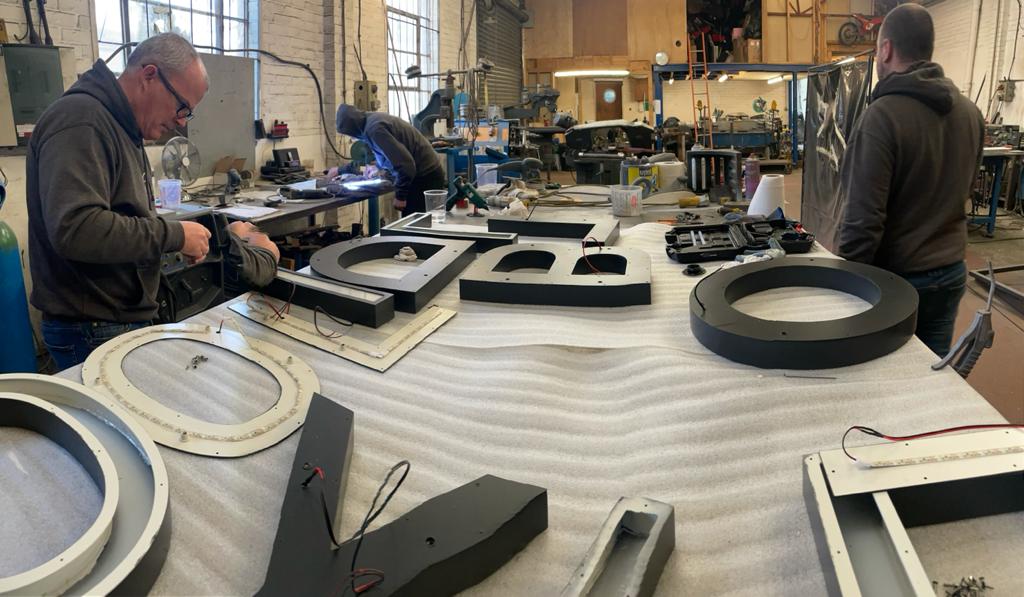
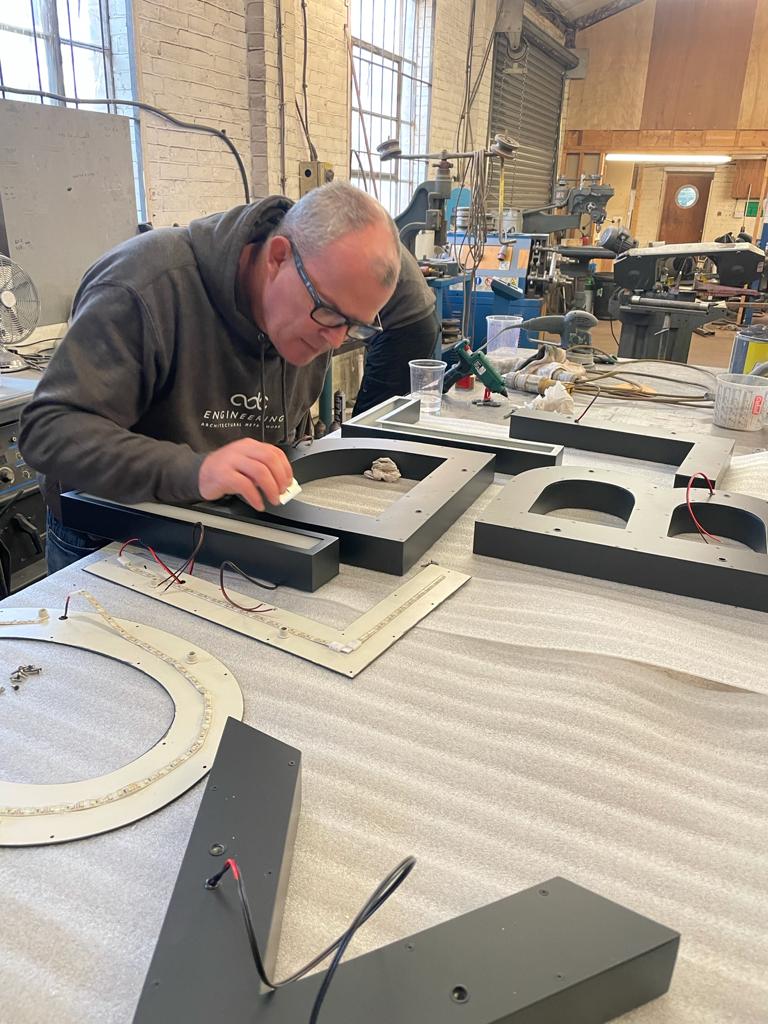
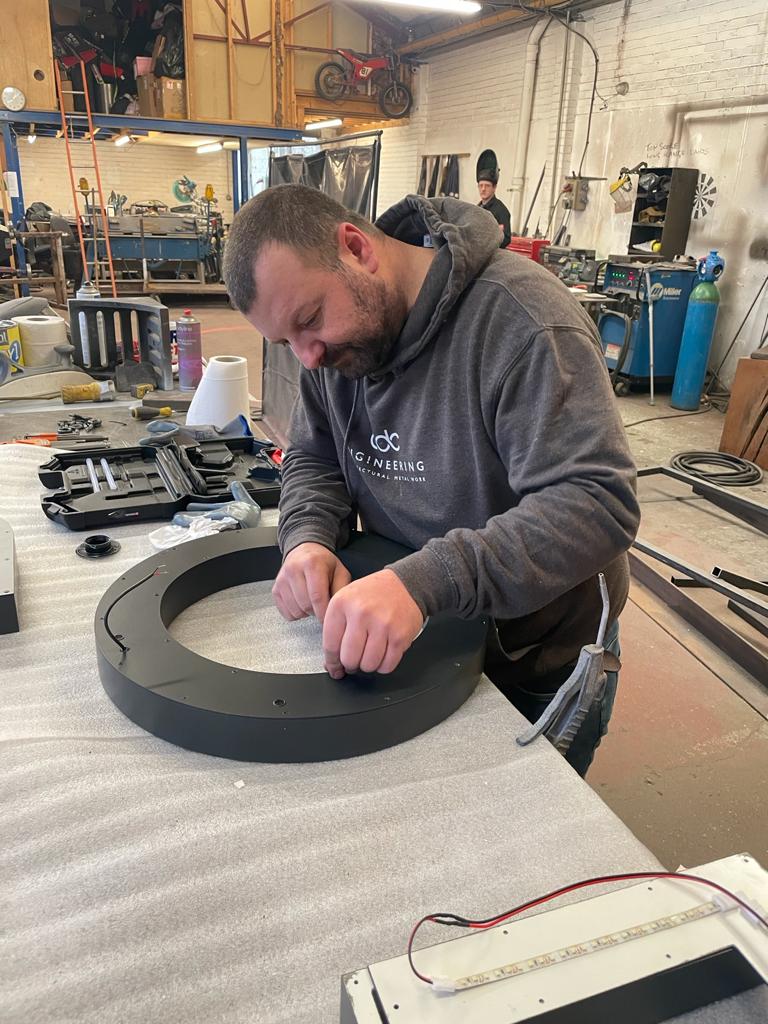
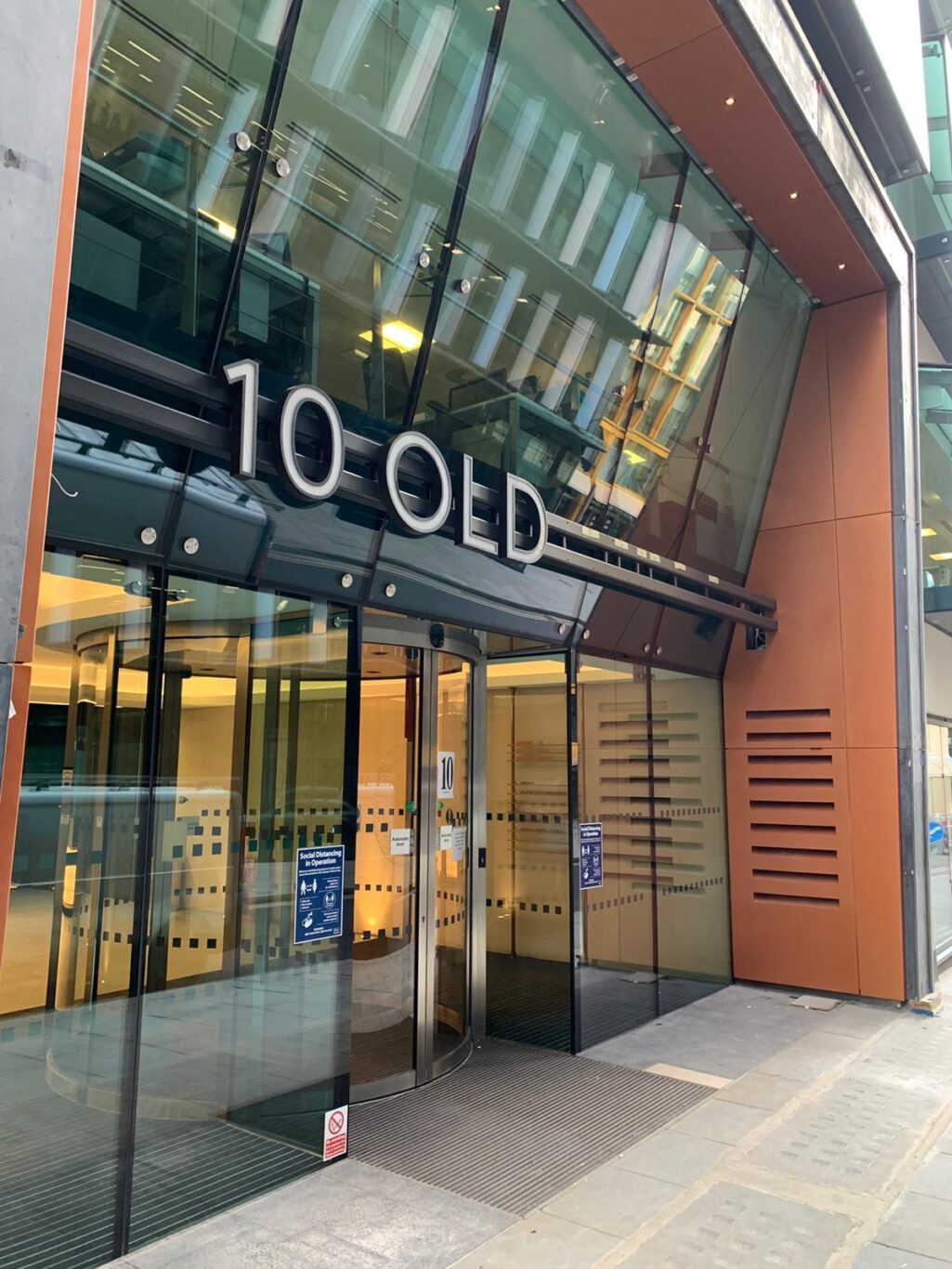
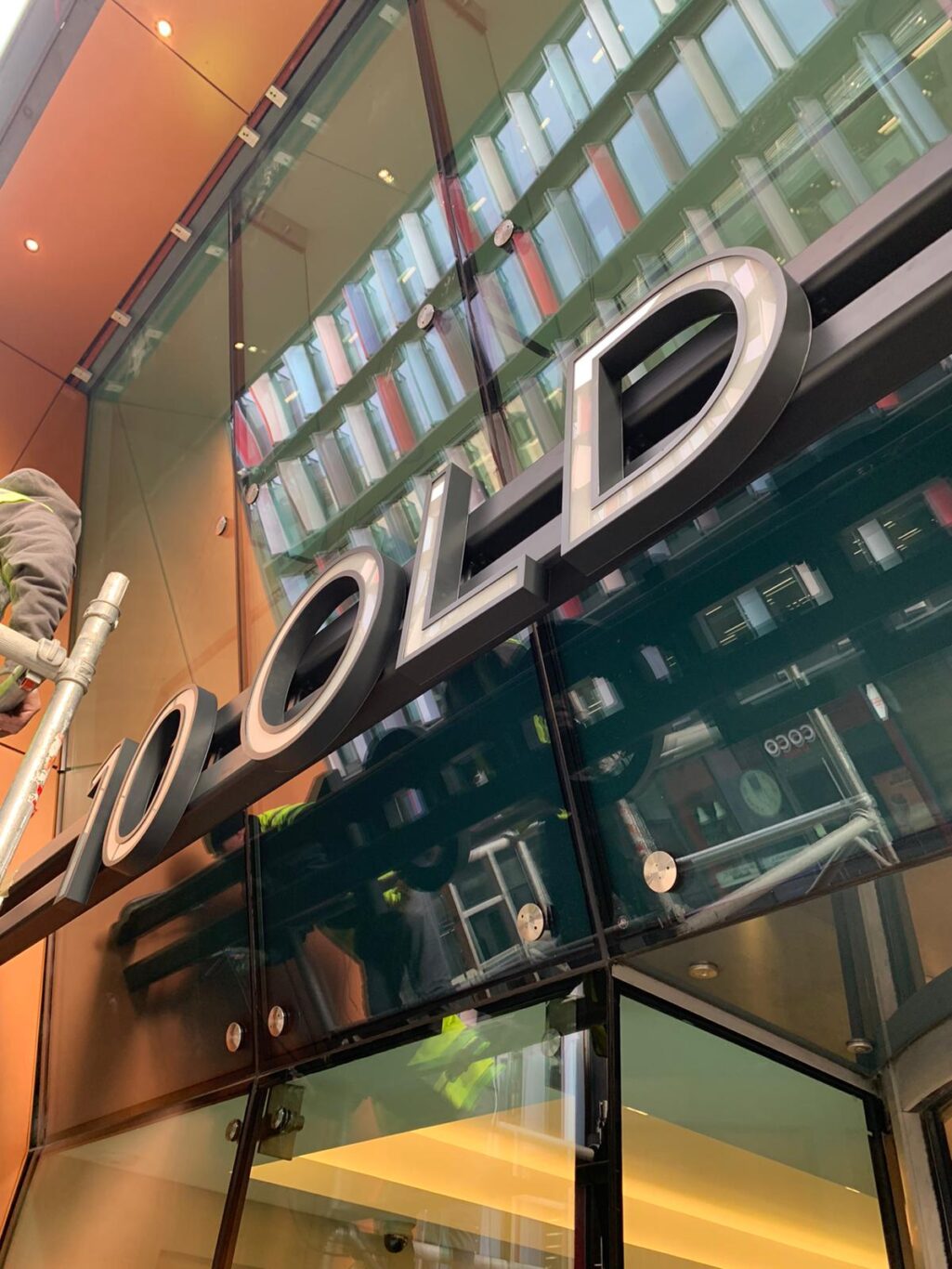
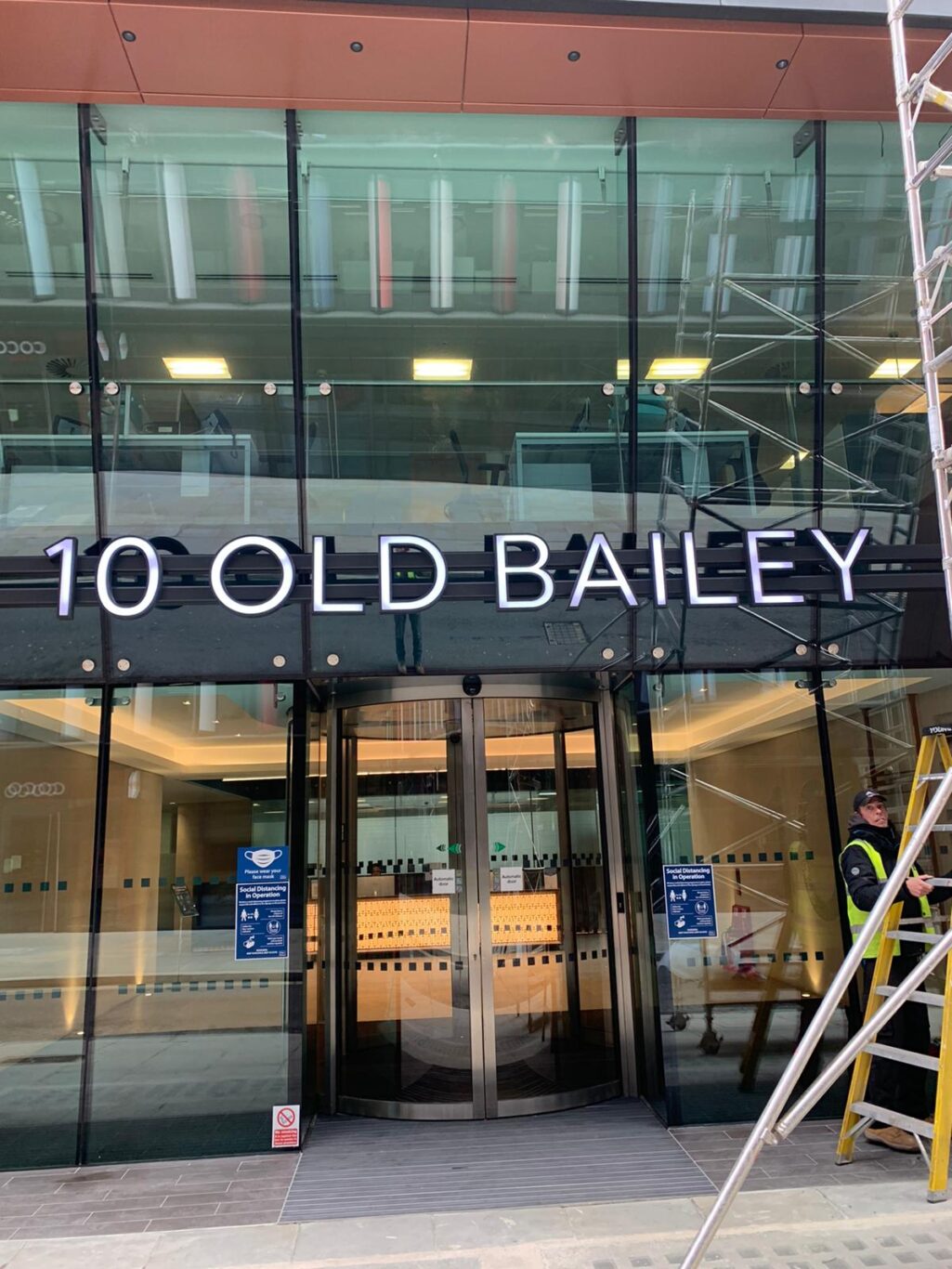
Through precision engineering, skilled fabrication, and close collaboration with Whittle Interiors, CDC Engineering successfully delivered architectural metalwork and signage that balance performance, durability, and design impact.
The Rosy Gold Rimex entrance cladding now provides a warm, luxurious welcome, while the illuminated “10 Old Bailey” sign serves as a defining feature of the refurbished façade.
This project stands as a showcase of CDC Engineering’s craftsmanship and attention to detail, reinforcing our reputation as a trusted partner in delivering premium architectural finishes within London’s most prestigious developments.
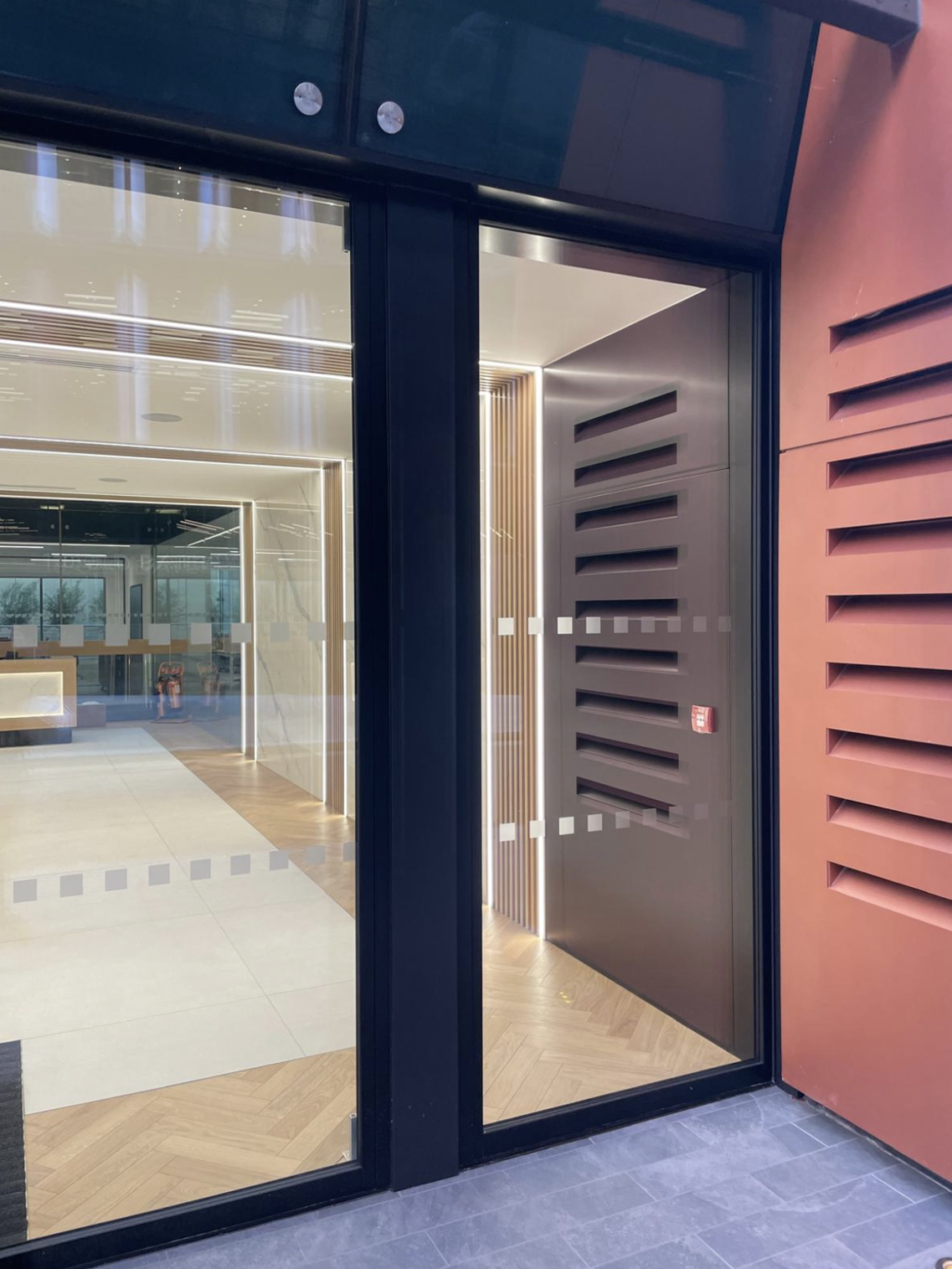
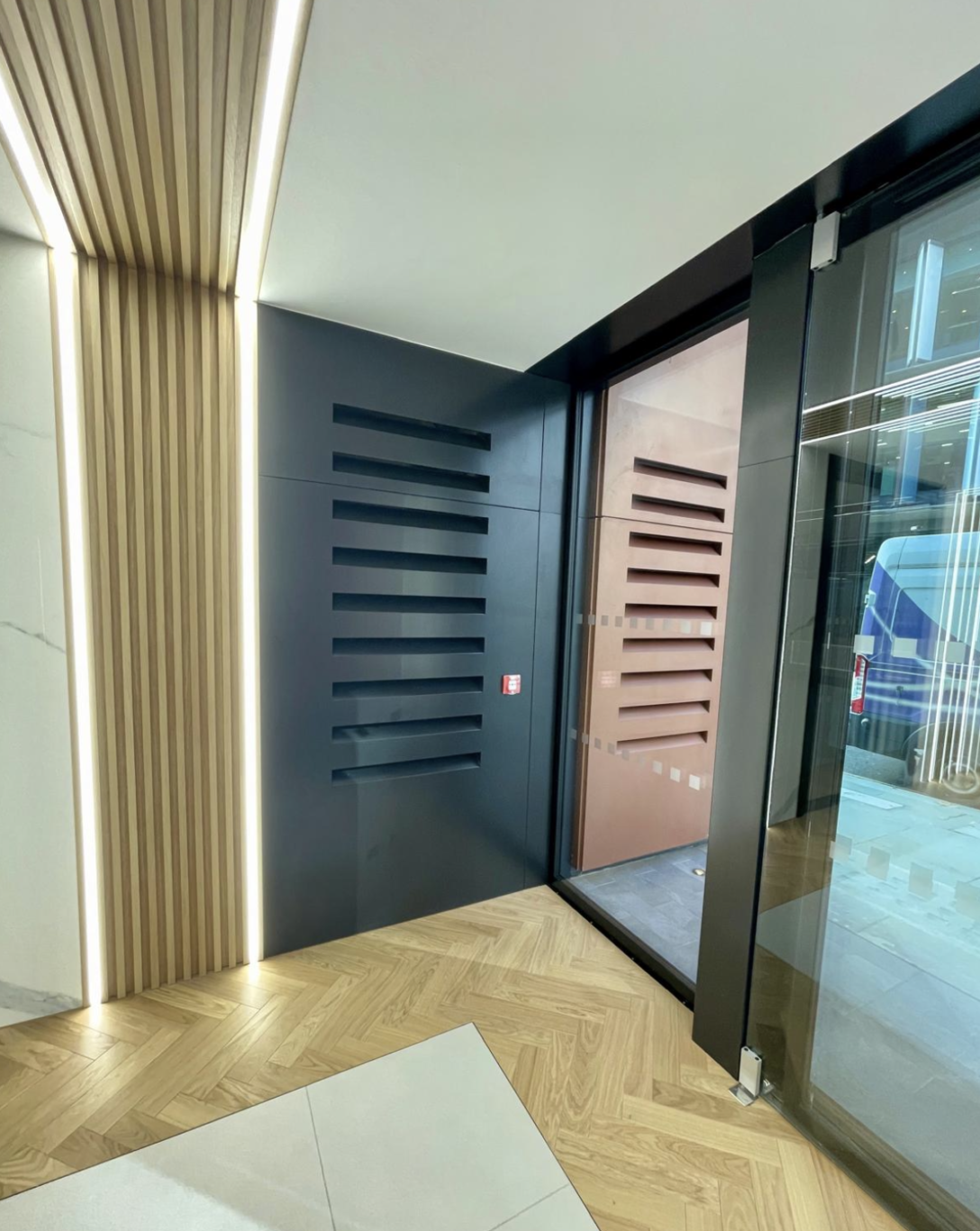
Nestled in the heart of London’s vibrant West End, Elsley House is a striking example of urban renewal. Originally serving the city’s historic ‘rag trade’—a hub for fashion and textiles—this five-storey building in Fitzrovia has been thoughtfully refurbished to meet the demands of modern commercial life. Today, it houses leading names from the marketing, media, and creative industries, offering them a space that combines architectural heritage with forward-thinking design.
The scale and sensitivity of the refurbishment demanded the involvement of experienced contractors with a track record of high-quality finishes and attention to detail. CDC Engineering was proud to be subcontracted to deliver key metalwork elements throughout the project.


One of the core tasks was the fabrication of all Fan Coil Unit (FCU) castings as part of the building’s upgraded heating and ventilation system. These systems were designed to be both high-performance and discreet, ensuring they integrate effortlessly into the building’s contemporary interiors. In fact, in many areas, the FCU units are so well-blended with the surroundings that they are virtually invisible—demonstrating a perfect union of functionality and design.


The FCU castings were crafted using mild steel and finished in a black powder coating, chosen both for durability and to complement the interior’s modern industrial palette. This same material and finish were extended to other custom-fabricated elements, including:
These additions help tie the building’s visual identity together, creating a cohesive and refined aesthetic throughout.


Elsley House now stands as a benchmark for adaptive reuse projects in central London—demonstrating how older commercial buildings can be repurposed to suit new uses without losing their character. CDC Engineering is proud to have contributed to this transformation, delivering expertly crafted metalwork that balances performance, subtlety, and design integrity.


